Surface Testing for Mold in Walla Walla, WA
Surface testing reveals what mold is present on visible materials and where contamination may be spreading.
Comprehensive Overview
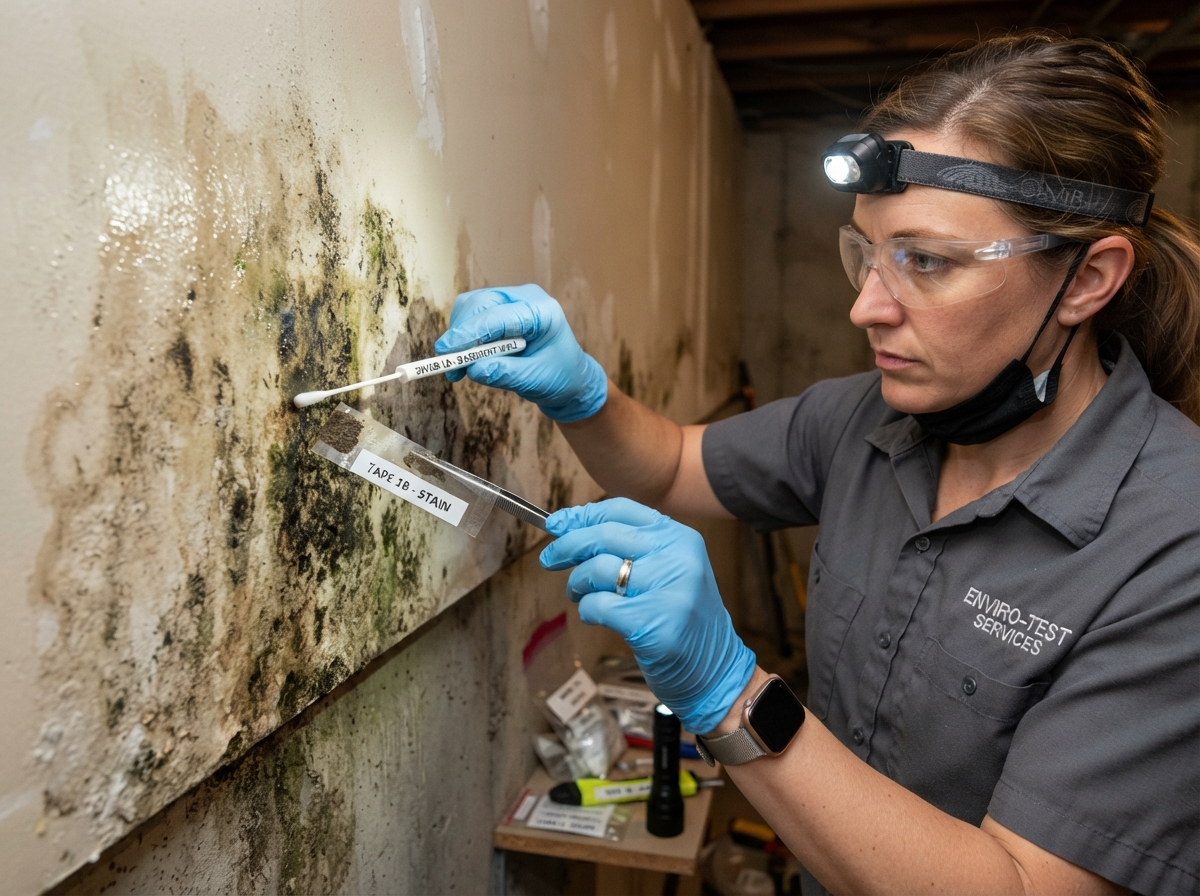
Direct tape lift, swab, and bulk sampling of visible spots or suspicious staining. Surface testing confirms the exact mold taxonomy (e.g., Stachybotrys chartarum, Aspergillus, Penicillium) to dictate proper cleanup protocols. When you see visible discoloration on drywall, ceiling tiles, or grout lines, the question is not just whether mold is present, but what kind of mold it is and whether it is toxic. Surface testing provides definitive laboratory identification of the mold genus and species at a specific location. This is essential for determining whether the staining is cosmetic (common Cladosporium or non-toxic Penicillium) or a concern (toxic Stachybotrys or Chaetomium). We collect samples using sterile tape lifts, swabs, or bulk material collection depending on the surface type and location. Samples are submitted to an AIHA-accredited laboratory for microscopic analysis. Results include spore identification, concentration levels, and hazard assessment. Surface testing is most valuable when combined with a canine inspection: the dog finds the hidden locations, and surface testing confirms what is growing there. It is also useful as a standalone service for visible staining that needs lab identification.
Who Needs This Service?
Property owners with visible staining, discoloration, or suspicious growth on walls, ceilings, grout, or HVAC registers who want lab confirmation of the mold type. Also recommended after a canine inspection to confirm what species the dog alerted to.
Why It Matters
Not all visible mold is toxic, and not all toxic mold looks black. Surface testing provides definitive lab identification so you and your remediation contractor know exactly what you are dealing with and can select appropriate cleanup protocols.
Key Benefits & Capabilities
What Is Included
When to Consider This Service
What Happens During the Inspection Process
Site Visit
We visit your property to assess the visible staining and determine the best sampling method (tape lift, swab, or bulk).
Sample Collection
Sterile tape or swab samples are collected from the target surface following AIHA-accredited protocols.
Lab Submission
Samples are submitted to an independent AIHA-accredited laboratory for microscopic genus and species identification.
Results & Report
You receive a detailed lab report identifying the mold type, spore density, hazard level, and recommended cleanup approach.
Service FAQs
Is all dark staining on drywall black mold?↓
No. Many dark stains are soot, dirt, or non-toxic mold species. Surface testing provides definitive lab confirmation of whether the staining is toxic Stachybotrys or a benign species.
How long do surface test results take?↓
Standard lab analysis takes 5 to 7 business days. Rush analysis is available for an additional fee, typically returning results in 48 to 72 hours.
Can surface testing be done on any material?↓
Yes. We can sample drywall, wood, grout, ceiling tiles, HVAC ducts, and soft furnishings. The sampling method is adapted to the surface type.
Should I do surface testing before or after a canine inspection?↓
Both approaches work. If you have visible staining, surface testing alone can identify it. If you suspect hidden mold, a canine inspection first identifies the locations, then surface testing confirms what is growing there.
Available in All Regional Locations
We offer Surface Testing for Mold throughout the following communities:
Book Surface Testing for Mold
Request a certified K9 handler consultation for your property.
Related Services
Certified & Trusted
Russ Bishop certified K9 teams. Detection dogs trained to law enforcement standards. Serving Walla Walla & Eastern WA.
(509) 204-4110Ready to Schedule Your Surface Testing for Mold?
Our certified K9 teams are ready to deploy across Walla Walla and Eastern Washington. Call now or request an inspection online.