Canine Mold Detection vs Traditional Mold Inspection: What's the Difference?
There are several approaches to mold inspection, each with its own strengths and limitations. Understanding the differences helps property owners choose the right method for their situation.
Visual Inspection: A visual inspection is the starting point for any mold assessment. The inspector looks for visible mold growth, water stains, and moisture damage. Strengths: fast, inexpensive, identifies obvious problems. Limitations: cannot see behind walls, under flooring, or inside sealed cavities.
Air Sampling: Air spore trap tests capture airborne particles during a 5-minute collection window. The sample is analyzed in a lab to identify spore types and concentrations. Strengths: provides quantitative data, useful for baseline assessment. Limitations: only captures what is airborne during the test, may miss mold sealed behind walls, results vary with conditions.
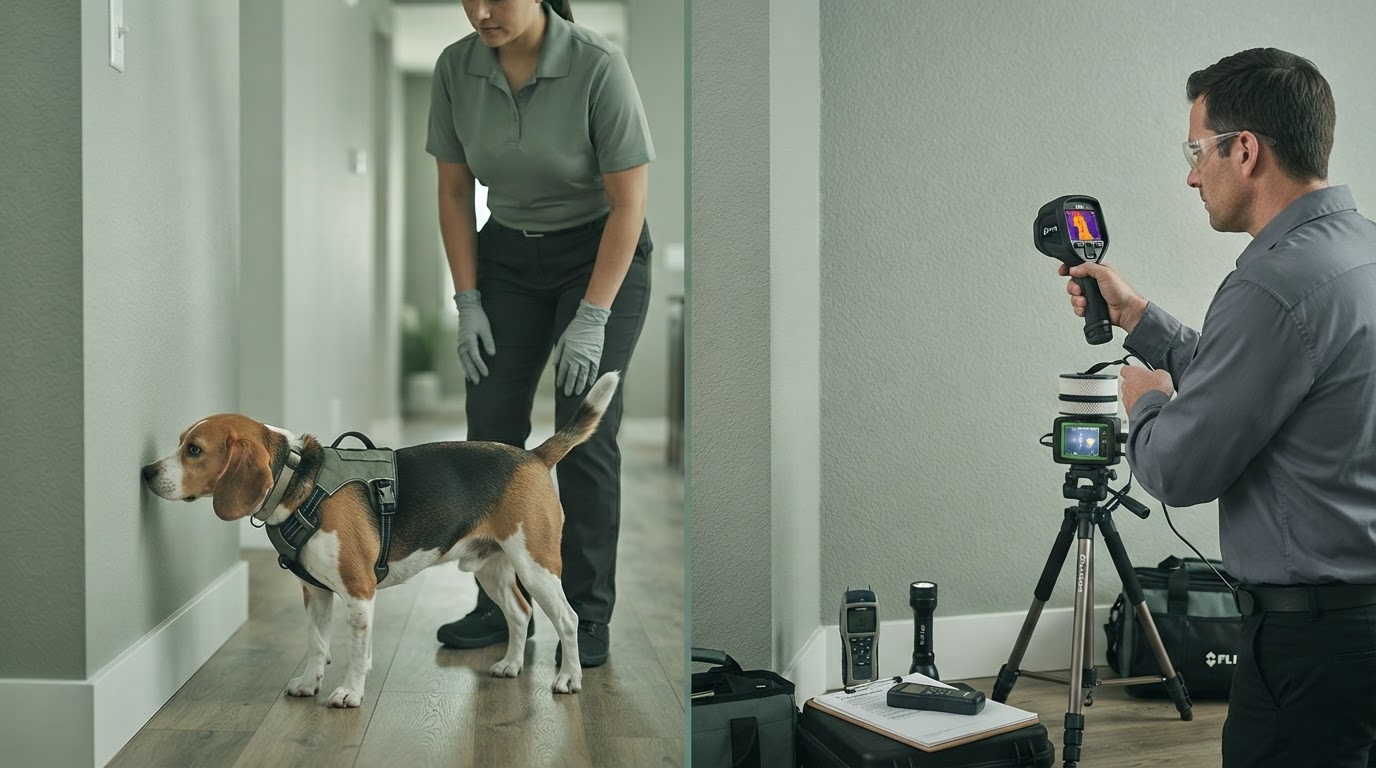
Thermal Imaging: Infrared cameras detect temperature differences that indicate moisture. Strengths: non-invasive, identifies active moisture sources. Limitations: requires active moisture to register, misses dry mold, cannot identify mold species.
Moisture Meters: Pin-type and pinless meters measure moisture content in building materials. Strengths: precise moisture readings at specific locations. Limitations: only measures moisture, not mold, requires physical access to the material.
Canine Scent Detection: Trained dogs alert to the microbial volatile organic compounds (MVOCs) that active mold emits. Strengths: helps identify areas where odor associated with active mold growth is present behind walls and under floors without demolition, narrows areas of concern, covers entire property systematically. Limitations: does not identify mold species, does not provide quantitative spore counts, requires lab confirmation for remediation decisions.
The most effective approach combines multiple methods. Canine detection helps narrow where to investigate, thermal imaging and moisture meters verify the moisture source, and lab testing identifies what species and mycotoxins are present. This combined approach gives property owners the most complete and actionable information.
No single method is perfect. Each has its place in a thorough mold investigation. The key is matching the method to the question being asked: Where is the odor associated with active mold? (Canine detection) What is the moisture source? (Thermal and moisture meters) What species and toxins are present? (Lab testing)
Suspect Mold in Your Home or Property?
Schedule a non-invasive canine mold inspection with our K9 handlers today. Serving Walla Walla and Eastern Washington.
Related Articles
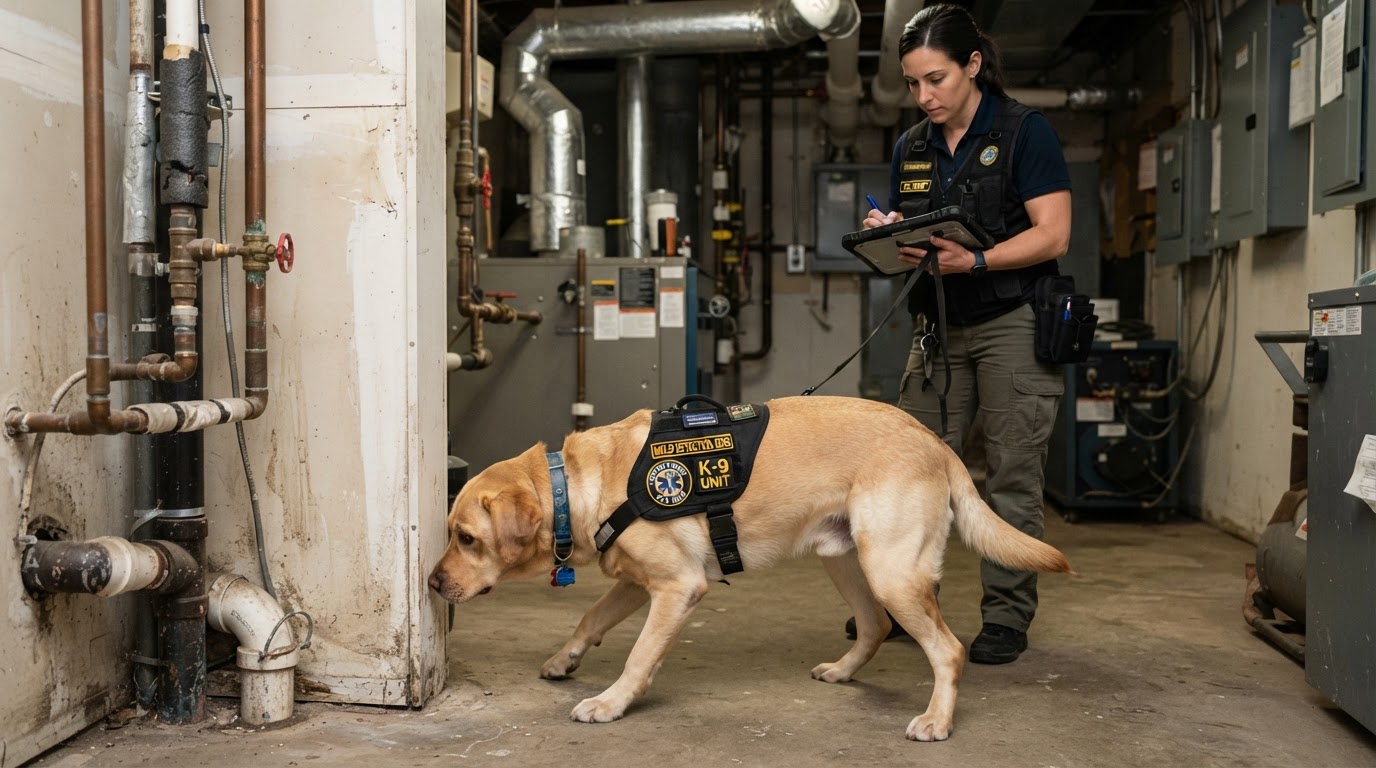
Mold Inspection for Property Managers: A Practical Checklist
Mold inspection for property managers, as a checklist: seasonal checks, tenant complaint steps, and when scheduled monitoring is worth it.
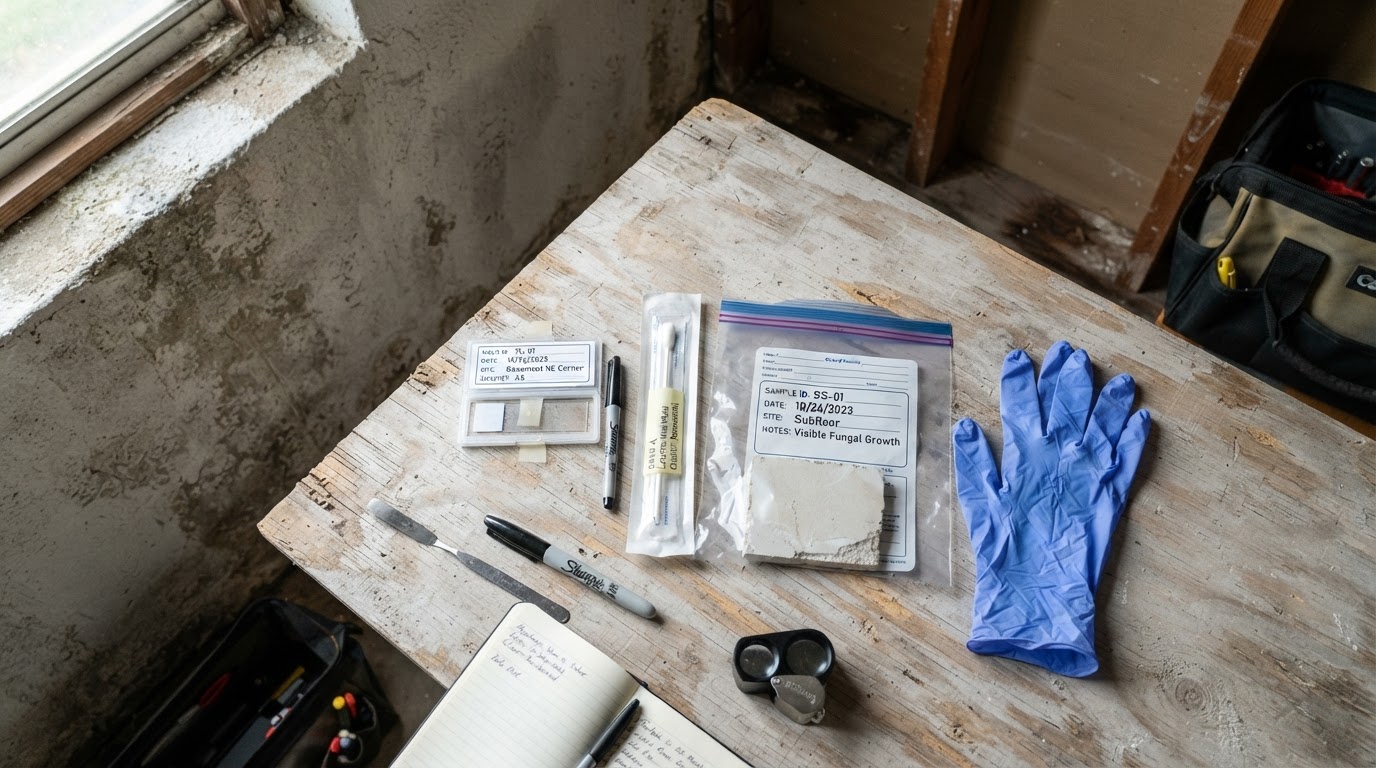
Which Mold Test Do You Need? Surface, Air, and Mycotoxin Testing Compared
Which mold test do you need? Compare surface testing, air sampling, and building mycotoxin testing, and learn when testing is not necessary.