Which Mold Test Do You Need? Surface, Air, and Mycotoxin Testing Compared
You have a stain on the drywall, a smell you cannot place, or a dog that just alerted behind your laundry wall. Someone has told you to get it tested, and now you are staring at three different services with three different prices.
So which mold test do you need? The honest answer is that it depends on what you are actually trying to find out, because surface testing, air sampling, and building mycotoxin testing answer three completely different questions. Paying for the wrong one is the most common way people spend money on mold and end up knowing no more than they did before.
Here is what each method can prove, what it cannot, and when the right answer is to skip testing entirely.
Detection and testing are not the same thing
Detection tells you where. Testing tells you what.
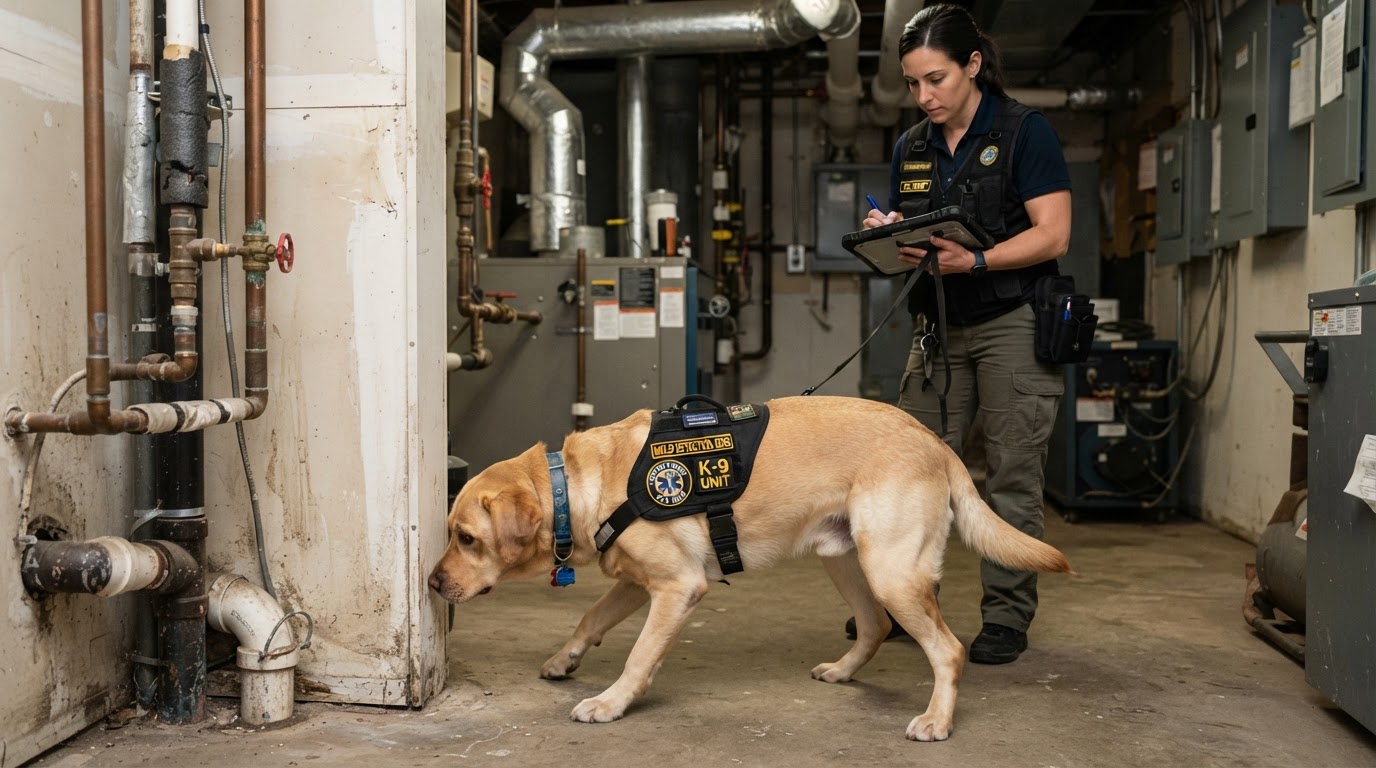
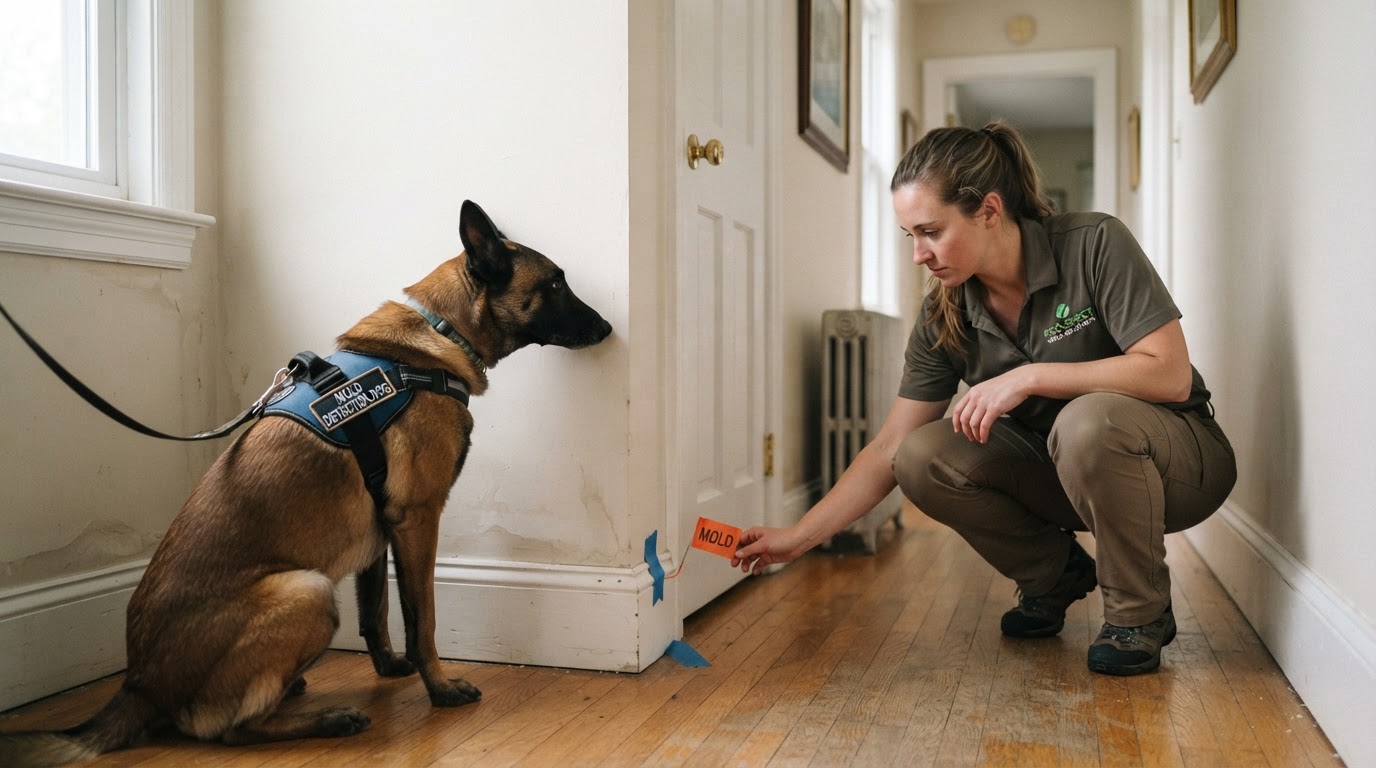
A canine inspection, a visual walkthrough, and a moisture meter are all detection tools. They narrow a whole building down to a specific area worth opening or sampling. Snow and Otis, the detection dogs at Canine Scent Inspections, are trained on the odor given off by active mold growth, which is how a scent sweep can flag a spot behind a baseboard that nothing on the surface would have suggested.
Laboratory testing is what turns that spot into a name. A dog can indicate that active mold odor is present in an area. It cannot tell you the species, the quantity, or whether mycotoxins have settled into your ductwork. That requires a sample and a lab.
Getting the order right matters, because a sample is only as good as the place it came from.
Surface testing: what it proves and what it does not
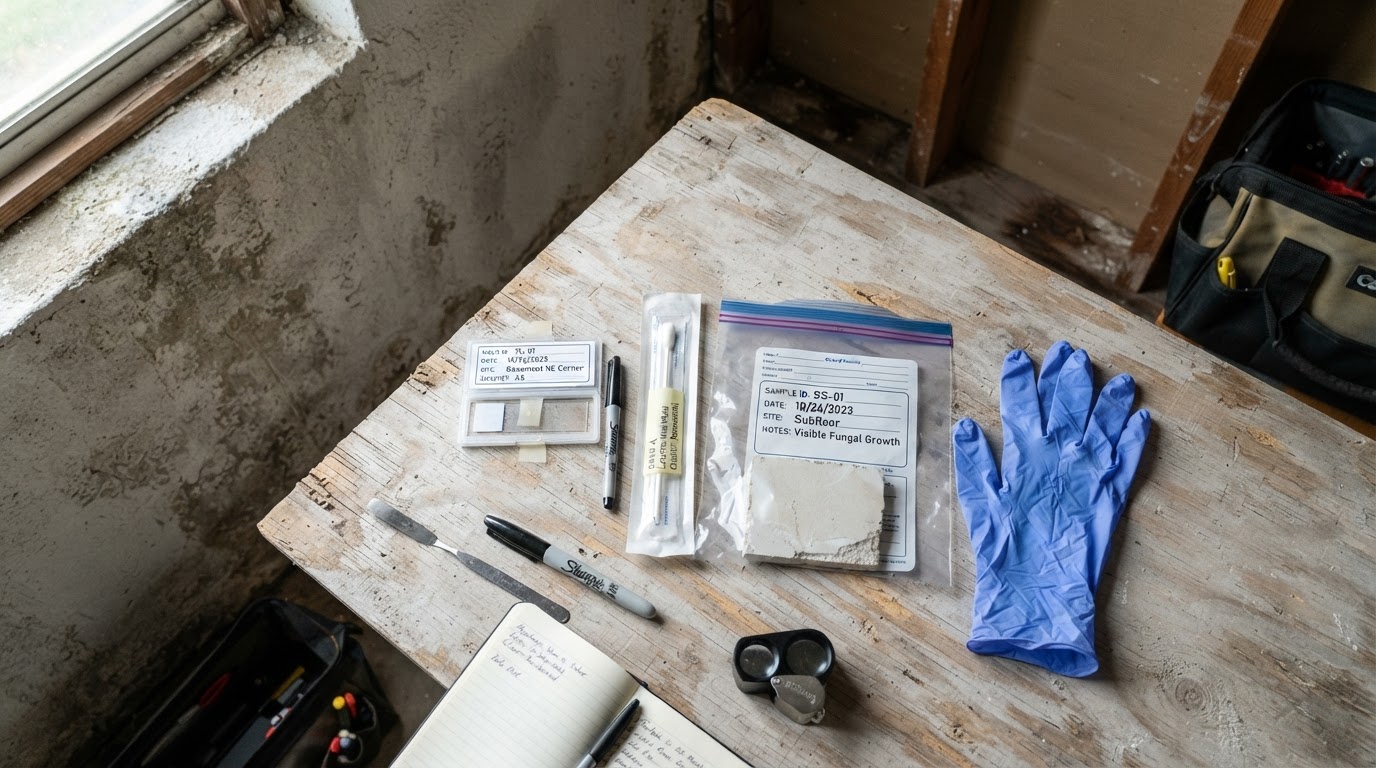
Surface testing means collecting physical material from a specific spot. Depending on the surface, that is a sterile tape lift, a swab, or a small piece of the material itself, which then goes to an AIHA-accredited laboratory for microscopic analysis.
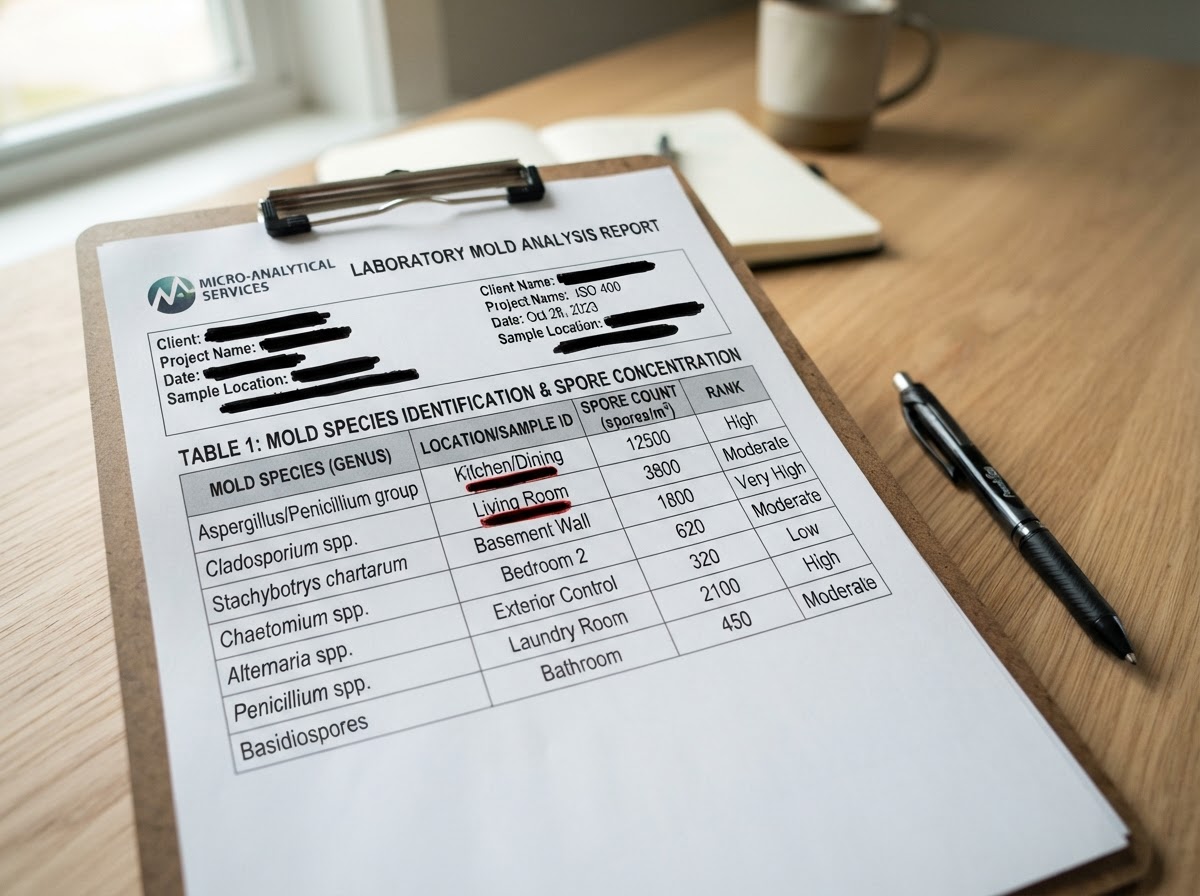
What it proves. The lab report identifies the mold genus and species present in that sample, assesses spore density, and classifies the hazard level as cosmetic, allergenic, or toxigenic. It comes back with written cleanup protocol recommendations. Standard turnaround is 5 to 7 business days, and rush analysis is available for an additional fee.
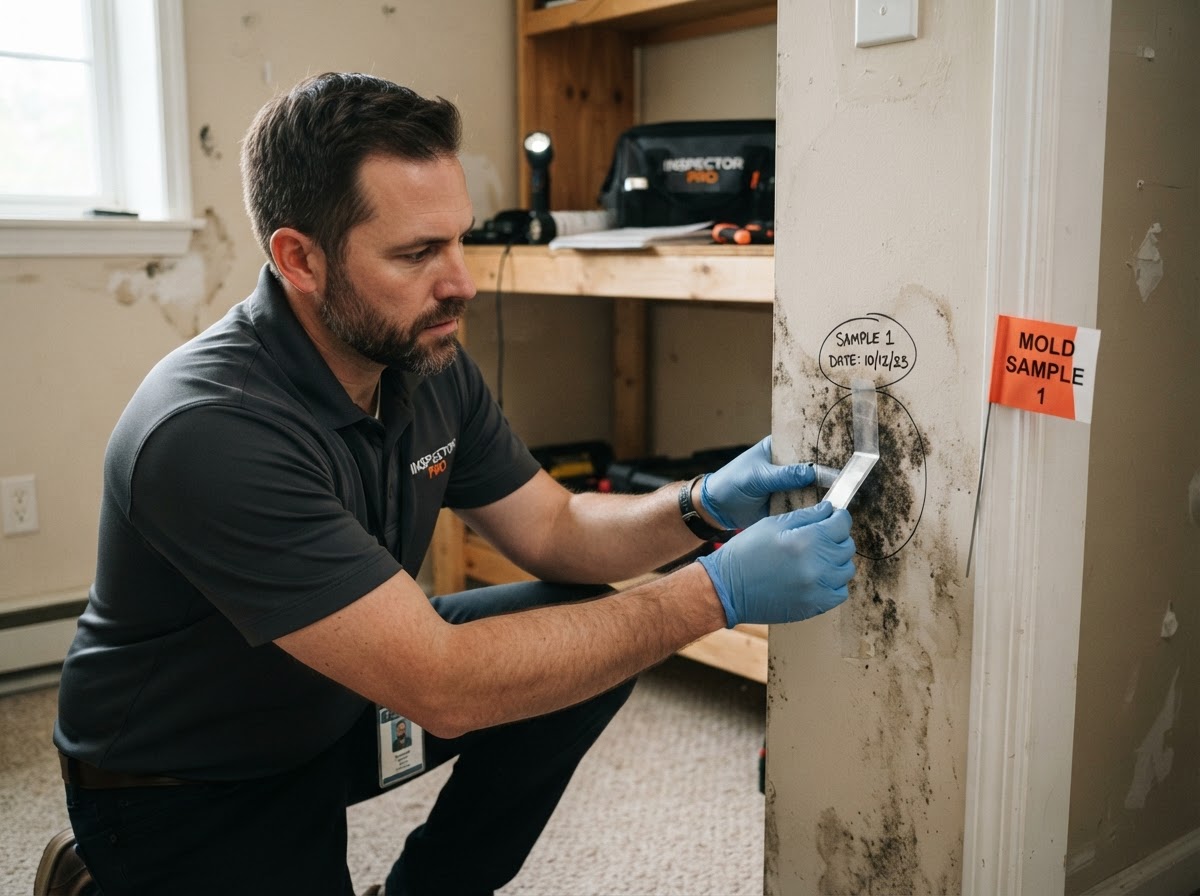
What it does not prove. A surface sample describes one spot. It does not tell you how far the growth extends behind the wall, whether anything is circulating through the air, or whether mycotoxins remain in the building after the growth itself is gone. It is precise and narrow, which is exactly what you want when you already know where to look. If you are ready to find out what is at a marked location, surface testing for mold is the service that answers it.
Air sampling: what it proves and what it does not
Air sampling captures a snapshot of airborne spores during a brief collection window, usually a few minutes, and compares indoor counts against an outdoor baseline.
It is the method most people picture when they hear "mold test," and it is worth understanding its limits before you buy one. The CDC's National Institute for Occupational Safety and Health states plainly that it does "not recommend routine air sampling for mold with building air quality evaluations," and that "thorough visual inspections or detecting problems by musty odors are more reliable than air sampling." The EPA adds that because no federal limits exist for mold or mold spores, "sampling cannot be used to check a building's compliance with federal mold standards."
None of that makes air sampling useless. It is genuinely helpful when an insurer, an attorney, or a corporate tenant has asked for that specific method, or when you need a documented indoor and outdoor comparison at a point in time. It is simply not a good first move when you do not yet know where the problem is.
One practical note: the testing menu at Canine Scent Inspections is built around surface testing, building mycotoxin testing, and EMMA analysis. If air sampling is what your situation calls for, say so when you call and you will get a straight answer about whether it is the right fit.
Building mycotoxin testing: what it proves and what it does not
Mycotoxins are the chemical compounds some molds produce. They are byproducts, not living organisms, which is the detail that surprises most people: they can persist in a building long after the mold that made them is gone. If you want the longer explanation, the article on what mycotoxins are covers it.
What it proves. Building mycotoxin testing samples HVAC return and supply ducts, settled dust from living areas and high traffic zones, and soft furnishings or carpet fibers where indicated. Mass spectrometry analysis quantifies mycotoxin levels in parts per billion and identifies which compounds are present, and the report comes with a decontamination protocol covering cleaning methods and duct work.
The related EMMA environmental mold and mycotoxin assessment takes a different route to a similar question, analyzing dust DNA for 10 mold species and 16 mycotoxins. Because settled dust accumulates over time, it gives a cumulative picture rather than a moment in time. Results take 10 to 14 business days.
What it does not prove. Building testing describes a building. It does not diagnose anyone, and no result from it should be read as a statement about your health or your pet's health. Those are questions for a physician or a veterinarian, and any test results you have should go to them.
Which mold test do you need? A short decision guide
Match the situation to the method:
- •You can see the mold and you already plan to remove it. Often no test at all. See the next section.
- •A canine alert or a moisture reading points behind a wall or under flooring. Surface testing for mold once the area is accessible, so you learn what you are dealing with before scoping the work.
- •You are buying, selling, or documenting a claim. Surface testing, because a lab report with a genus and species identification is what other parties will accept.
- •Remediation is finished but the smell or the problem persists. Building mycotoxin testing or EMMA, since mycotoxins can outlast the growth that produced them.
- •A lender, insurer, attorney, or corporate tenant has specified a method. Ask them which one, then book that.
- •The same building keeps having problems season after season. Scheduled monitoring rather than another one-off test.
If you are not sure which line you fall on, that is a two minute phone conversation, not a purchase decision. Schedule testing or simply ask which test fits what you are trying to find out.
When you do not need a mold test at all
This is the part most testing companies leave out.
The EPA's position on whether testing is necessary is direct: "In most cases, if visible mold growth is present, sampling is unnecessary." If you can see it, you know it is there, and you are going to remove it either way, a lab report may only confirm what your eyes already told you while delaying the actual fix.
The same logic applies to a small, obvious problem with an obvious cause. A window that was left open in a storm, a supply line that let go under a sink, a bathroom with no working fan. Fix the water, clean the affected material, and watch it. Testing is worth paying for when the result will change what you do next. When it will not, it is an expense, not information.
Sage Ali, who coordinates environmental sampling for the company, would rather tell you that on the phone than sell you a sample you did not need. It is also worth remembering that because Canine Scent Inspections does not perform remediation, there is no tear-out job waiting at the end of a test result.
What a canine inspection changes about the order of operations
The reason detection comes before testing is simple. Sampling a wall cavity without knowing where the odor is coming from is a guess, and a negative result from the wrong spot is worse than no result at all, because it feels like an answer.
A scent sweep is non destructive. No holes are cut, no walls are opened, and no furniture is disturbed. Otis specializes in concealed drywall and subfloor work. Snow works commercial grid searches and HVAC duct sweeps across larger and more complicated layouts. Hadi Ali, who handles both dogs and is certified through Rival K9's Mold Detection Dog Program, interprets the alert behavior and documents each location.
What a canine sweep does not do is identify what was found. No detection method is perfect, and an alert is an indication worth confirming, not a diagnosis. That is the point of pairing detection with a lab.
Timelines in the Walla Walla Valley and Tri-Cities
Lab time is the part people underestimate. Inspections are typically scheduled within 48 to 72 hours, and real estate transactions with contingency deadlines get 24 to 48 hour scheduling, but a surface sample still takes 5 to 7 business days at the lab and an EMMA panel takes 10 to 14. Rush processing is available for an additional fee if your deadline will not stretch. If you are working backward from a closing date, count the lab days first.
Coverage runs across Walla Walla, Dixie, Prescott, Waitsburg, and Dayton, and out through Burbank into Pasco, Richland, Kennewick, Finley, and Selah. Travel within Walla Walla, Columbia, Franklin, and Benton Counties is included in standard rates. You can see the full Walla Walla service area and check whether your address is covered.
Your next step
Decide what you are trying to find out first, then pick the test that answers it. If you do not know yet, that is what the detection sweep is for.
Schedule testing, or call and describe the situation before you commit to anything. If a test will not change what you do next, you will be told that.
*Sources: U.S. EPA: Is Sampling/Testing for Mold Necessary? | CDC / NIOSH: Mold, Testing, and Remediation*
Frequently Asked Questions
Suspect Mold in Your Home or Property?
Schedule a non-invasive canine mold inspection with our K9 handlers today. Serving Walla Walla and Eastern Washington.
Related Articles
Mold Inspection for Property Managers: A Practical Checklist
Mold inspection for property managers, as a checklist: seasonal checks, tenant complaint steps, and when scheduled monitoring is worth it.
What Happens After a Mold Dog Alerts?
A mold dog alerted in your home. Here is what happens after a mold dog alerts, what the alert proves, and whether you need lab testing next.