
Mold Inspection for Property Managers: A Practical Checklist
An email arrives on a Friday afternoon. A tenant in unit 4 says there is a musty smell in the back bedroom, and they have mentioned it once before. You have thirty other doors to think about and no idea yet whether this is a dehumidifier conversation or a fifteen thousand dollar one.
Mold inspection for property managers is a different problem than it is for a homeowner, because you are managing exposure across a portfolio rather than solving one house. You need a repeatable process, written documentation, and a way to tell a real problem from a complaint that will resolve with a working bathroom fan.
Here is a working checklist, a tenant complaint sequence, and an honest read on when scheduled monitoring is worth paying for and when it is not.
Why mold is a portfolio problem, not a unit problem
Three things make mold unusual among maintenance issues.
It compounds quietly. A slow supply line leak behind a vanity does not announce itself until the baseboard swells, by which point the cavity and the subfloor have had months.
It creates a paper trail whether or not you create one. Tenant emails, work orders, and text messages all exist. Your own documentation is the only part of that record you control.
And it moves between units. A shared wall, a common chase, a single HVAC system serving a floor. What starts as one tenant's complaint is frequently a building's condition.
That is why the useful unit of planning is the property, not the ticket.
Mold inspection for property managers: the checklist
Run this by trigger rather than by calendar alone. Each item is a place moisture accumulates without being visible from the middle of the room.
At every turnover, before the unit is re-listed:
- •Under every sink, including the shutoff valves and the back of the cabinet floor
- •Behind and beneath the refrigerator, dishwasher, and washing machine
- •Bathroom ceilings and the wall above the shower surround, plus whether the exhaust fan actually moves air
- •Window sills and the wall below them, particularly in bedrooms
- •Closet corners on exterior walls
- •Water heater pan and the surrounding floor
Seasonally, or twice a year at minimum:
- •Roof, gutters, and downspout discharge points, since most interior water starts outside
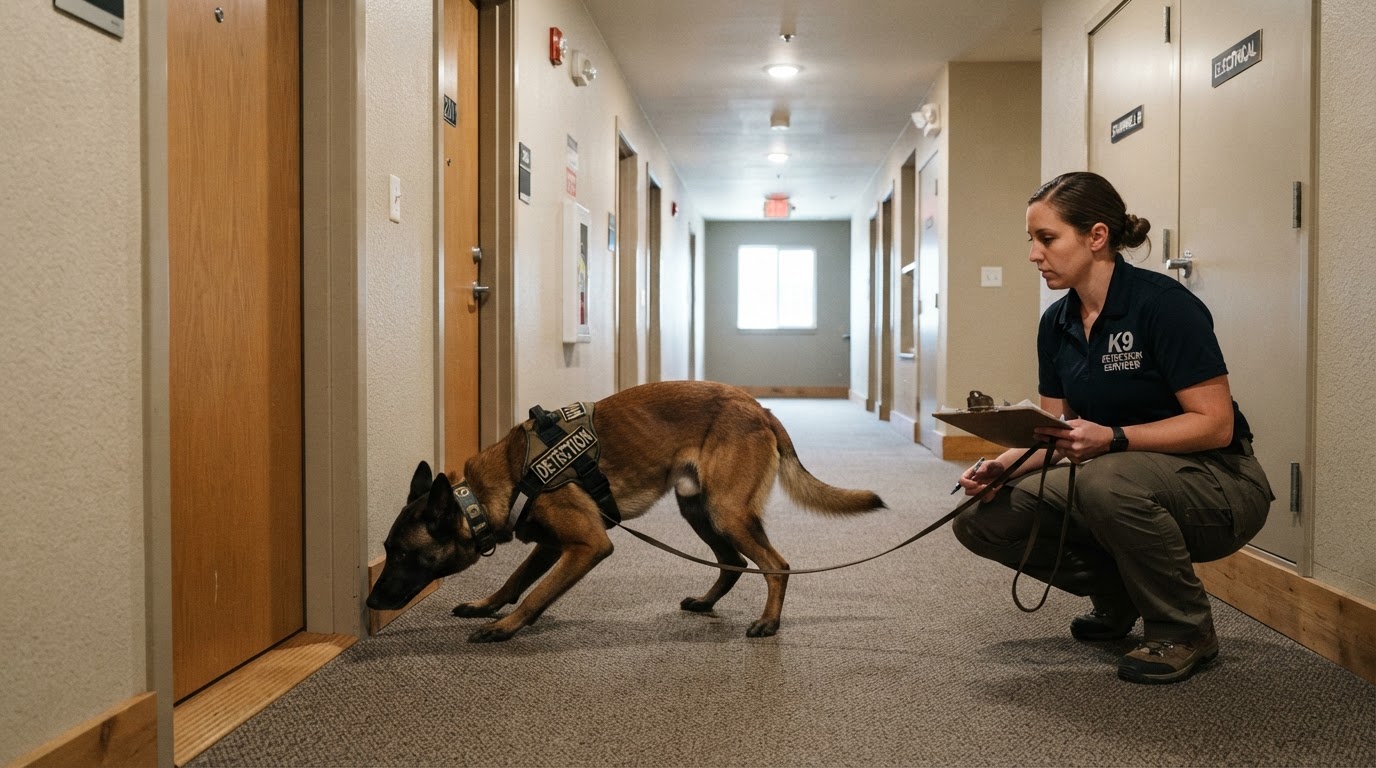
- •Crawl space or basement, including vapor barrier condition and standing water
- •HVAC condensate line, drain pan, and the air handler cabinet
- •Attic sheathing around bathroom and kitchen vent terminations
- •Irrigation heads and grading anywhere they direct water toward a foundation
After any water event, without exception:
- •Document the source, the date, the extent, and what was done, in writing
- •Confirm the affected material was dried rather than just wiped down. The CDC and NIOSH position is that wetted materials should be dried within 48 hours or removed
- •Re-check the same area three to four weeks later
On any tenant complaint mentioning smell, staining, or health:
- •Respond in writing the same business day, even if the visit is scheduled later
- •Inspect in person rather than diagnosing from a photo
- •Keep dated photographs of what you found and what you did
Handling a tenant mold complaint
The sequence matters more than the speed.
Acknowledge in writing. A dated written response is the single most valuable thing in the file later.
Inspect promptly and document what you see, including the absence of anything visible. "No visible growth observed in the bedroom, closet, or adjacent bath" is a useful record.
Find the water. Mold is a symptom. If you cannot identify the moisture source, you have not finished the inspection.
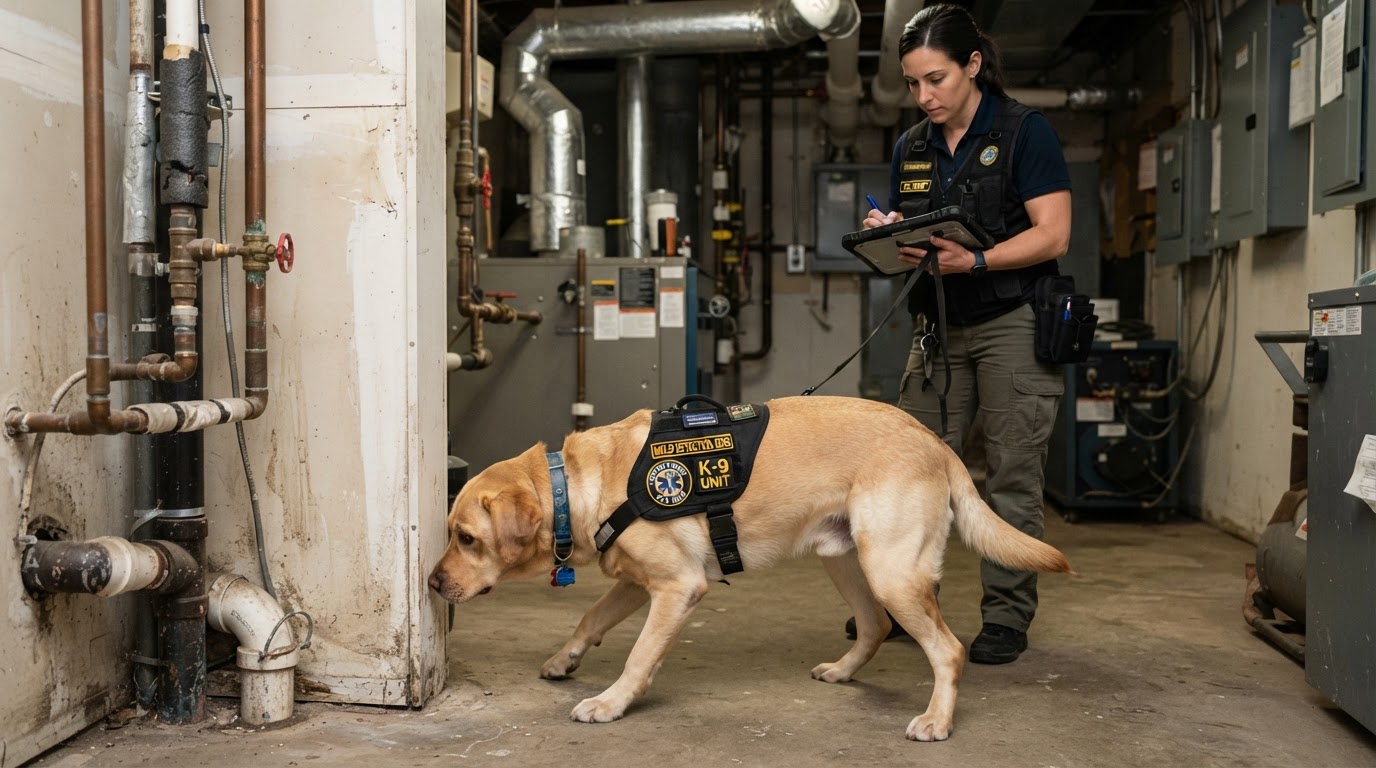
Bring in a third party when the visible inspection does not explain the complaint. A persistent smell with nothing to see is the specific case where a scent sweep earns its cost, because the alternative is opening walls speculatively in an occupied unit.
Fix the moisture, then address the material, in that order.
Verify and close the loop with the tenant in writing.
On the legal side, be careful. Washington's Department of Health publishes guidance for renters and landlords on mold, and it is worth reading, but it is guidance rather than a statement of your obligations under a specific lease or tenancy. Commercial leases in particular allocate responsibility in ways that vary enormously from one document to the next. Read your lease, and route anything contested to your attorney rather than to an inspector.
What a canine sweep adds, and what it does not
The case for scent detection in a portfolio context is narrow and specific: it addresses the complaint you cannot see.
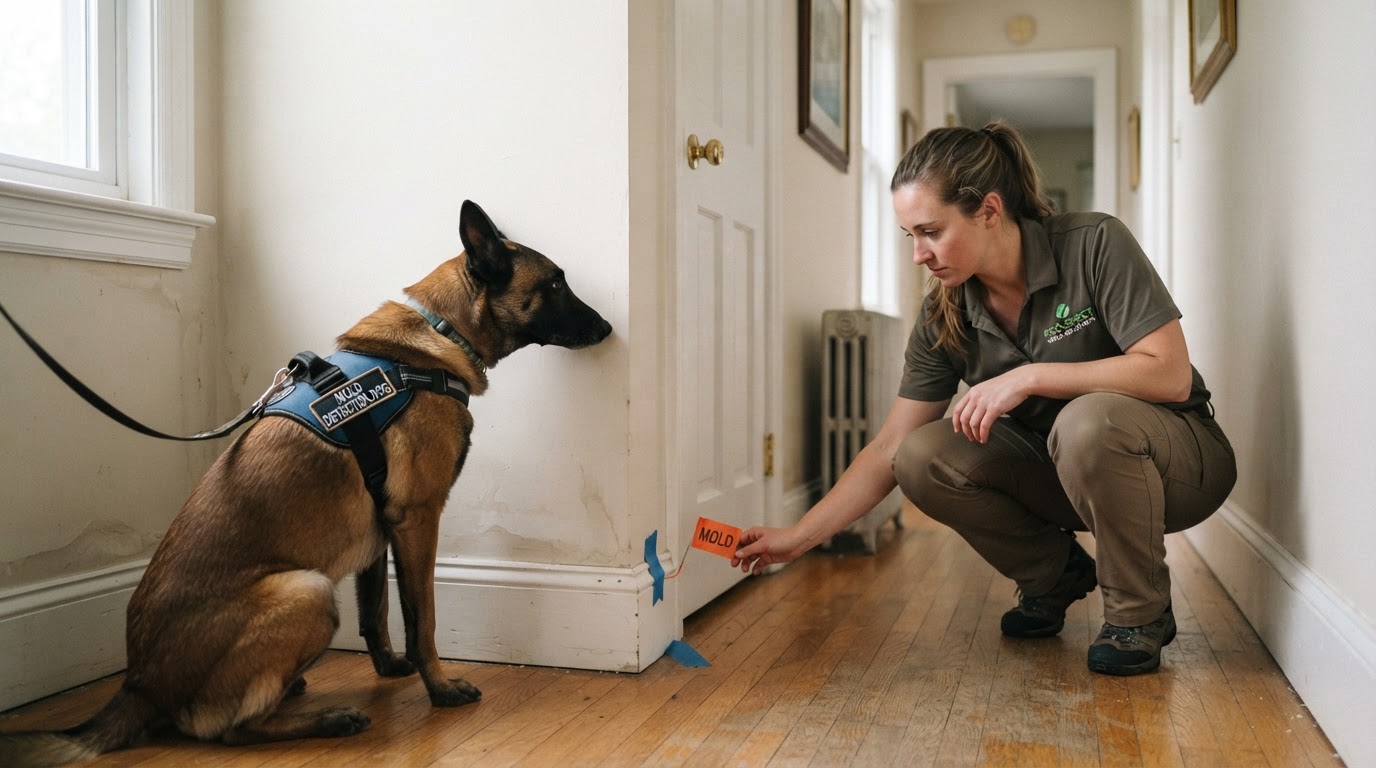
A commercial building canine mold inspection is non destructive. No holes are cut, no walls are opened, and no furniture is disturbed, which matters when the unit is occupied and you would rather not authorize exploratory demolition in someone's home. Snow works commercial grid searches and HVAC duct sweeps across larger layouts. Otis specializes in concealed drywall and subfloor work. Hadi Ali handles both dogs and documents each alert location.
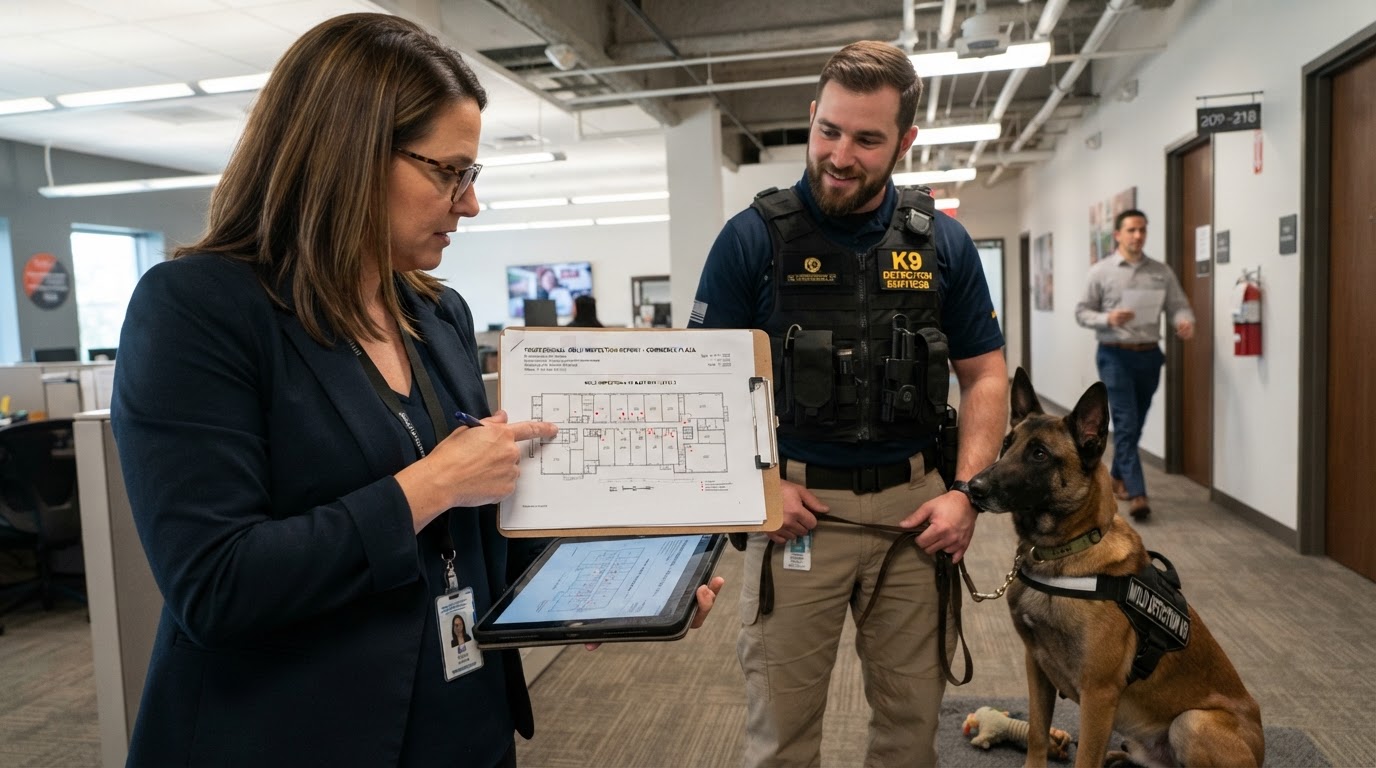
What comes back is a report with mapped alert locations, thermal images, and written findings, which is built to support insurance claims, tenant communications, and contractor scoping. For a property manager, that document is often the actual deliverable.
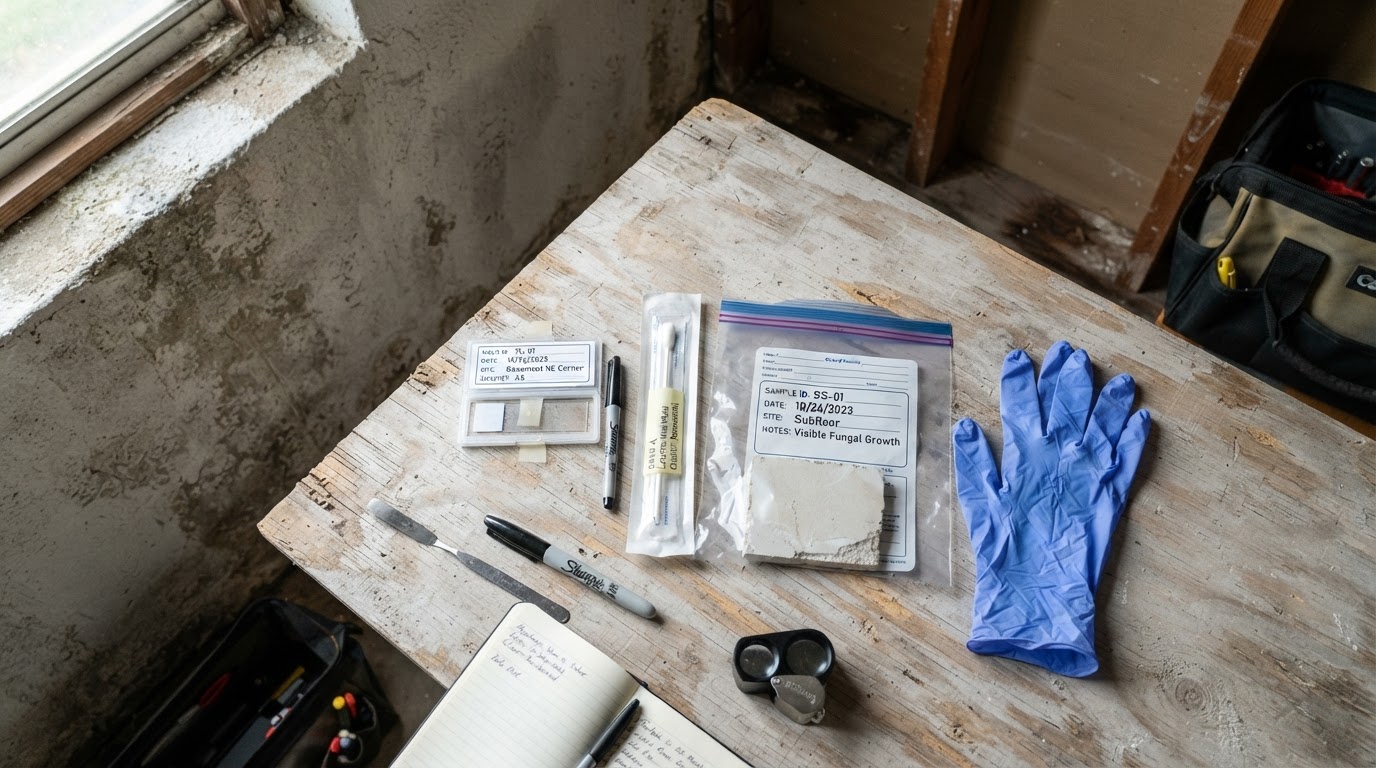
What a sweep does not do is identify what was found. An alert indicates that odor associated with active mold growth is present in an area. Species identification requires a laboratory sample, and no detection method is perfect, which is why an alert is a strong reason to confirm rather than a conclusion.
One more thing worth stating plainly: Canine Scent Inspections does not perform remediation. When a sweep comes back clean, there is no tear-out job on the other side of that finding.
Request a recurring monitoring plan, or start with a single property and see what the report looks like.
When one inspection is enough, and when monitoring pays
Most portfolios do not need monitoring on every door. Be honest about which properties actually carry recurring risk.
A one-time inspection is usually the right call when: the trigger is a single event with a known cause, the property has no history of moisture complaints, or you need documentation for one specific transaction or dispute.
Scheduled monthly or quarterly monitoring tends to pay for itself when:
- •The property has had two or more moisture events in the past few years
- •It sits vacant or seasonally occupied, where a leak can run for weeks unnoticed
- •It has a crawl space, an older HVAC system, or a history of condensate problems
- •Tenants include anyone who has told you they are sensitive to indoor air quality
- •The building is high consequence if it goes wrong: healthcare, hospitality, food service, wine storage, or anything with an occupancy dependent revenue stream
Monitoring visits are focused sweeps of the critical plumbing, HVAC, and high risk zones rather than a full re-inspection each time, and they build a trend log across visits so you can see whether a property is drifting. Schedules run monthly, bi-monthly, or quarterly, and monitoring rates are discounted against one-time inspection pricing.
If a property does not meet any of the criteria above, monitoring is an expense rather than a control. You will be told that.
Walla Walla Valley and Tri-Cities portfolios
Practical logistics matter more in this region than in a dense metro, because a portfolio here is frequently spread across two counties.
Coverage runs across Walla Walla, Dixie, Prescott, Waitsburg, Dayton, and Burbank, and into Kennewick, Richland, Pasco, Finley, Selah, and Eureka. Travel within Walla Walla, Columbia, Franklin, and Benton Counties is included in standard rates, which means a multi property visit across the valley does not accrue a trip charge per door.
Scheduling is the other constraint. Evening, weekend, and holiday appointments are available at no additional cost, which is usually the only way to work an occupied commercial space or a short turnaround vacancy. Bookings are typically accommodated within 48 to 72 hours.
If a tenant wants to know what will actually happen in their unit, the walkthrough of what to expect during an inspection is a useful thing to forward. It reduces the number of access refusals considerably.
Your next step
Pick the two or three properties in your portfolio that already worry you and start there rather than trying to systematize everything at once.
Request a recurring monitoring plan for those properties, or request commercial pricing for a single building if you would rather see one report before committing to a schedule.
*Sources: Washington State Department of Health: Renters, Landlords, and Mold | CDC / NIOSH: Mold, Testing, and Remediation*
Frequently Asked Questions
Suspect Mold in Your Home or Property?
Schedule a non-invasive canine mold inspection with our K9 handlers today. Serving Walla Walla and Eastern Washington.
Related Articles
Which Mold Test Do You Need? Surface, Air, and Mycotoxin Testing Compared
Which mold test do you need? Compare surface testing, air sampling, and building mycotoxin testing, and learn when testing is not necessary.
What Happens After a Mold Dog Alerts?
A mold dog alerted in your home. Here is what happens after a mold dog alerts, what the alert proves, and whether you need lab testing next.