Should You Get a Mold Inspection After Water Damage in Walla Walla?
The water is gone. The fans ran for a few days, the carpet feels dry, and the plumber fixed the line. So why does something still feel unresolved?
That question is the reason people start looking into a mold inspection after water damage in Walla Walla, WA. Drying the surface you can see and drying the material behind it are two different things, and mold doesn't need a puddle to get started. It needs moisture, something organic to feed on, and time.
This article covers what the EPA and public-health agencies actually say about moisture and mold, when an inspection is worth considering after a leak or flood, and when it probably isn't.
Why Water Damage Can Lead to Mold Problems
Mold spores are already in your house. They're in every house. The EPA is direct about this in its guide to mold, moisture and your home: you can't eliminate spores from an indoor environment, so the only practical way to control indoor mold is to control moisture.
Water damage supplies that missing ingredient all at once, and often to materials that are very good at holding it: drywall paper, insulation, subfloor, framing, carpet pad, cabinet particleboard.
The Washington State Department of Health takes the same position for homes in our state: fix the water problem, dry the materials, and the mold problem largely takes care of itself. Leave moisture in place and it doesn't.
On health: the CDC notes that exposure to damp and moldy environments can cause symptoms such as nasal congestion, wheezing, and eye or skin irritation in some people, and that people with asthma or weakened immune systems may be affected more. That's general public-health guidance, not a diagnosis. If someone in your household has symptoms you're concerned about, that's a conversation for a physician, not an inspector.
How Quickly Should Water-Damaged Areas Be Dried?
This is the number that actually matters, and it comes straight from the EPA rather than from us.
> "If wet or damp materials or areas are dried 24-48 hours after a leak or spill happens, in most cases mold will not grow." (U.S. EPA)
Two things follow from that:
- •If everything was dried thoroughly inside that window, your odds are good.
- •If water sat longer than that, or reached material you couldn't get air to, the window closed, and that's worth looking into.
The catch is the word thoroughly. A surface can feel dry while the sheathing behind it is still wet. That gap is where most post-water-damage mold questions live.
7 Situations Where a Mold Inspection May Be Worth Considering
None of these prove mold exists. They're the conditions under which the 24-48 hour window most often gets missed.
- 1.Water sat for more than a day or two. A slow drip under a sink, a leak discovered after a weekend away, a crawl space nobody checked until spring.
- 2.The leak was behind a wall or under the flooring. Water travels along framing and pipes and shows up somewhere other than where it started.
- 3.The source was hard to find. If it took a while to locate, moisture had a while to spread.
- 4.A musty smell is still there after cleanup. Odor is the single most common reason people call. It doesn't confirm mold, but it rarely appears without a moisture source.
- 5.Materials stayed damp. Insulation, carpet pad, and particleboard hold water long after the surface reads dry.
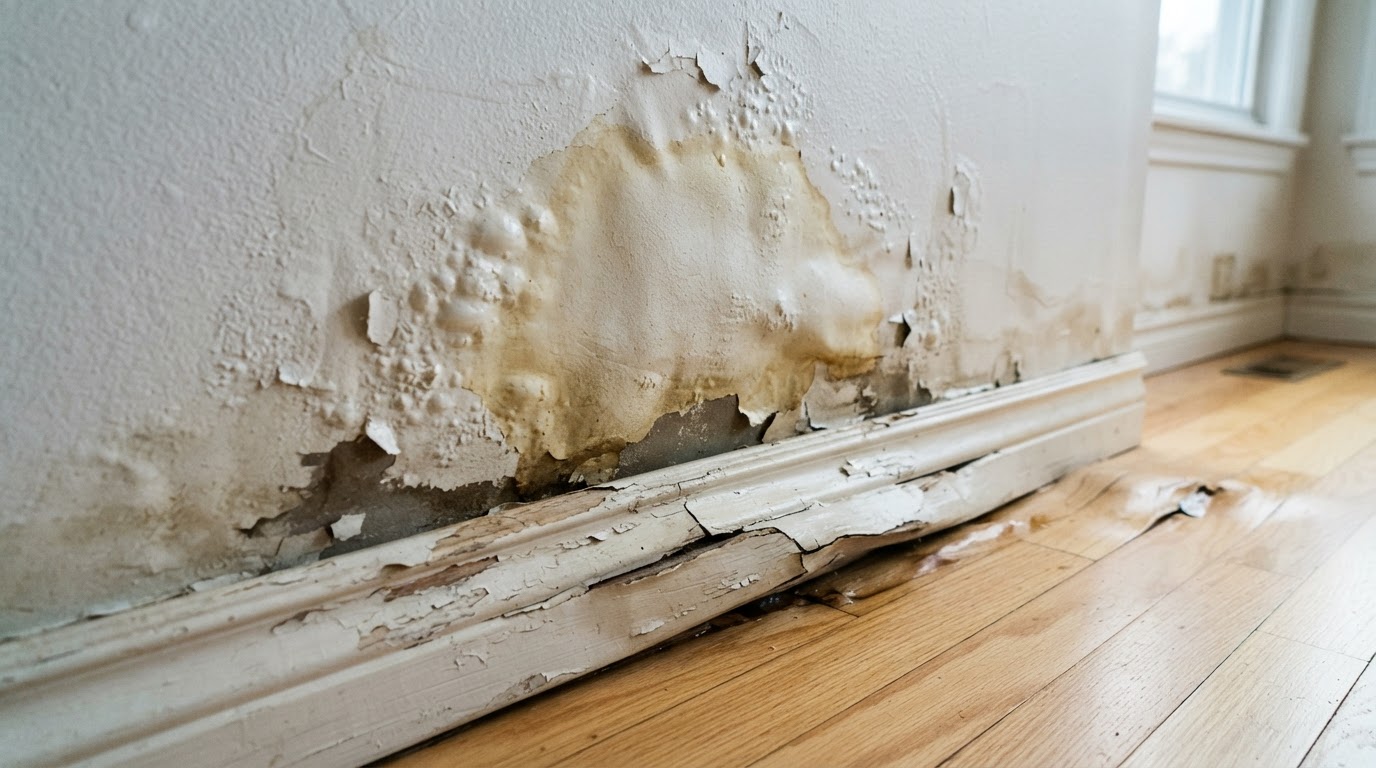
- 6.You can see staining, discoloration, or warping. Especially at baseboards, ceiling edges, or the toe-kick under cabinets.
- 7.The property has had mold before. A previously affected area that gets wet again deserves a closer look than a first-time leak.
If none of these apply (the spill was caught immediately, dried fast, and nothing smells or looks off), you may not need an inspection at all. We'd rather tell you that than sell you something.
Where Mold Can Hide After Water Damage
The EPA's own cleanup guidance flags hidden mold as a real category, and lists the places it turns up: the back side of drywall and wallpaper, the underside of carpet and pad, inside wall cavities, above ceiling tiles, and in ductwork.
In practice, after a leak, the areas worth attention are:
- •Behind drywall, particularly near plumbing walls
- •Under vinyl, laminate, or engineered flooring where water wicked under the seams
- •Beneath carpet and carpet padding
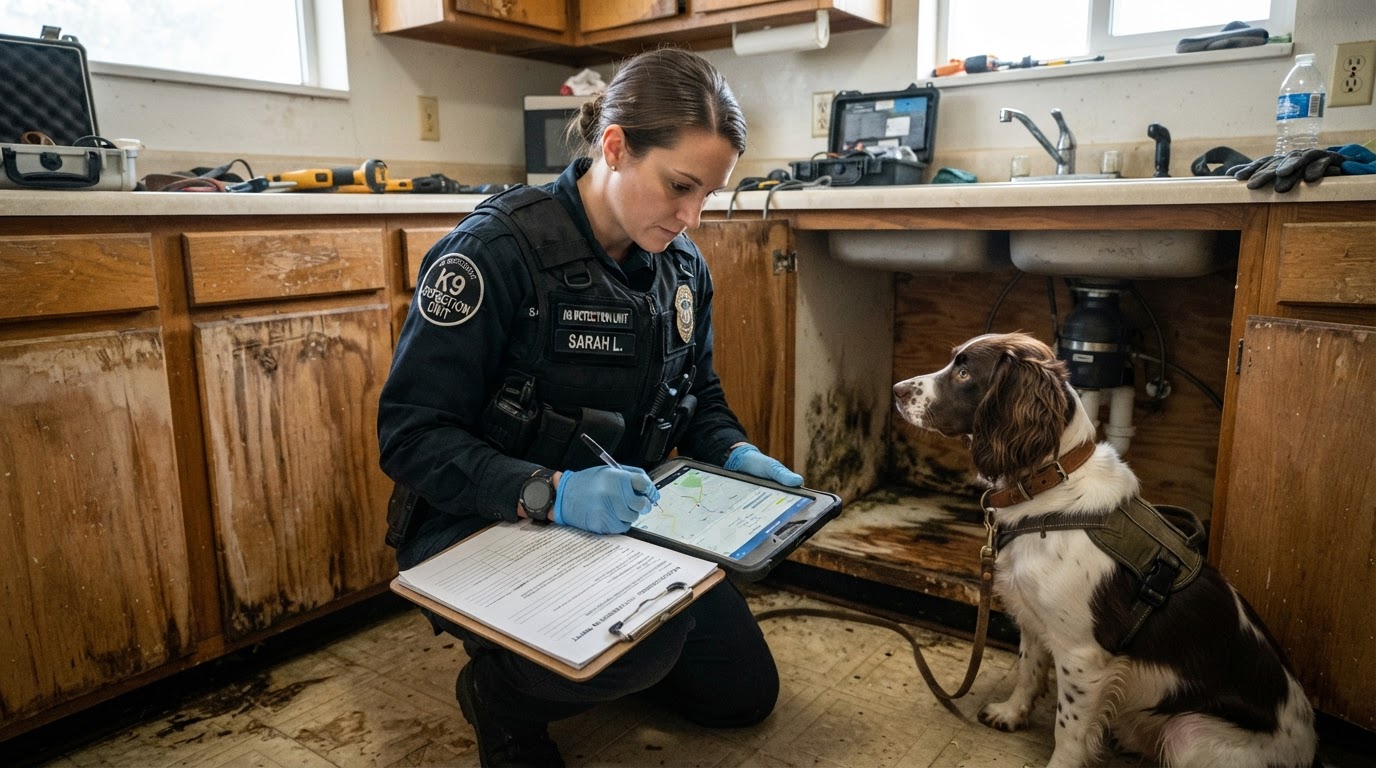
- •Inside sink and vanity cabinets
- •Ceilings below an upstairs bathroom or a past roof leak
- •Crawl spaces and subfloor framing
- •Window sills and framing where a past leak was repaired but never opened up
None of these are visible without either specialized detection or cutting something open. That's the whole problem a post-water-damage inspection is trying to solve.
What Water Damage Looks Like in Walla Walla Valley Homes
Walla Walla's housing runs from newer subdivisions to considerably older homes in and around the historic core, and the downtown commercial stock is older still: buildings that have been re-plumbed, re-roofed, and remodeled more than once over their lifetimes. Walla Walla has housing from multiple development eras, including historic late-19th- and early-20th-century neighborhoods, mid-century and postwar homes, and newer development. No authoritative local dataset was found showing that crawl spaces are more prevalent than basements, so that specific comparison should not be presented as a confirmed local fact.
Every remodel adds seams: a new fixture tied into old supply lines, a floor laid over an older floor, an addition meeting original framing. Those transitions are where slow leaks start and where dry-out equipment struggles to reach.
The same applies across the valley: College Place, Milton-Freewater just over the Oregon line, and the older properties around Waitsburg and Dayton. Seasonal swings between wet winters and hot, dry summers also change how fast materials release moisture. Climate data support the seasonal contrast: Walla Walla has cooler, wetter winter conditions and hot, comparatively dry summers. Actual indoor moisture and drying conditions still depend on the individual property, ventilation, drainage, leaks, building materials, and other site-specific factors.
Do You Need Mold Testing or Mold Detection?
These get used interchangeably, and they shouldn't be. They answer different questions.
| Method | Answers |
|---|---|
| Detection | Where should we look? (Canine scent detection, visual inspection, moisture meters) |
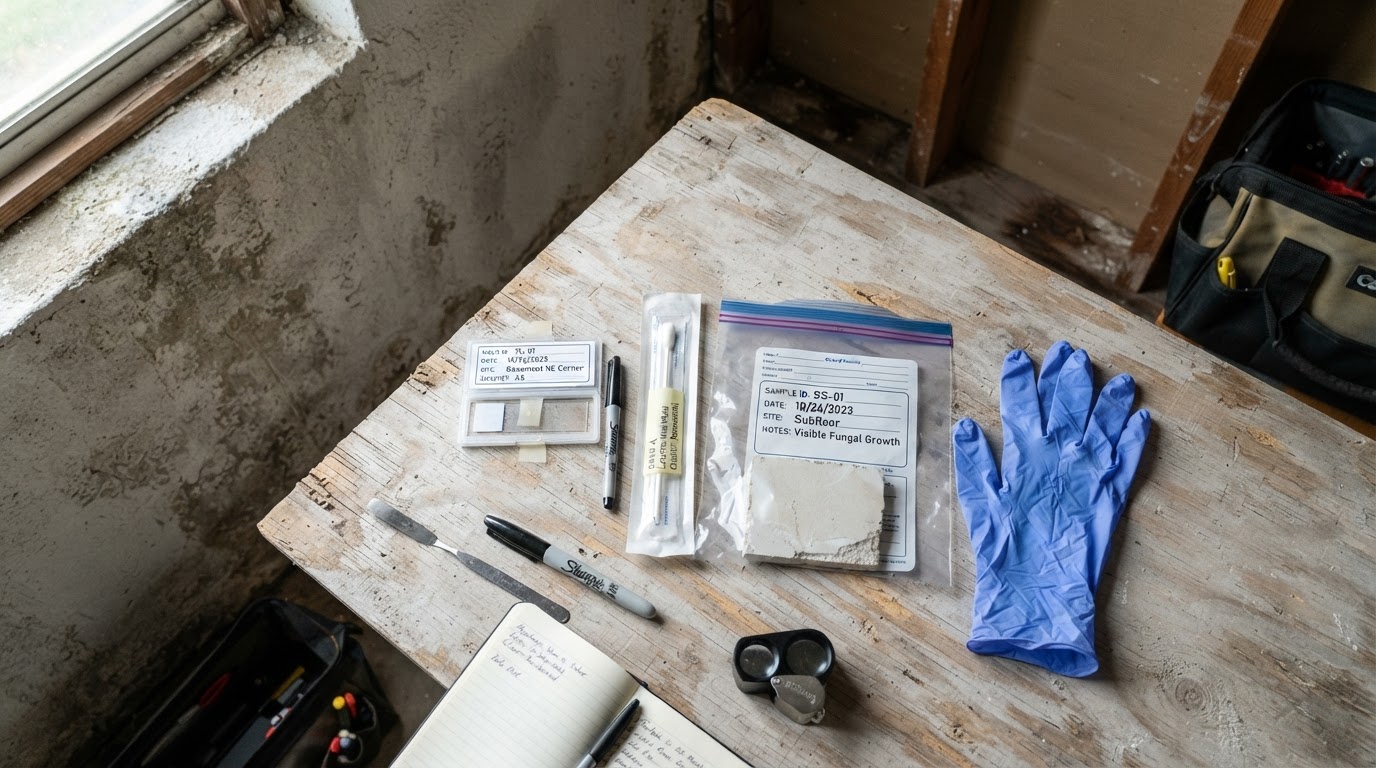
| Testing | What is it? (Surface samples, air samples, or mycotoxin analysis sent to a lab) |
After water damage, detection usually comes first. You need to narrow a whole house down to specific locations before it makes any sense to sample. Testing a random wall tells you very little; testing a wall a dog alerted on tells you something.
Neither replaces the other, and neither is remediation.
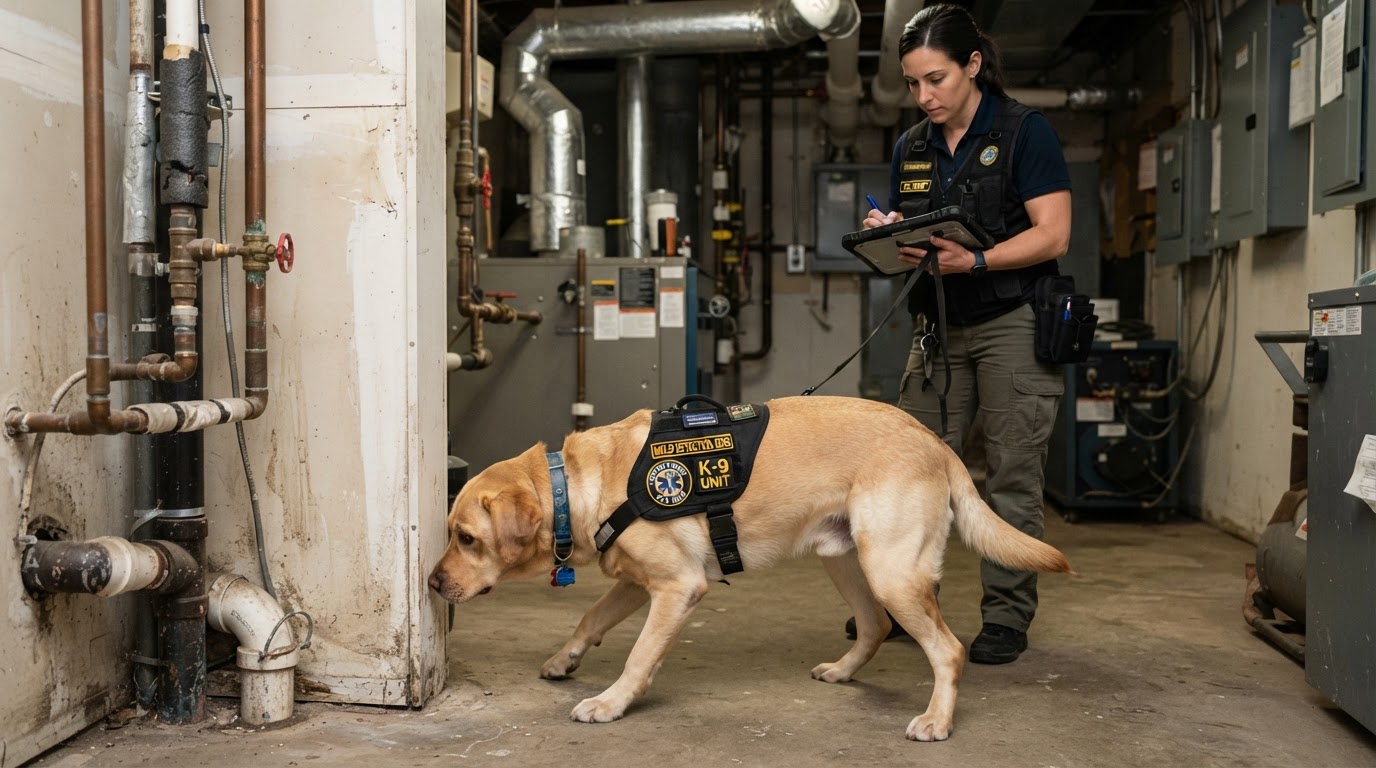
How K9 Mold Detection Can Help Locate Suspected Hidden Mold
This is where Canine Scent Inspections fits. We're a Walla Walla-based canine mold detection company, working with two trained detection dogs, Snow and Otis.
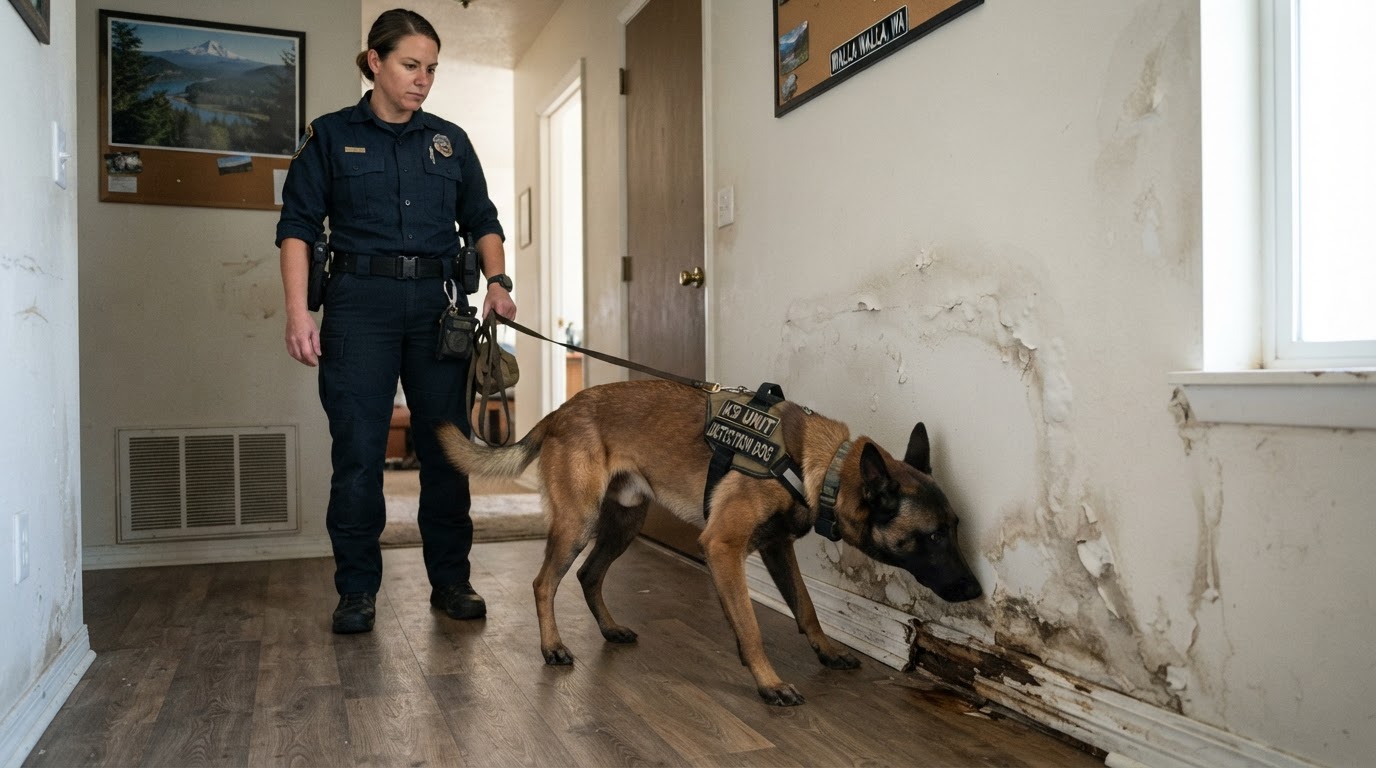
The dogs are trained to detect the scent of active mold growth, including in places a visual inspection can't reach: behind walls, under flooring, inside cabinetry and HVAC pathways. A person can only assess what's visible or accessible. Scent moves through the building envelope, so a dog can work an intact wall without anyone opening it.
Two honest limits, because they matter:
- •A canine alert indicates mold scent is present. It does not identify the species. That requires lab analysis.
- •No inspection method is perfect. An alert is a strong indicator that a specific area warrants a closer look or confirmation testing, not a verdict.
One structural point worth knowing: we don't perform remediation. We inspect and we test. That means there is no version of this where finding mold makes us more money on the removal work, because we don't do the removal work. The website states that Canine Scent Inspections provides remediation recommendations and can connect clients with trusted or certified remediation specialists. It does not describe a formally named remediation-contractor network, and clients may choose their own remediation company.
Had water damage in the last few months and something still doesn't smell right? Schedule a residential mold inspection and get a specific answer about specific locations.
What Happens During a Canine Scent Inspection
- 1.You schedule the inspection and tell us what happened: where the water came from, when, how it was dried. That history shapes where we work. The current FAQ states that appointments are typically available within 2-3 business days. For urgent situations such as recent water damage or time-sensitive real estate transactions, same-day or next-day service can often be accommodated.
- 2.The K9 team works the property. Handler and dog cover the affected areas systematically, including areas adjacent to the known damage.
- 3.Suspected locations are identified and documented. We mark where alerts occurred, not a vague "there's mold somewhere."
- 4.You receive the findings. Written documentation of what was inspected and what was indicated.
- 5.You decide next steps: confirmation testing, or bringing in a remediation contractor for the areas identified.
More detail on how inspections run is on our K9 mold detection service page, and common questions are answered in the mold detection FAQs.
What If Mold Is Found After Water Damage?
Finding it and fixing it are two separate jobs, and the second one has a prerequisite.
The EPA is unambiguous: you must fix the underlying water or moisture problem, or the mold comes back. Removing growth from a wall that's still getting wet is temporary work. So the sequence is: identify the location, correct the moisture source, then remediate the affected material. That last step goes to a remediation contractor, which is a different trade from ours.
If the affected area is small and the moisture source is already fixed, EPA guidance indicates many homeowners can handle limited cleanup themselves. Larger areas, contaminated water, or material inside wall cavities are professional jobs.
Should You Have the Property Checked Again After Remediation?
Often, yes. And this is the step people skip.
Remediation is judged on whether it achieved its goal, and the contractor who performed the work isn't the most neutral party to make that call. A post-remediation inspection is an independent check of the areas that were treated.
To be precise about what that can and can't establish: an inspection reports what was found in the areas inspected. It does not certify a building as mold-free, and anyone who offers you that certificate is overpromising.
How to Reduce the Risk of Future Mold Problems
Drawn from EPA, CDC, and Washington State DOH guidance:
- •Dry any wet material within 24-48 hours; that window is the whole ballgame
- •Keep indoor humidity below 60%, ideally 30-50%
- •Fix leaks at the source, not at the stain
- •Vent bathrooms, kitchens, and dryers to the outside
- •Keep crawl spaces ventilated and covered with a vapor barrier
- •Clear gutters and grade soil away from the foundation
- •Don't carpet bathrooms, basements, or areas that get wet
Schedule a Mold Inspection After Water Damage in Walla Walla
If you've had a leak, a flood, or an appliance failure and you're not confident everything dried, an inspection answers the question with specifics instead of guesswork.
Canine Scent Inspections serves Walla Walla, College Place, Milton-Freewater, Waitsburg, and Dayton. The current public phone number is (509) 204-4110. The official website does not publish business hours, so Monday-Friday, 9:00 AM-5:00 PM remains client-stated and should be confirmed before publication.
Request an inspection. Or if you're outside the valley, ask whether we serve your location.
*Sources: U.S. EPA: A Brief Guide to Mold, Moisture and Your Home | CDC: Mold | WA State Dept. of Health: Mold*
Frequently Asked Questions
Suspect Mold in Your Home or Property?
Schedule a non-invasive canine mold inspection with our K9 handlers today. Serving Walla Walla and Eastern Washington.
Related Articles
Mold Inspection for Property Managers: A Practical Checklist
Mold inspection for property managers, as a checklist: seasonal checks, tenant complaint steps, and when scheduled monitoring is worth it.
Which Mold Test Do You Need? Surface, Air, and Mycotoxin Testing Compared
Which mold test do you need? Compare surface testing, air sampling, and building mycotoxin testing, and learn when testing is not necessary.