How Much Does a Mold Inspection Cost in Walla Walla, WA?
Maybe you caught a musty smell in the hallway that won't go away. Maybe a home inspector flagged moisture under the house and now you're under a closing deadline. Either way, you're trying to figure out what this is going to cost before you pick up the phone.
That's a fair question, and it's harder to answer online than it should be. Mold inspection cost in Walla Walla, WA depends on real variables: how big the property is, how much of it needs to be covered, whether you need lab testing on top of detection, and how far the inspector has to drive. This article walks through each of those so you can estimate what your situation should run, and decide whether an inspection is worth booking at all.
What a Mold Inspection Costs in Walla Walla
Canine Scent Inspections publishes current pricing on its mold detection services page. Here's the structure:
| Service | Current Price |
|---|---|
| Residential canine mold inspection | $650 for under 1,500 sq ft; tiered by size up to $2,250 for 5,000-6,000 sq ft; over 6,000 sq ft: contact for quote |
| Commercial canine mold inspection | $650-$2,250 by square footage; over 6,000 sq ft or additional complexity: contact for quote |
| Pre-remediation inspection | Same as standard residential/commercial rates based on square footage |
| Post-remediation verification | Stand-alone clearance: 50% of original inspection rate; full-property reinspection: 75% of original inspection rate |
| Surface or building testing (add-on) | Contact for pricing; no public add-on price is listed |
| Monthly / biannual / annual monitoring | Monthly: 30% off standard rates; biannual: 20% off; annual: 10% off |
Standard residential and commercial inspection pricing is tiered by square footage. Published rates start at $650 for properties under 1,500 sq ft and increase by size through $2,250 for 5,000-6,000 sq ft; properties over 6,000 sq ft require a custom quote. Commercial pricing may also vary with property complexity.
Prices change, so treat the services page as the source of truth and this article as the explanation of why the number looks the way it does.
What Affects Mold Inspection Cost in Walla Walla, WA
Two homes on the same street can get different quotes. These are the reasons why.
Property size. More square footage means more ground to cover and more time on site. A 1,200-square-foot bungalow and a 3,500-square-foot house with a finished basement are not the same job.
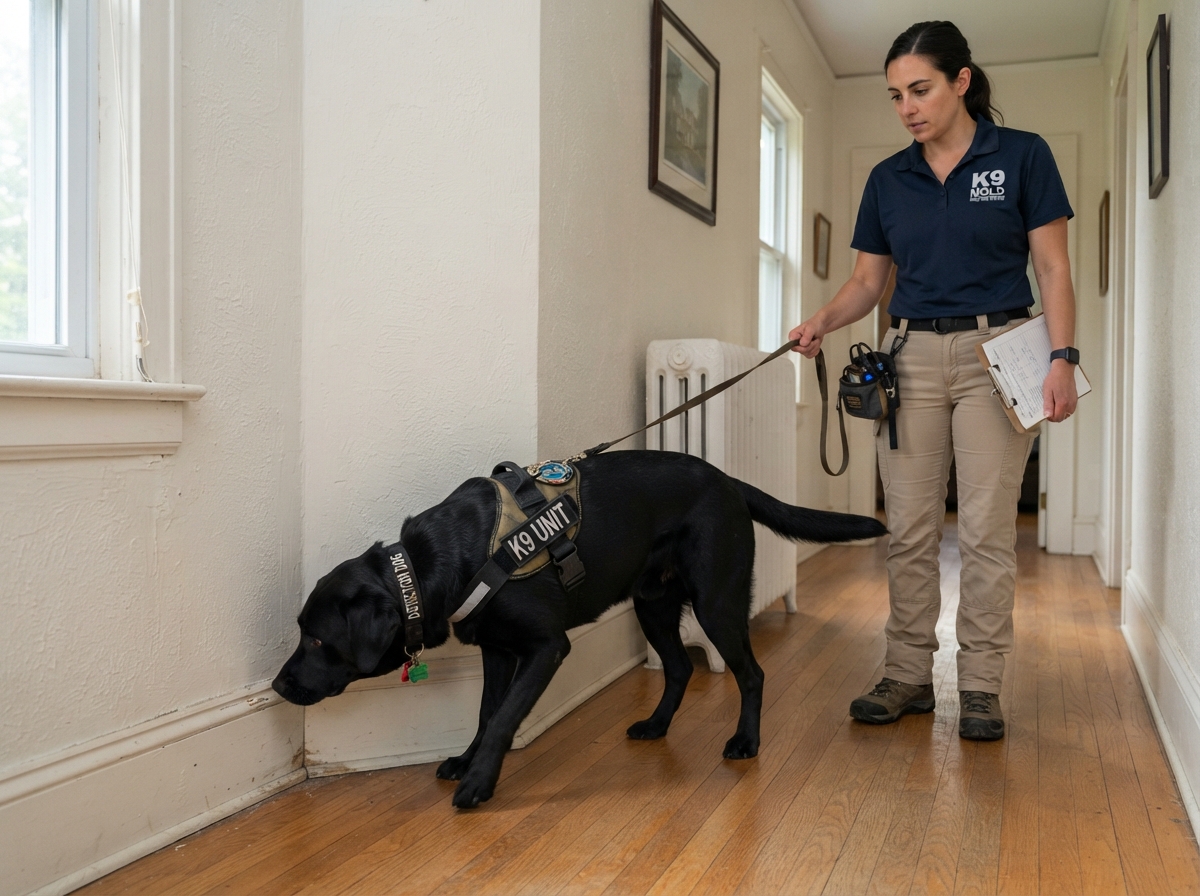
Residential vs. commercial. Commercial buildings usually involve larger footprints, more mechanical systems, tenant coordination, and documentation that a property owner may need for a lease dispute or an insurance file. That work is typically quoted per property rather than priced off a standard rate.
Scope of the inspection. A targeted inspection of one bathroom and the crawl space beneath it costs less than a whole-property sweep. If you already know where the problem probably is, say so when you call. It may lower your quote.
Detection versus testing. Locating a scent source and lab-analyzing a sample are two different services with two different costs. More on that below, because this is where most people misjudge their budget.
Re-inspection. Post-remediation verification is a separate visit after a remediation contractor has finished. If you're planning remediation, budget for two appointments, not one.
Monitoring. Recurring monthly, biannual, or annual monitoring is priced differently from a one-time inspection, usually per visit under a plan. It's aimed at property managers, vacation rental owners, and households that want ongoing checks rather than a single snapshot.
Travel. Distance matters, which brings us to the local part.
Where You Are in the Valley Changes the Number
Walla Walla is the county seat of Walla Walla County, and the properties here are genuinely varied: an older downtown commercial building, a mid-century home near the college, and a newer build on the edge of town all present different inspection conditions and different amounts of work.
Canine Scent Inspections is based in Walla Walla, so routine local service covers the city plus the surrounding valley towns: College Place next door, Milton-Freewater just across the Oregon line, and Waitsburg and Dayton up the highway. If you're in that radius, travel generally isn't a significant factor in your quote. The published travel policy is distance-based rather than town-based: the first 30 miles are free, then travel is charged at $0.75 per mile within Washington and $1.00 per mile out of state.
The Tri-Cities (Kennewick, Pasco, and Richland) sit roughly 45 to 55 minutes out. That's a regularly served market, but it's a longer drive and a larger, newer-construction housing stock than Walla Walla's. If you're searching for a mold inspection near me from Kennewick or Richland, ask about scheduling and travel when you call rather than assuming Walla Walla pricing applies unchanged. The same published distance-based policy applies: the first 30 miles are free, then travel is $0.75 per mile within Washington. Route coordination may reduce individual travel costs when inspections can be combined in the same area.
What a Professional Mold Inspection Includes
Ask any provider this before you compare prices, because "inspection" covers a wide range of work.
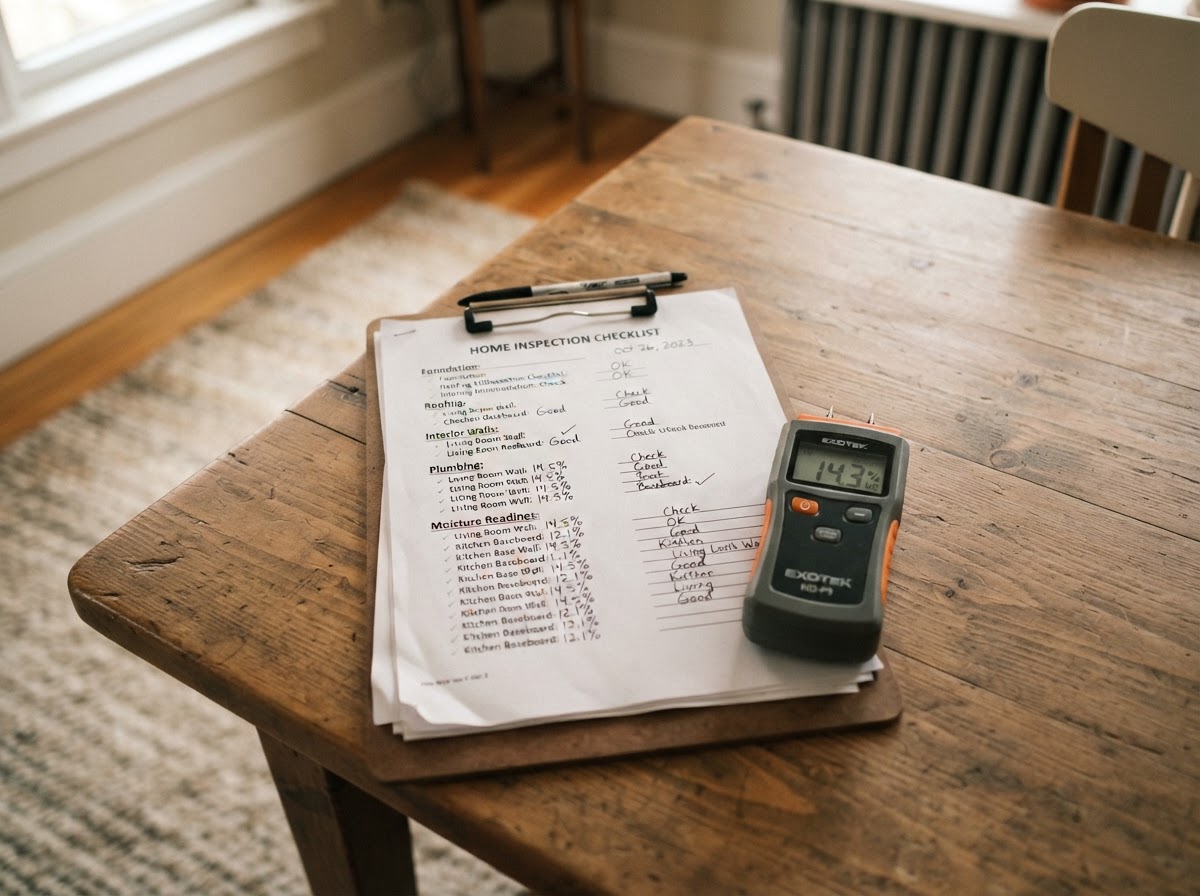
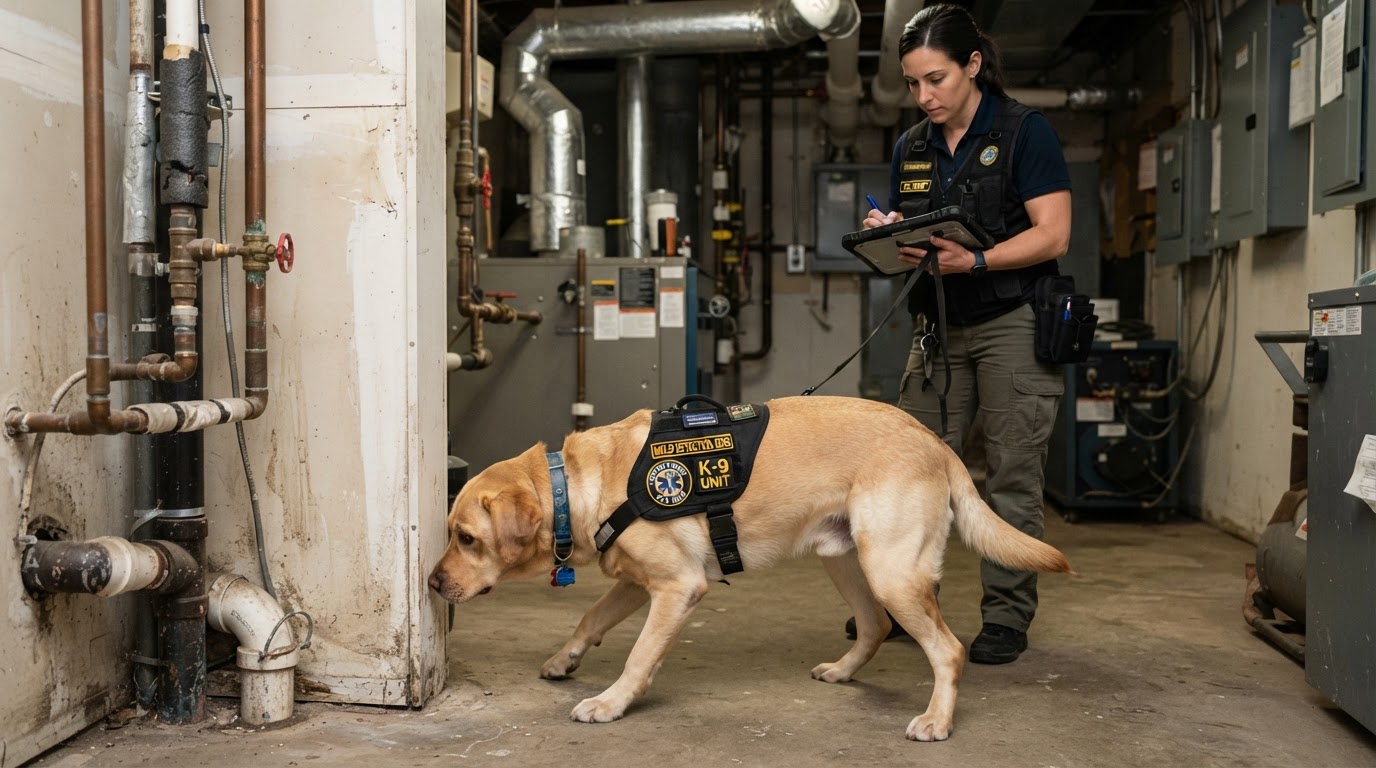
With Canine Scent Inspections, a residential inspection means a trained detection dog, Snow or Otis, worked through the property with a handler, covering areas a visual check can't reach without opening them up. Behind walls, under flooring, inside HVAC runs. The dog indicates where the scent of active mold growth is coming from.
You then receive documented findings: what was inspected, where alerts occurred, and what the recommended next steps are. If remediation looks warranted, you get a referral to remediation professionals. Canine Scent Inspections doesn't perform remediation itself. The current website confirms that clients receive a detailed written report, but it does not publish a specific report-delivery turnaround time. Client confirmation is still required before stating a same-day, 24-hour, or other delivery window.
Worth stating plainly: a report says what was found in the areas inspected. No honest inspector will certify a building as "mold-free."
Detection and Testing Are Two Different Line Items
This is the distinction that trips up most budgets.
Canine detection answers where. The dog indicates the location of a mold scent source. It does not tell you what species it is or how much is there. A dog cannot identify a mold type, and any company claiming otherwise is overselling.
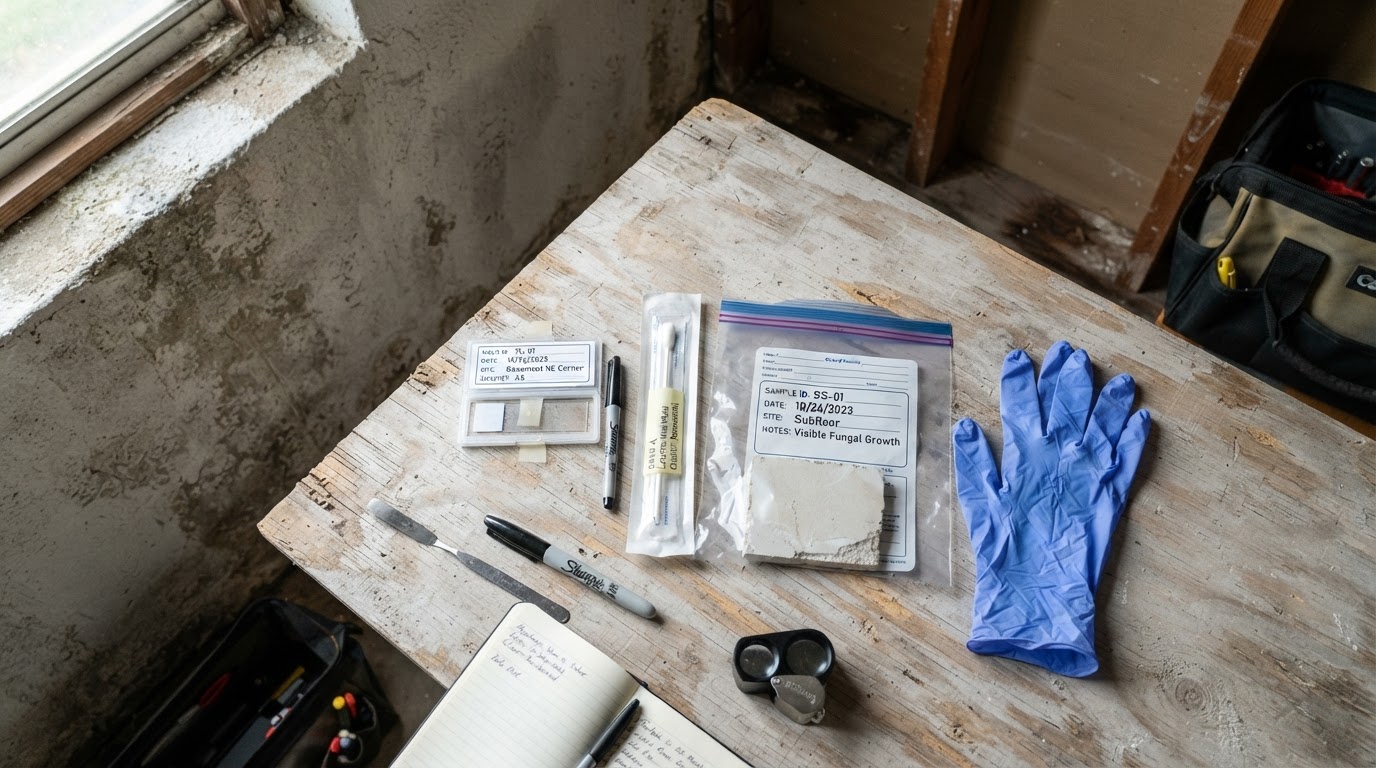
Lab testing answers what. Surface samples, air sampling, or building mycotoxin analysis go to a laboratory for identification. That's a separate service with a separate cost. US BioTek is the publicly named partner for advanced mold and mycotoxin laboratory testing. RealTime Laboratories is named for the veterinary urine mycotoxin panel. The specific laboratory used for surface or air samples is not publicly identified.
Some situations only need detection: you smell something, you want to know where it's coming from, and you're going to remediate regardless. Other situations need both, particularly insurance claims, tenant disputes, or when a physician has asked a household about environmental exposure. You can see the full range of testing and detection options and decide which layer you actually need.
Why Finding Hidden Mold First Protects Your Remediation Budget
Here's the part that changes the math on whether an inspection is worth it.
Remediation is priced by the area that gets opened up and treated. If nobody knows where the mold actually is, that work starts with exploratory demolition, cutting into drywall or pulling flooring to find the source. That's billable work that may or may not land in the right spot.
The EPA's guidance is consistent on the underlying point: mold grows where moisture is, and moisture problems are frequently hidden from view inside building assemblies. Narrowing the search before remediation begins is what keeps a job targeted instead of speculative.
There's a second reason this matters here. Because Canine Scent Inspections doesn't do remediation, it has no financial reason to find mold in your house. The competitors reviewed most positively in this market are the ones willing to tell a client they don't need the work. That independence is worth asking about with any provider you consider.
Ready to find out where the problem is? Schedule a residential mold inspection in Walla Walla and get a documented answer before anyone starts cutting.
What Happens After Potential Mold Is Located
Knowing where a scent source is doesn't automatically mean tearing into a wall. What happens next depends on what you're trying to accomplish.
If you want confirmation of what's there, the next step is testing: a surface sample or building analysis sent to a lab. If you're moving straight to repair, the findings go to a remediation contractor so their scope starts at the right place instead of an educated guess. Canine Scent Inspections can point you toward remediation professionals but doesn't perform that work, so the referral isn't a handoff to an in-house crew.
If remediation happens, a post-remediation inspection is a separate follow-up visit that documents conditions in the treated areas afterward. Property owners dealing with tenants, insurers, or a sale often want that record. And if the underlying issue is recurring moisture rather than a one-time event, monthly, biannual, or annual monitoring is usually a better fit than repeating one-off inspections. That's the structure most property managers and vacation rental owners end up on.
When a Mold Inspection Is Worth It, and When It Isn't
It depends on your situation, so here it is by situation.
Probably worth it: you have a persistent musty odor with no visible source; you've had a leak, a burst pipe, or past flooding; you're under contract on a home and the inspection flagged moisture; you're selling and don't want a surprise mid-transaction; you've had remediation done and want independent verification it worked; or you have recurring moisture you can't trace.
Probably not yet: you can see the mold, you know exactly where it came from, it's a small area on a hard surface, and you're prepared to handle it. The EPA offers guidance on small-area cleanup for exactly this case. Paying to locate something already in plain sight isn't a good use of money.
Worth a phone call before deciding: you're worried about health effects. The CDC and EPA both publish general guidance on mold exposure, but no inspection company can tell you whether mold is causing symptoms. That's a conversation for your doctor. An inspection tells you what's in the building, not what's happening in your body.
Mold Inspection Services in Walla Walla
Canine Scent Inspections works out of Walla Walla, serving the valley and the Tri-Cities with residential and commercial canine mold detection, pre-remediation inspections, post-remediation verification, and recurring monitoring programs. Snow and Otis are the detection dogs; the mold inspection FAQs page covers how a working inspection actually goes if you've never had one.
Canine detection isn't something you'll find from a conventional home inspector in this region. Most local inspectors are looking for what's visible and reachable. Neither approach replaces the other, and there are plenty of situations where a standard home inspection is the right call.
Schedule a Mold Inspection in Walla Walla
If you want a price for your specific property, the fastest route is to describe the situation: square footage, what you're noticing, and whether there's a deadline involved.
Contact Canine Scent Inspections for a quote, or ask whether your location is covered if you're outside the immediate valley. Office hours are Monday through Friday, 9:00 AM to 5:00 PM.
*Sources: U.S. EPA: Mold | U.S. EPA: A Brief Guide to Mold, Moisture and Your Home | CDC: Mold | WA State Dept. of Health: Mold*
Frequently Asked Questions
Suspect Mold in Your Home or Property?
Schedule a non-invasive canine mold inspection with our K9 handlers today. Serving Walla Walla and Eastern Washington.
Related Articles
Mold Inspection for Property Managers: A Practical Checklist
Mold inspection for property managers, as a checklist: seasonal checks, tenant complaint steps, and when scheduled monitoring is worth it.
Which Mold Test Do You Need? Surface, Air, and Mycotoxin Testing Compared
Which mold test do you need? Compare surface testing, air sampling, and building mycotoxin testing, and learn when testing is not necessary.