Why Traditional Mold Air Tests Miss Hidden Mold Behind Drywall
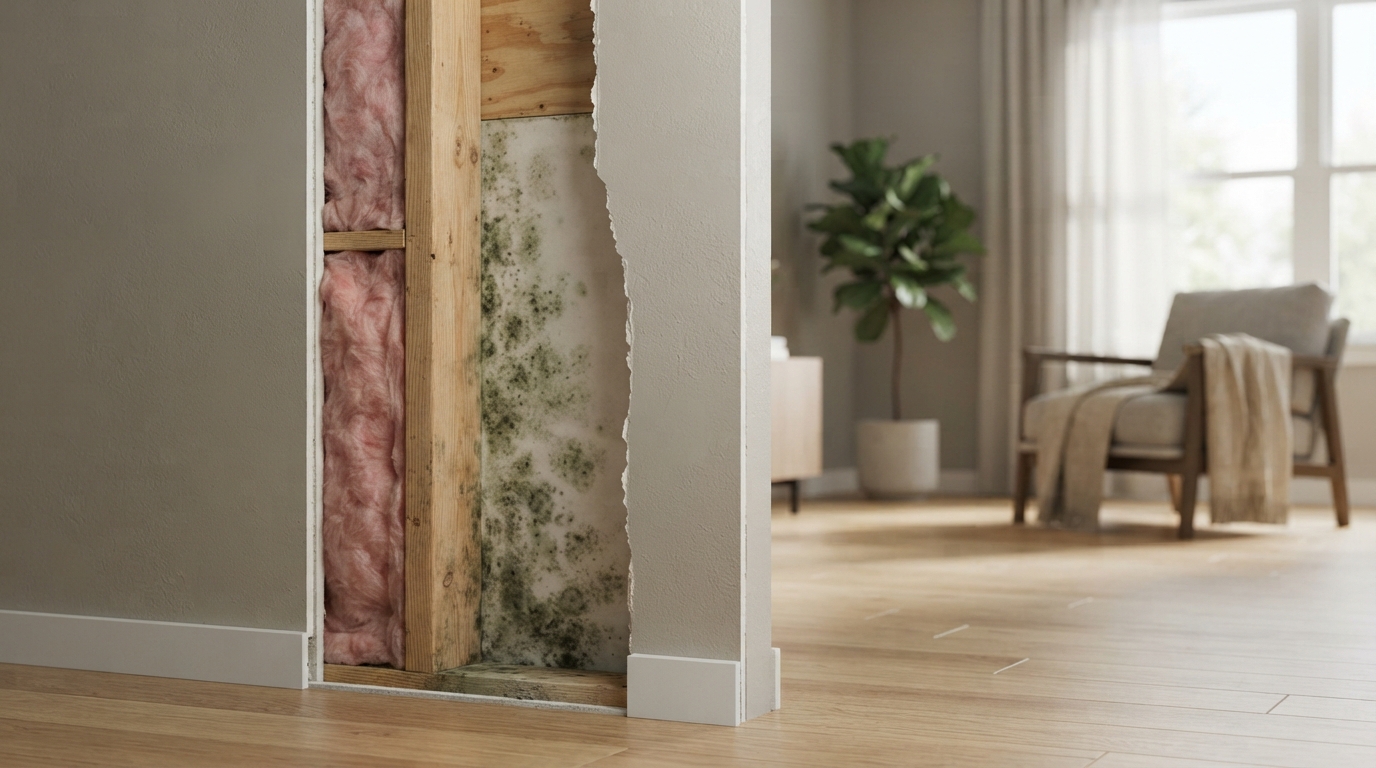
When homeowners suspect mold due to unexplained health symptoms or past plumbing leaks, they often start by ordering standard air spore trap tests. While air tests provide a baseline snapshot of floating spores in a room, they frequently yield false negatives when mold is sealed inside drywall, under subflooring, or behind tiled showers.
The fundamental limitation of air sampling is that it only captures what is airborne during a 5-minute collection window. Mold growing inside a sealed wall cavity may not release spores into the room air at levels detectable by the pump. The spore trap sits in the middle of the room, pulling air from its immediate surroundings, while the actual mold colony remains hidden behind multiple layers of building material.
This is not a flaw in the testing equipment. Air spore traps are designed to capture airborne particulates, and they do that job well. The problem is one of application: air sampling tells you what is floating in the room right now, not what is growing behind the walls. A mold colony behind a bathroom wall can grow for months or years without ever showing up on an air sample.
Thermal imaging has similar limitations. Infrared cameras detect temperature differences caused by active moisture. If a leak has dried out between rainstorms or plumbing uses, the camera shows nothing, even though active mold continues to emit MVOCs that the dogs can detect.
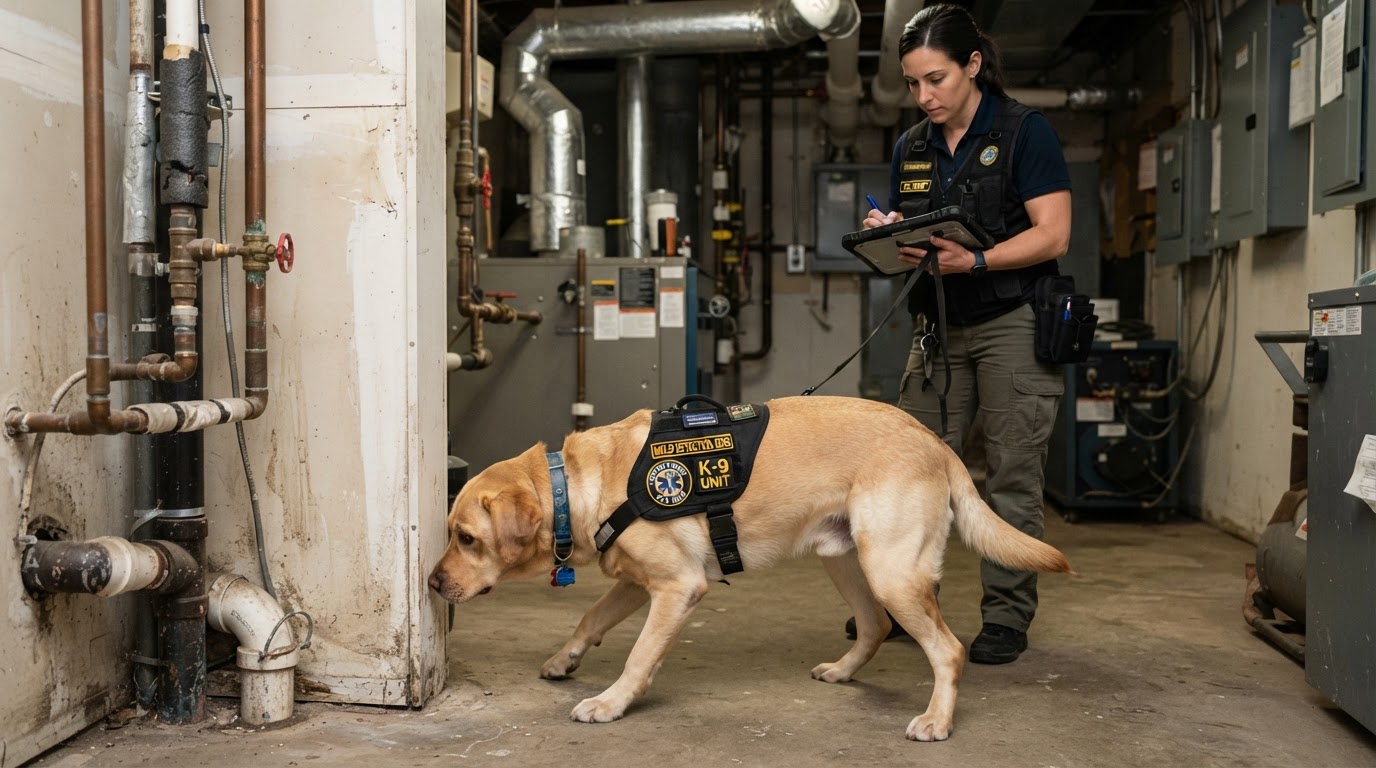
This is where canine scent detection fills the gap. Our detection dogs are trained to alert to the microbial volatile organic compounds (MVOCs) that active mold colonies produce. Odor migrates out of wall cavities, under flooring, and through building assemblies via seams, outlets, and baseboards, reaching the dog's nose even when the mold itself is completely sealed inside a wall cavity. The dog does not need the mold to be airborne; it needs only the scent to be present.
When the dog alerts, the handler verifies the finding with thermal imaging and moisture meters, then maps the area of concern for your remediation contractor. This targeted approach helps your contractor open a small section of drywall instead of tearing down an entire wall based on guesswork.
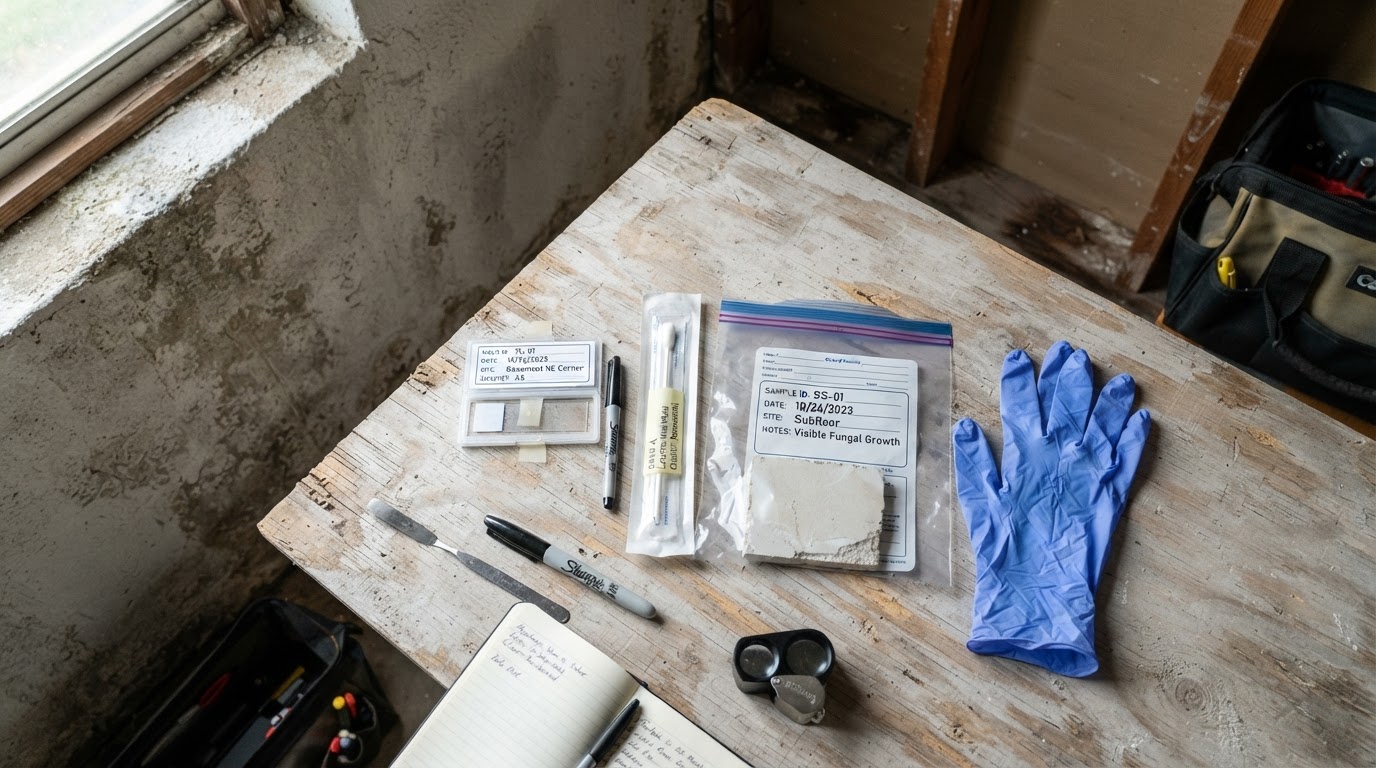
For the most complete diagnostic picture, we recommend combining canine detection with lab testing. The dog helps narrow where to test; surface testing or EMMA panels tell you what species and mycotoxins are present. Together, they provide the clarity that air sampling alone cannot deliver.
Suspect Mold in Your Home or Property?
Schedule a non-invasive canine mold inspection with our K9 handlers today. Serving Walla Walla and Eastern Washington.
Related Articles
Mold Inspection for Property Managers: A Practical Checklist
Mold inspection for property managers, as a checklist: seasonal checks, tenant complaint steps, and when scheduled monitoring is worth it.
Which Mold Test Do You Need? Surface, Air, and Mycotoxin Testing Compared
Which mold test do you need? Compare surface testing, air sampling, and building mycotoxin testing, and learn when testing is not necessary.