Canine Mold Detection vs. Traditional Home Inspection: What Each One Actually Finds
If you've had a home inspection and still can't shake the feeling that something's off, you're not imagining it. A standard home inspection and a canine mold inspection are built to catch different things, and knowing the difference matters before you spend money on either one.
What a Standard Home Inspection Actually Checks for Mold
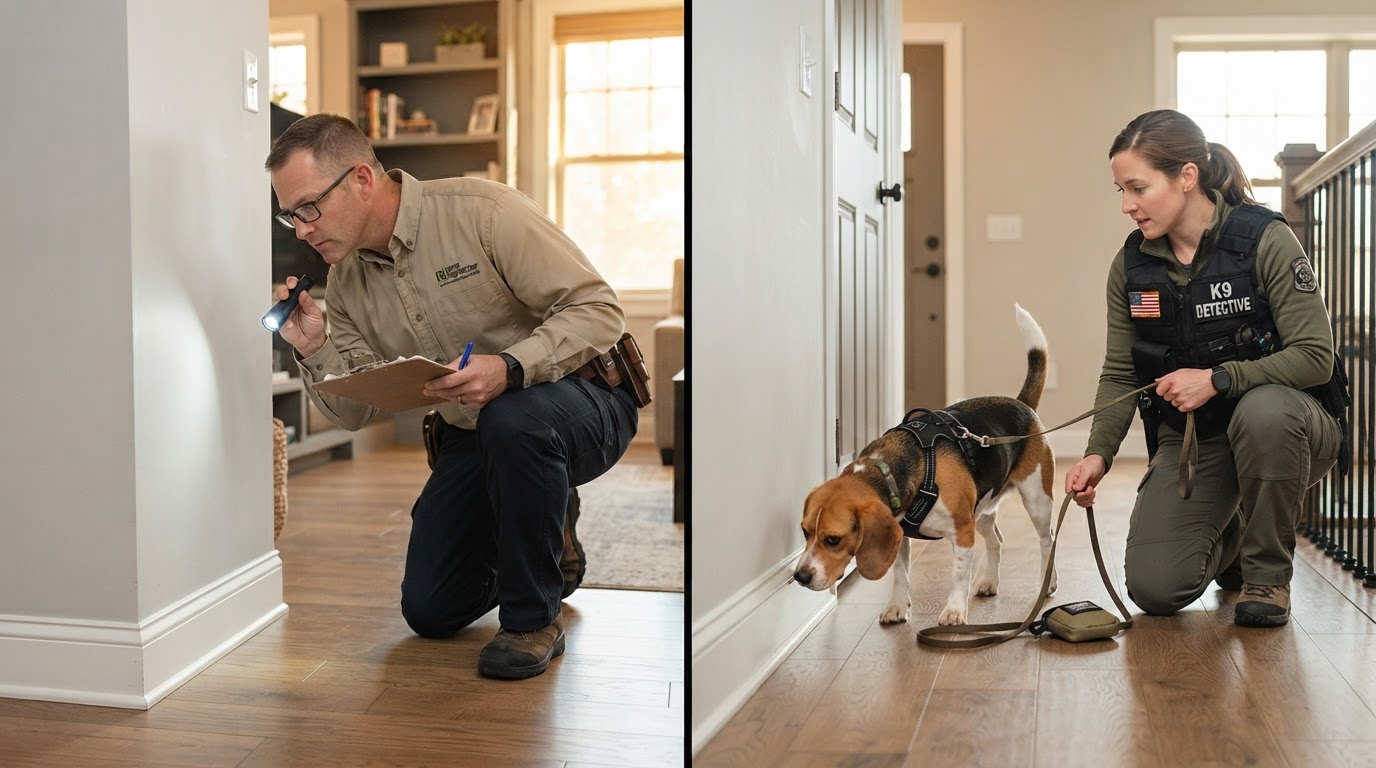
A general home inspector's job is broad: roof, foundation, electrical, plumbing, and dozens of other systems in a few hours. Mold usually gets a visual check as part of that walkthrough, not a dedicated search.
That means an inspector will typically flag:
- •Visible discoloration, staining, or fuzzy growth on surfaces they can see and reach
- •Obvious past water damage, warping, or bubbling paint
- •Musty odors strong enough to notice during a walkthrough
- •Moisture readings in accessible areas, if the inspector carries a moisture meter
What a standard inspection generally can't do is open up a wall, pull back flooring, or climb fully into a crawl space or attic void. If mold is growing behind a shower surround, under old flooring, or inside a wall cavity from a slow leak, a visual inspection has no way to see it. That's not a knock on home inspectors. It's the nature of a visual method: it can only find what's in front of it.
How Canine Mold Detection Works Differently
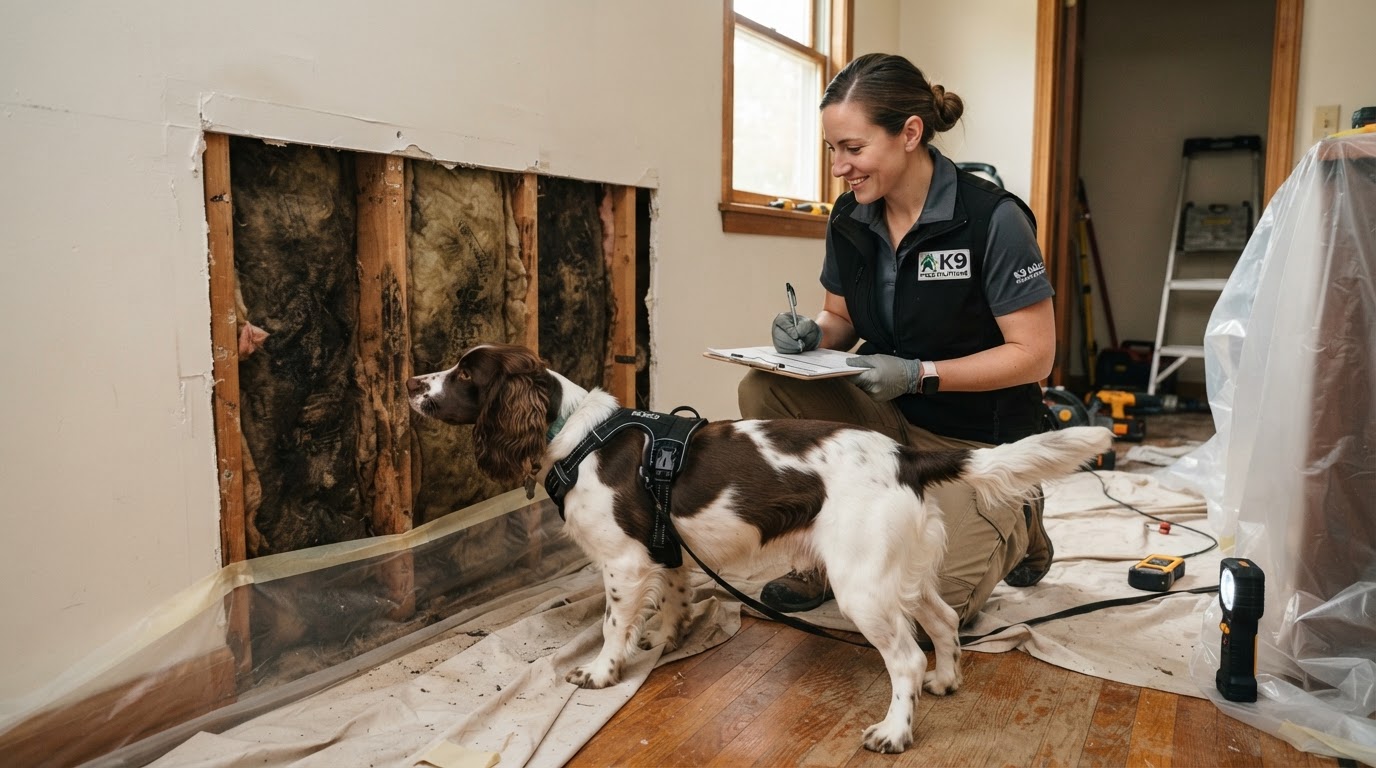
A trained detection dog isn't looking at anything. It's following scent, and scent moves through gaps a person can't see through: gaps around baseboards, HVAC returns, plumbing penetrations, and framing cavities. That's the core difference between the two methods. One is a visual search of accessible surfaces. The other is a scent search that can pick up on sources behind walls, under flooring, and inside HVAC systems, places a visual check can't access without opening them up.
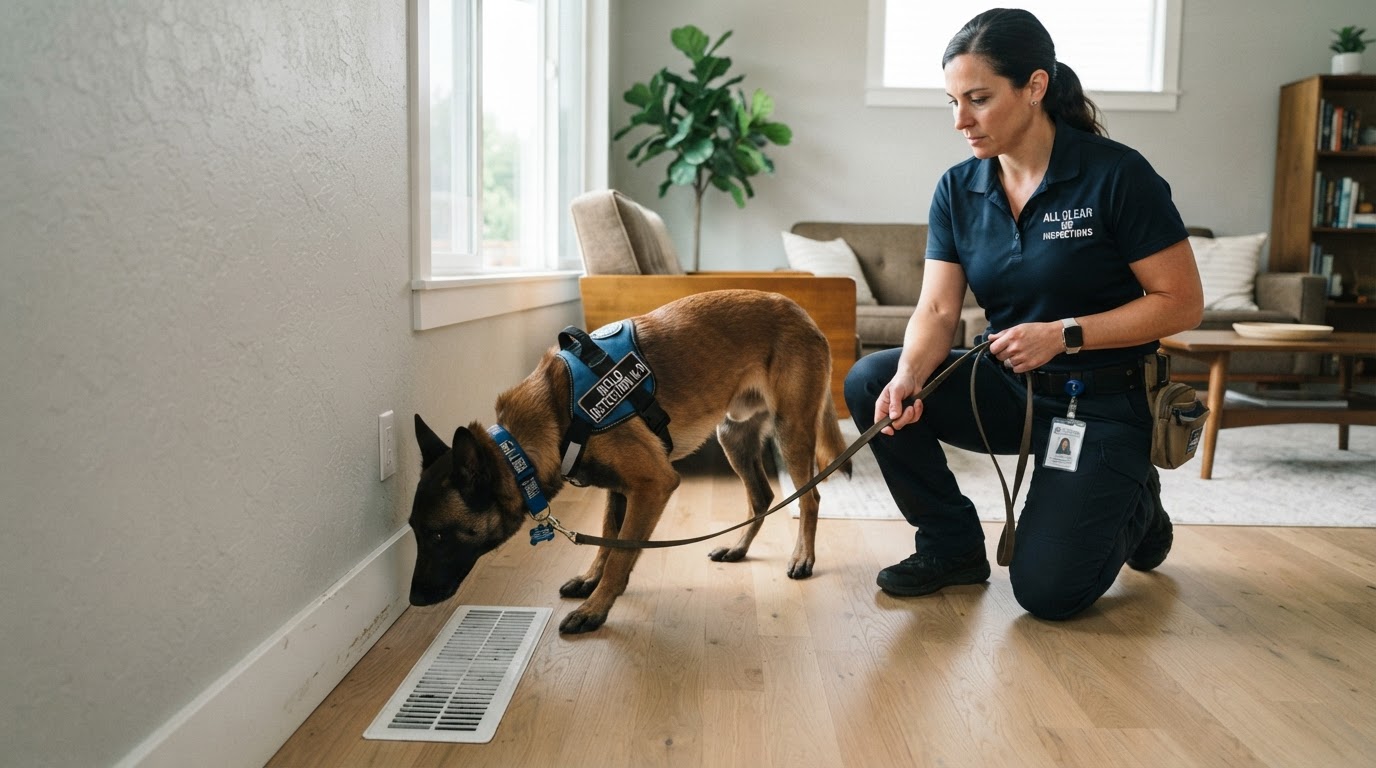
In practice, that means a dog can indicate on an area that looks completely normal to the eye, because the growth itself is somewhere the eye will never see it without demolition.
It's worth being precise about what that indication means, because this is where marketing in this industry tends to overstate things. A canine alert tells you where to look. It does not identify the exact species of mold, and it isn't a lab result. Canine detection narrows down where to look. Lab testing identifies what is there. The two are a sequence, not substitutes for each other.
What Each Method Can't Do
Being honest about limits is part of choosing the right service, so here's the other side of both methods.
Traditional inspection limits: can't detect what's hidden behind finished surfaces, relies on the inspector's visual judgment and available light, and a clean visual check on inspection day doesn't rule out a hidden source that isn't actively visible yet.
Canine detection limits: a dog indicates on scent, not on a lab-confirmed species or a health risk level. No inspection method, canine or visual, is perfect, and a canine alert is a strong indicator that warrants confirmation testing, not a final diagnosis of the problem. Weather, HVAC airflow, and recent cleaning products can all affect a working session, which is why a good handler will tell you when conditions weren't ideal rather than push through them.
Neither method should claim to catch everything. A house that passes both a visual inspection and a canine sweep with no findings is in genuinely good shape. A house that fails either one needs a next step, not a certificate declaring it clear. No inspection, canine or otherwise, can call a building "mold-free." The honest statement is narrower and more useful: no mold was detected in the areas inspected, using the method used, on that day.
When You Want Both
The two methods are strongest together, and for a few common situations, that combination is worth the extra step:
- •You have a musty smell but nothing visible. This is the single most common reason people call a canine inspector after a standard inspection came back clean. The smell is real information. A dog can often confirm where it's coming from when a visual check can't.
- •You're buying a house with a known moisture history. A past leak, a slab that's been re-sealed, or a basement that's been "freshened up" right before listing are all situations where a scent-based check adds real information a walkthrough won't surface.
- •You manage a commercial property with a tenant complaint. Liability and lease obligations mean you need a defensible answer, not a guess. A canine sweep followed by confirmation testing, if warranted, gives you documentation for both.
- •You've already had remediation done and want to confirm it worked. Post-remediation verification is exactly this pairing: a scent sweep to check for anything remaining, with testing available if the dog indicates.
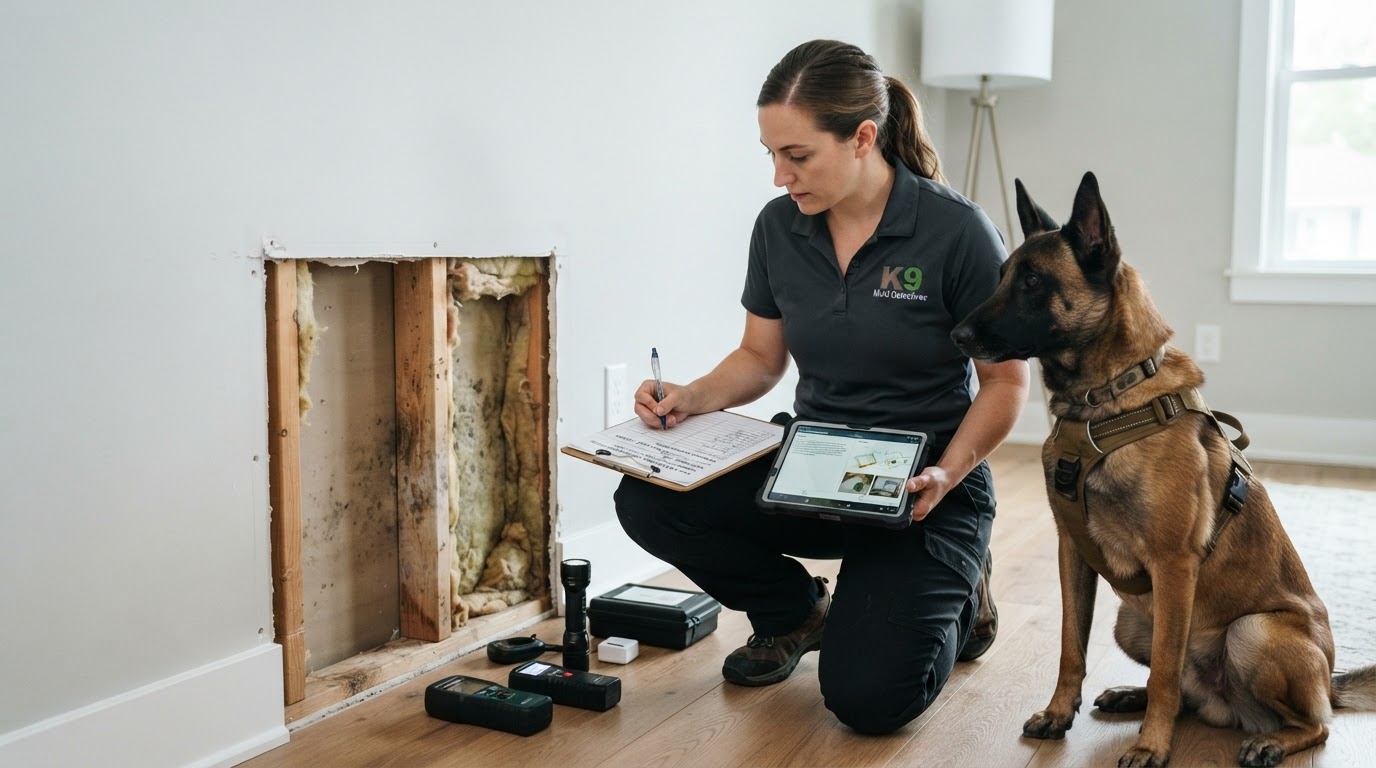
If a dog does indicate on an area, the responsible next step is confirmation, not demolition. That's typically surface sampling or air sampling sent to a lab, which identifies what's actually there so you know whether you're looking at a minor, easily addressed spot or something that needs a remediation contractor.
Why This Combination Makes Sense in the Walla Walla Valley and Tri-Cities
Canine mold detection isn't something you'll find from a conventional inspector in this region right now. Walla Walla's older downtown commercial buildings and long-established residential stock mean a lot of local properties have had decades of small plumbing fixes, roof patches, and remodels, each one a potential hidden moisture event that a walkthrough today won't catch. The Tri-Cities market, with its faster pace of new construction and a larger professional and office footprint, sees a different pattern: newer buildings with tighter envelopes, where a hidden leak can sit undetected behind a wall for longer before anyone notices a smell.
In both markets, the same principle applies. A visual inspection and a canine sweep are answering different questions, and a property that's been through both has actually been checked, not just glanced at.
One more thing worth knowing before you call anyone: a canine inspection company that doesn't also perform remediation has no financial incentive to find a problem. That's worth asking any provider you're comparing, canine or traditional. Ask whether the same company doing your inspection also does the repair work. If the answer is yes, ask how they keep that separate.
Not sure whether a canine inspection makes sense for your situation? Schedule a residential inspection and we'll walk you through what we'd actually be checking for your property.
What Happens After a Canine Alert
If Snow or Otis indicates on an area during your inspection, here's the sequence that follows: the handler documents exactly where and notes the conditions of the session, you get a plain explanation of what the indication does and doesn't tell you, and if confirmation makes sense, surface or air sampling can be arranged through our testing service so you have a lab result, not just a scent-based indication, to act on. From there, the decision about remediation is yours and your contractor's. We don't perform remediation, so that recommendation comes with no incentive attached either way.
Ready to see what each method would actually catch on your property? Schedule a residential mold inspection in Walla Walla, or ask whether we serve your commercial property or location.
*Sources: U.S. EPA: Mold | CDC: Mold*
Not Medical Advice: This article is for general informational purposes about mold detection and inspection services. It is not medical advice. If you have health concerns you believe may be related to mold exposure, the CDC and EPA note that mold exposure can cause symptoms in some people, and a physician is the right resource to evaluate any symptoms you're experiencing.
Frequently Asked Questions
Suspect Mold in Your Home or Property?
Schedule a non-invasive canine mold inspection with our K9 handlers today. Serving Walla Walla and Eastern Washington.
Related Articles

Fall Mold Risk in Walla Walla Homes: What Changes When You Close the House Up
Fall mold risk in Walla Walla homes shows up as a musty smell when the furnace first runs. Here's what changes in September, and when to look closer.
How Do I Know If Mold Remediation Worked?
How do I know if mold remediation worked? What verification should cover, when to schedule it, and what to do if the smell comes back.