Canine Mold Detection in Washington: What It Is and How It Works
There's a smell in the house you can't trace. Or a pipe let go under the kitchen three winters ago, it got dried out and patched, and something about it has never sat right with you.
Then somebody mentions there's an outfit that brings in dogs to find mold, and you think: come on.
That's the right instinct. Canine mold detection in Washington is unfamiliar enough that you should want it explained before you'd pay for it. So here is the method: what the dogs are trained to do, what happens during a search, what an alert actually establishes, and where the whole approach stops being useful. If you get to the end and decide it isn't what your situation calls for, that's a perfectly good result.
What It Is, Stated Plainly
Canine mold detection is a search method. A trained dog and its handler work a building systematically, and the dog signals the spots where it detects the odor that mold growth gives off.
That's the entire claim. The dog narrows a whole house down to a handful of specific locations worth opening up or sampling.
It is not a test. It measures nothing. It produces no lab result, names no species, and certifies nothing about the building. Those are different jobs done by different means, and keeping them separate is precisely why the method holds up under scrutiny.
Think of it the way a plumber thinks about a leak-locating tool. The tool tells you where to cut. It doesn't tell you what you'll find when you do.
Can Dogs Smell Mold? What's Actually Happening
Yes, and the mechanism isn't exotic.
Mold growth releases microbial volatile organic compounds, or MVOCs. These are the airborne compounds behind that damp basement, old crawl space smell. You can pick them up yourself at close range on a bad day. A dog works at concentrations far below what a person registers.
The more important difference is discrimination. You walk into a room and get one blended smell. A dog pulls individual odors out of that mixture, separating the target from laundry soap, the cat, last night's dinner, and the woodstove. Sensitivity gets the attention. Discrimination is what makes the work possible.
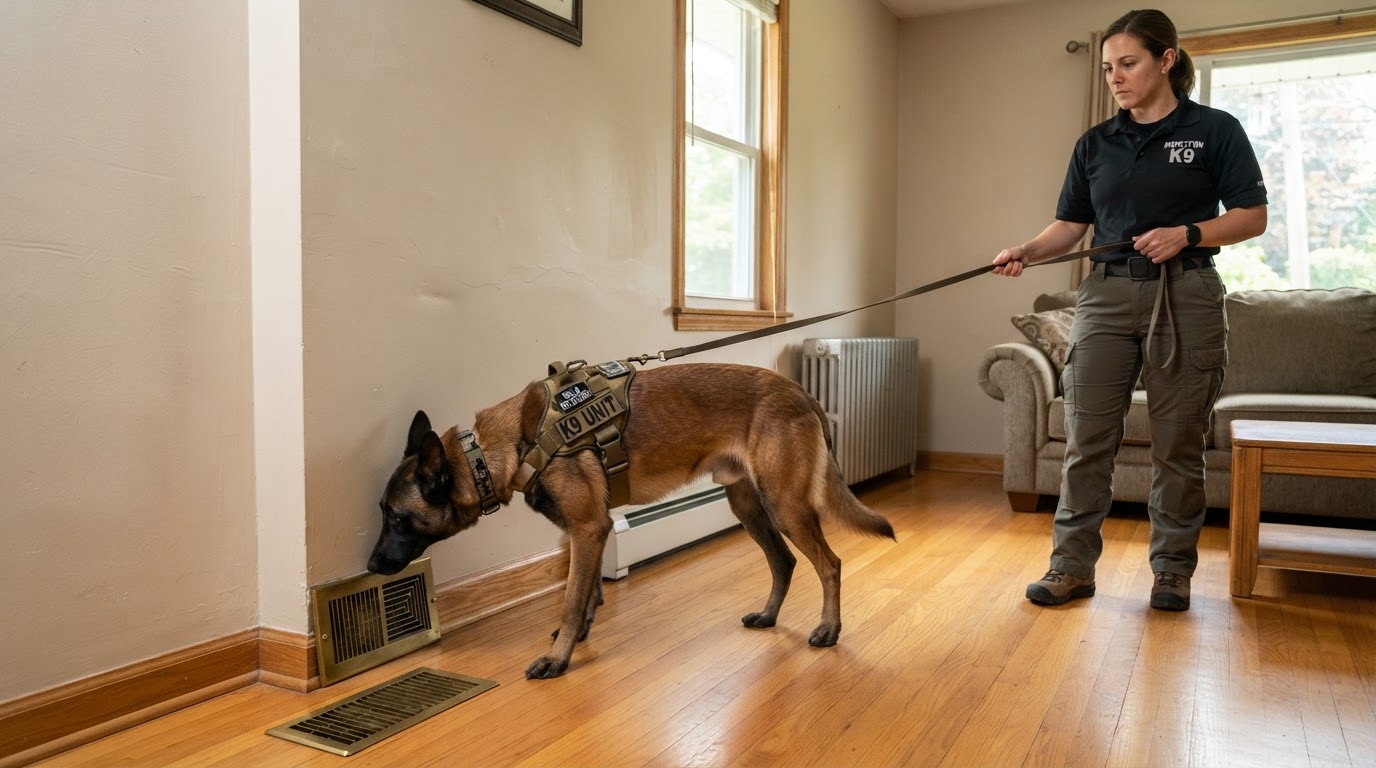
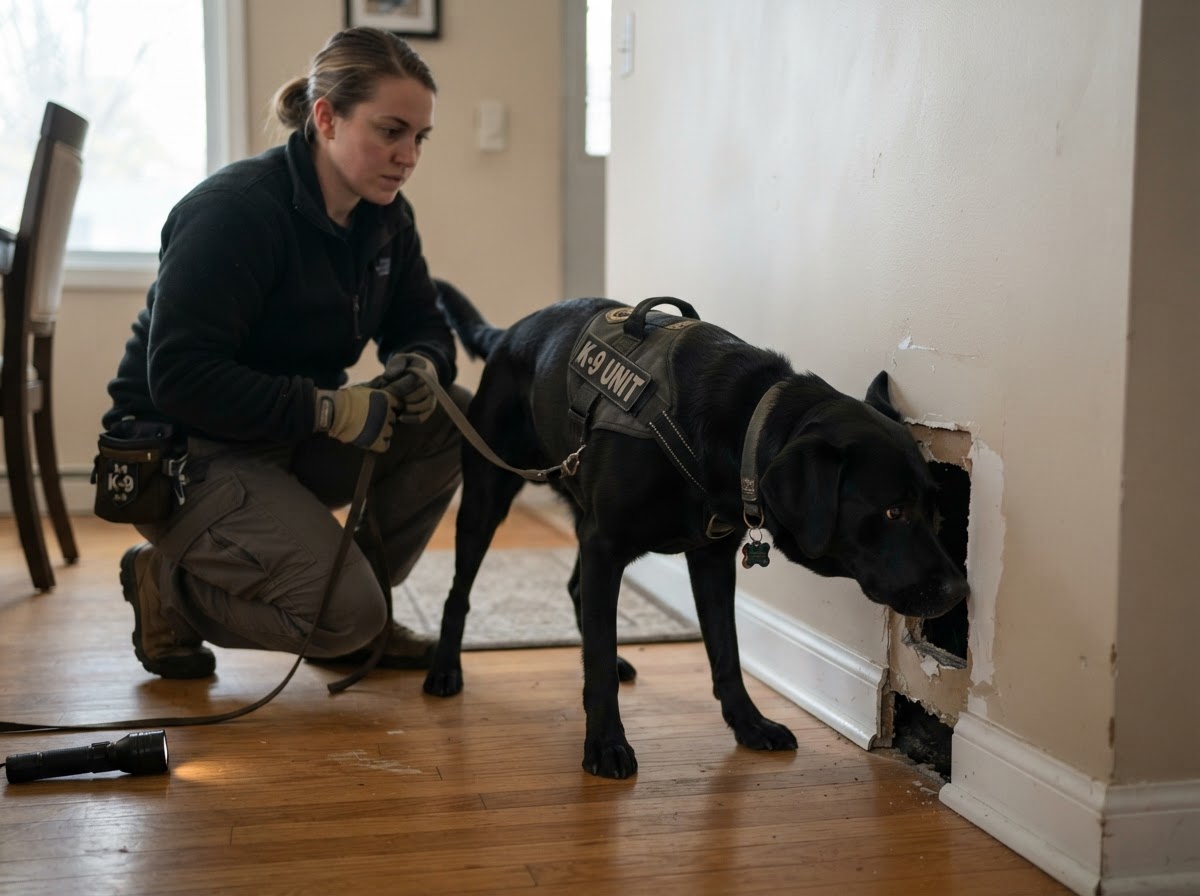
Then there's the fact that air moves. Scent from growth inside a wall cavity, under a floor, or in a duct run doesn't stay sealed in there. It migrates on air currents and leaks out at seams, outlet boxes, baseboards, and register grilles. A dog tracks that scent back toward its strongest concentration. That's how a source behind a finished surface gets located without anyone taking a saw to the drywall first.
How Detection Dogs Are Trained
Training starts by imprinting the target odor, then reinforcing one specific response to it, and rewarding nothing else. The response has to be unmistakable, because a vague signal is worthless to the handler reading it.
From there, two things matter more than the imprinting itself.
The first is blind trials, where the handler doesn't know where the target is. If the dog can still find it, the dog is working odor rather than reading the person on the other end of the leash.
The second is proofing against distractors, which teaches the dog to walk past wet building materials, cleaning products, food, and animals without alerting. A dog that alerts on every damp thing in a house isn't narrowing anything down.
If you want to know how Snow and Otis were trained specifically, ask. It's a fair question and we'd rather answer it than have you wonder.
What a Search Actually Looks Like
Nothing dramatic, which surprises people.
It opens with questions. Where's the smell, what's the water damage history, what's been repaired and when, what's changed recently. That conversation shapes the search pattern before a dog is brought in at all.
Then the dog works the space room by room in a deliberate pattern, moving along walls and floor lines, checking under cabinetry, around plumbing penetrations, at crawl space openings, and near HVAC returns. When the dog gives its trained response, the handler marks the location and keeps going. The search finishes before anyone starts drawing conclusions from it.
What you have at the end is a documented set of locations, not a diagnosis.
What an Alert Means, and What It Doesn't
An alert means the dog detected the target odor at that spot, and that spot warrants a closer look.
An alert does not mean mold is confirmed at that precise point. It doesn't establish a species, a quantity, or how long anything has been there. Scent can also persist after a problem has been dealt with, so an alert isn't proof that something is currently active.
It also says nothing about health. If you want general guidance on what mold exposure can mean, the EPA and CDC publish it in plain language. A dog has no view on the subject, and neither does an inspection report.
Where the Method Has Limits
No inspection method is perfect, and this one has specific weak points worth knowing before you hire anyone.
A source that's fully sealed, with no path for scent to escape, can be missed. Scent that has traveled and collected somewhere can pull an alert toward a spot that isn't the source. Dogs tire, and a chaotic, heavily scented environment makes the work harder. Access matters too. A dog can't search a space nobody can physically get into.
Then there's handler influence, the well-documented risk that a dog responds to what its handler expects rather than to odor. It's real in every scent detection discipline, and pretending otherwise would be the actual red flag. The answer isn't to deny it. It's to work the search methodically without leading the dog, and then confirm findings by a method that has nothing to do with the dog or the handler.
Which is the whole reason the next step exists.
Why Lab Testing Follows
Canine detection narrows down where. Lab testing establishes what.
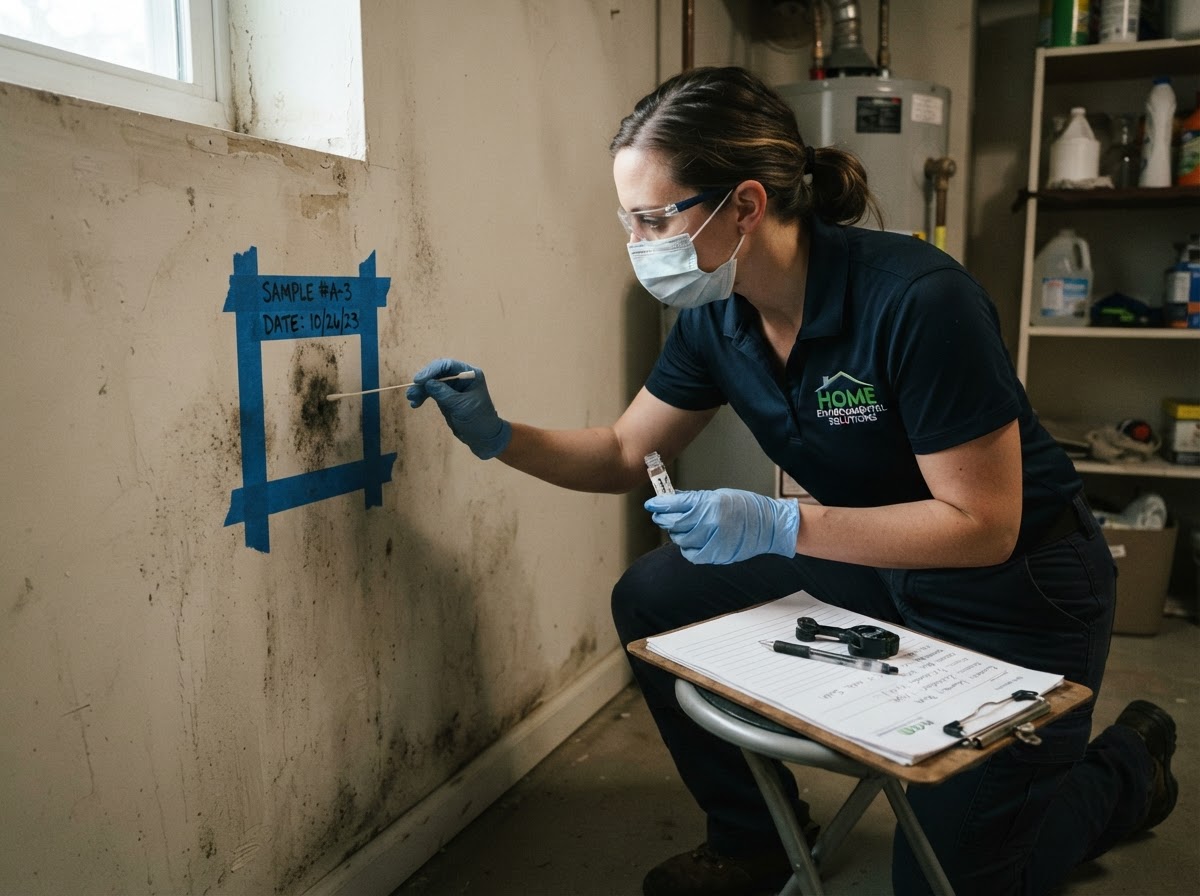
Once locations are marked, the next step is targeted sampling at those spots: a surface swab or tape lift, air sampling to measure airborne spores, or building mycotoxin testing where it fits the situation. Mycotoxins are compounds that some molds produce. Samples go to a laboratory, and the lab result is what tells you what you're dealing with. Our mold and mycotoxin testing services exist so those two halves connect, instead of leaving you holding an alert and no answer.
This is also the honest answer to the skeptic. You never have to take the dog's word for anything. The dog decides where to sample. The lab decides what's true.
One more structural point. We don't do remediation. We inspect and we test, and removal work goes to independent contractors. There's no version of this where finding more mold earns us more work, and that independence does more for the credibility of a finding than any claim we could make about the dogs.
Ask whether we serve your location. No obligation attached to the answer.
When You Probably Don't Need This
You can see the mold, you know where the water came from, and you already know it has to come out. Call a remediation contractor. A method built to find hidden sources adds little when nothing is hidden.
Small spill, dried promptly, no odor, no staining, nothing since. Keep an eye on it.
Where canine detection earns its cost is the opposite case, when something is wrong and nobody can find it. An odor with no visible source. A building with a water history and finished surfaces no one wants to cut into blind. A purchase decision where the standard home inspection flagged moisture but couldn't say what it meant.
Where We Work
We're based in Walla Walla and regularly serve College Place, Milton-Freewater, Waitsburg, and Dayton, along with the Tri-Cities: Kennewick, Richland, and Pasco. Walla Walla's older downtown building stock and the newer construction across the Tri-Cities make for genuinely different search conditions, and the plan for a given property reflects that.
Canine mold detection isn't something a conventional inspector in this region offers, which is why it needs explaining before it needs selling. You can read what a residential inspection involves, check our Walla Walla coverage, or meet Snow and Otis.
The Next Step
If there's a smell you can't place, or a water damage history you never resolved, guessing is the expensive option.
Ask whether we serve your location. And if what you're describing calls for something other than a canine inspection, we'll tell you that instead.
*Sources: U.S. EPA: Mold | CDC: Mold*
Frequently Asked Questions
Suspect Mold in Your Home or Property?
Schedule a non-invasive canine mold inspection with our K9 handlers today. Serving Walla Walla and Eastern Washington.
Related Articles
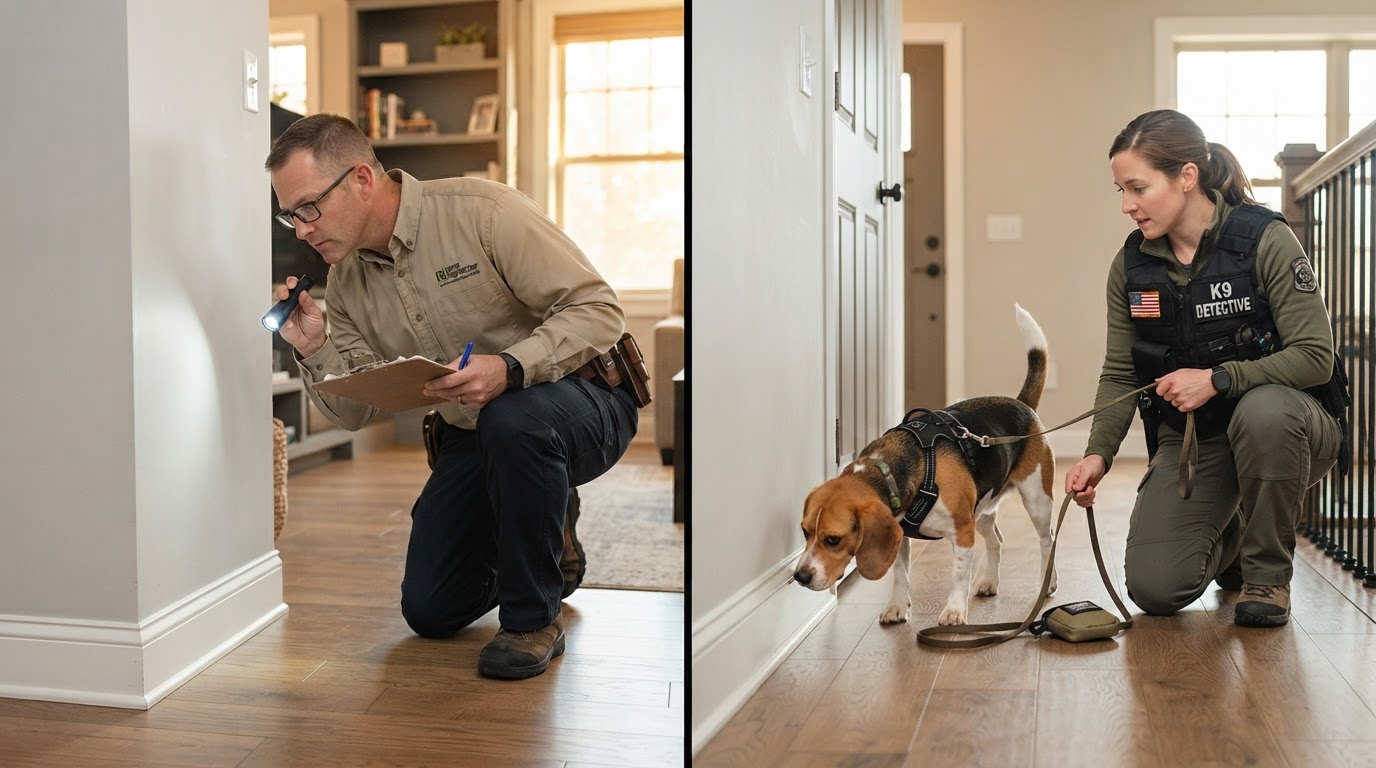
Canine Mold Detection vs. Traditional Home Inspection: What Each One Actually Finds
Can a dog really find mold a home inspector misses? Here's what each method actually checks, and when you want both.

Fall Mold Risk in Walla Walla Homes: What Changes When You Close the House Up
Fall mold risk in Walla Walla homes shows up as a musty smell when the furnace first runs. Here's what changes in September, and when to look closer.