Commercial Mold Inspection for Walla Walla and Tri-Cities Businesses
A tenant emails about a musty smell in the back suite. An employee mentions it too. You walk the space, find nothing, and now you have a complaint in writing, a lease that says something about maintenance, and no idea whether there is an actual problem behind the drywall.
That is the situation a commercial mold inspection in Walla Walla or the Tri-Cities is built for. Not a hunch, and not a crisis. A documented answer to a question you cannot resolve by looking.
This walks through when a commercial building actually warrants an inspection, what a canine sweep covers that a walkthrough does not, and what should be in the report so the file holds up later.
When a Commercial Building Warrants an Inspection
Most calls come from one of these:
- •A tenant or employee complaint about odor or symptoms, especially one that arrives in writing
- •Water intrusion that has already been dried, where nobody opened the assembly to check
- •A roof, plumbing, or HVAC failure in a building with occupied space below it
- •A lease negotiation, sale, or refinance where a mold question has been raised
- •An insurance claim that needs supporting documentation
- •Recurring complaints in the same area of the building that a previous inspection did not resolve
- •Verification that a remediation contractor's work achieved its goal
If your situation is not on that list and nobody has complained, a full building sweep is probably not what you need. Recurring monitoring on the areas most likely to fail is usually a better use of the budget, and it is cheaper per visit. That is covered further down.
Why Commercial Buildings Are Harder Than Houses
The mechanics are different, and it changes what an inspection has to reach.
Commercial space is built around concealed systems. Drop ceilings hide the entire plenum. HVAC trunk lines run above them and move air between areas that are otherwise separate. Demountable partitions and tenant improvement walls get built, moved, and rebuilt over decades, and each round leaves connections nobody documented. A leak above a drop ceiling in one suite can produce a smell in a different suite entirely.
Occupancy is the other difference. You cannot take a functioning restaurant, clinic, or multi-tenant office offline for a day. Anything invasive means notice, coordination, and often a tenant relations conversation you would rather not have to start.
And the stakes are documentary as well as physical. In a house, you are answering a question for yourself. In a commercial building, you are answering it for a tenant, an insurer, a lender, a buyer, or an attorney, which means how the answer is recorded matters as much as what the answer is.
Commercial Mold Inspection in Walla Walla vs. the Tri-Cities
Walla Walla and the Tri-Cities are two different building problems, and a commercial mold inspection in Walla Walla is not the same job as one in Kennewick.
Walla Walla is the county seat with an older downtown commercial core. Buildings in that stock have been through multiple rounds of tenant improvement, with plumbing and mechanical systems added and rerouted over long service lives. The Valley also runs on a wine and agriculture economy, which means production space, tasting rooms, and cold storage: buildings with washdown areas, deliberate humidity control, and floor drains, where a moisture problem does not always look like a leak. The same trip covers College Place next door, and Waitsburg, Dayton, Dixie, and Prescott out through the county. See our Walla Walla service area for the full coverage map.
The Tri-Cities is a substantially larger metro with more recent construction and a deeper professional and office market. That shifts the typical job toward multi-tenant office buildings, retail, medical and clinical space, and hospitality, where the recurring pattern is shared mechanical systems and one tenant reporting something the others do not. Kennewick, Richland, Pasco, Burbank, Finley, and Eureka all sit inside that service area. See commercial mold inspection in Kennewick and the Tri-Cities for that region.
Travel within Walla Walla, Columbia, Franklin, and Benton Counties is included in the inspection, so location within that footprint does not change your quote.
What a Canine Sweep Covers in a Commercial Building
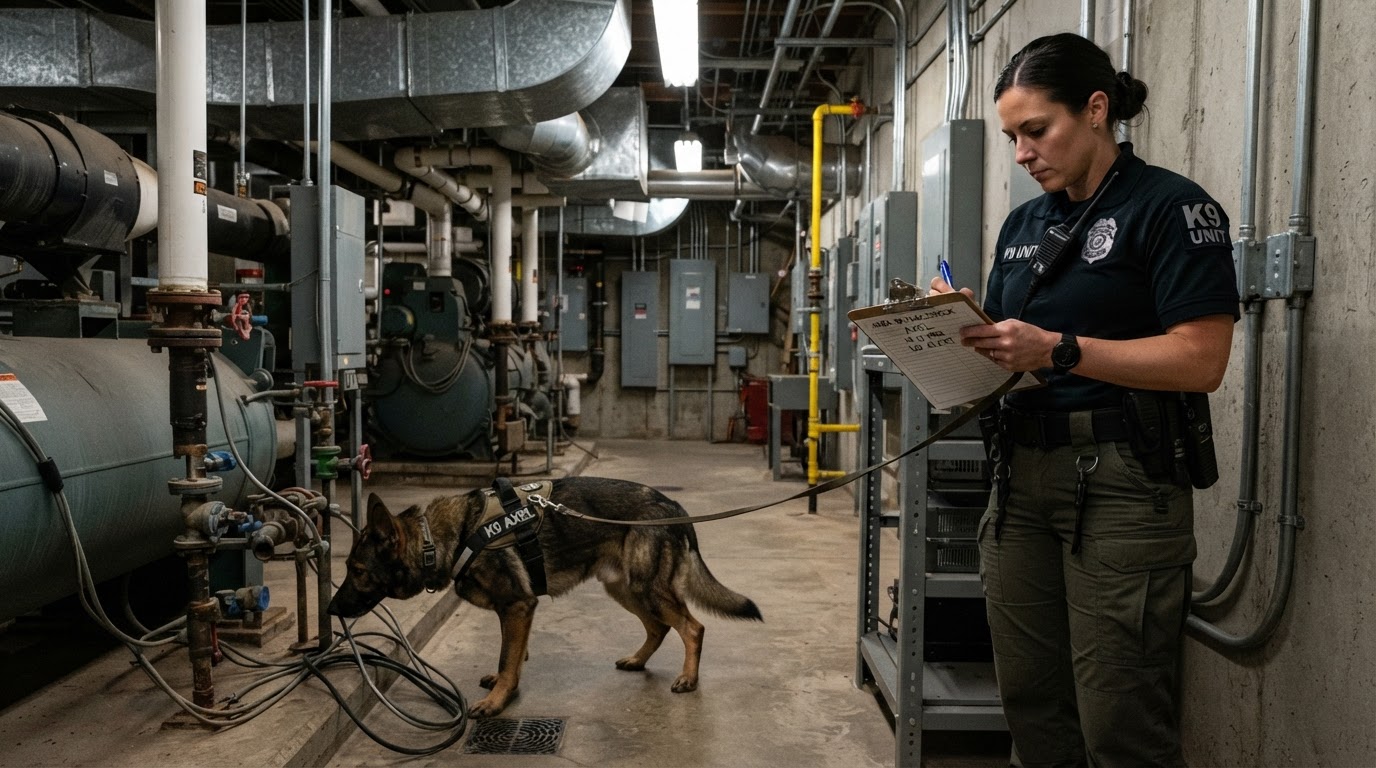
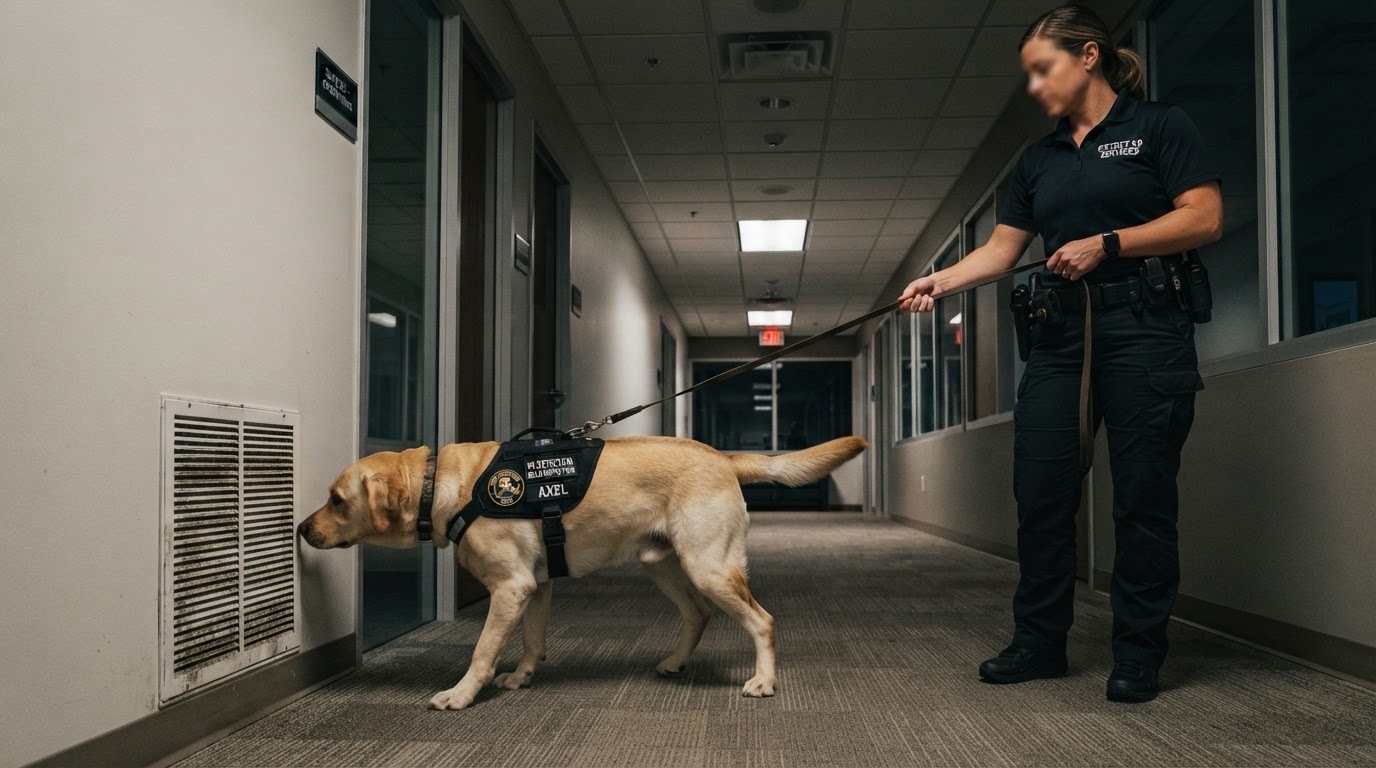
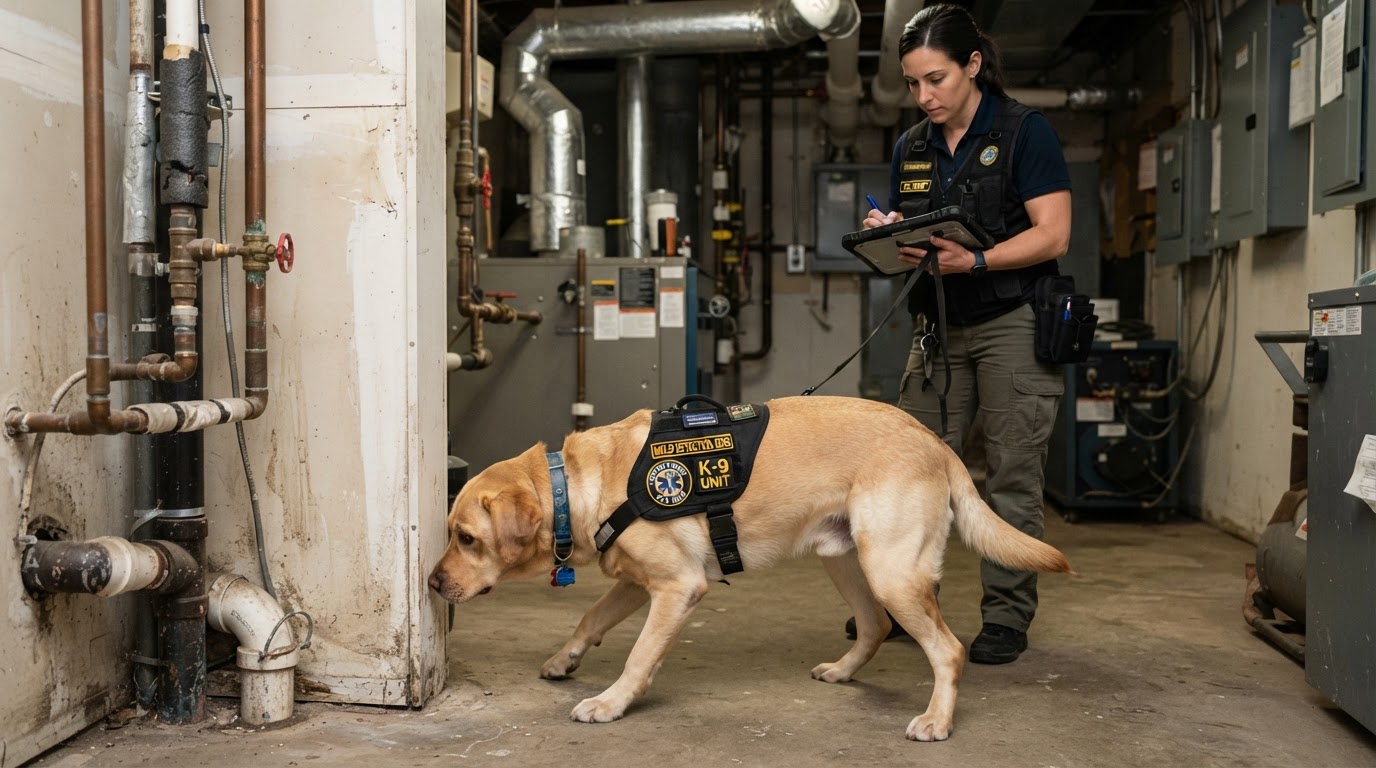
A trained detection dog works from scent rather than sight. Snow and Otis are trained to indicate the odor associated with active mold growth, which travels through wall cavities, above drop ceilings, along HVAC trunk lines, and out of return-air registers. That is the reason the method fits commercial space: the odor gets out even when the growth does not.
Practically, that means:
- •Coverage without demolition. A single canine team covers roughly 10,000 to 15,000 square feet per session. Multiple teams are available for larger facilities. Nothing is cut and nothing is opened.
- •Scheduling around your operation. Evening, weekend, and holiday scheduling is available at no additional cost. For occupied retail, restaurant, clinical, and multi-tenant space, after hours is usually the right call, and it removes the tenant notice problem.
- •Verification at each alert. Thermal imaging is used at alert locations, alongside moisture readings, so an alert is recorded with supporting evidence rather than on its own.
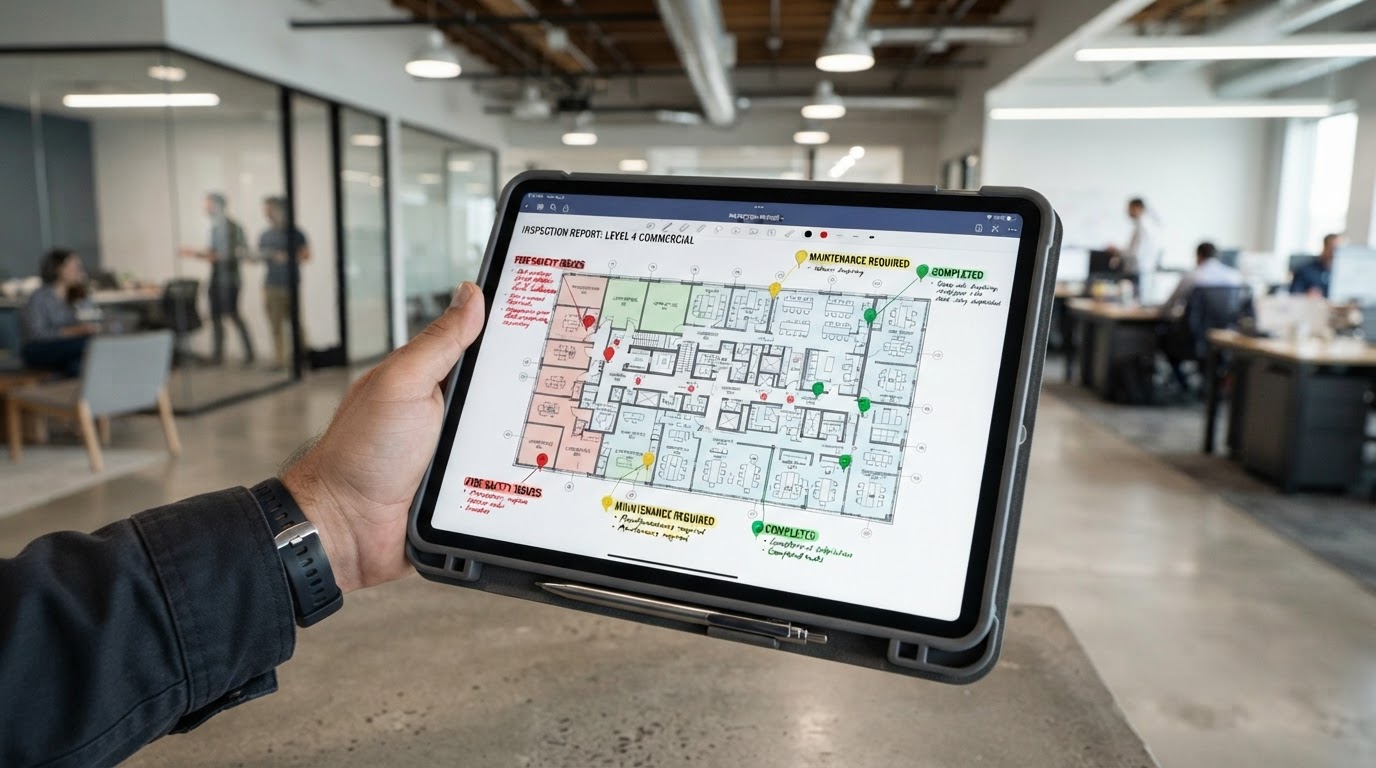
- •A report mapped to your floor plan. Alert locations are marked on the building's architectural plan, with photographs, moisture readings, and a recommended scope for whoever does the remediation work.
Because Canine Scent Inspections does not perform remediation, there is no version of this where finding more problems produces more work for the inspector. For a property manager who has to defend a decision to a tenant or an owner, that separation is the point.
If you have a complaint on file or a water event you never fully closed out, request commercial pricing for your property and describe the situation. Quotes are based on square footage and building complexity, so the details change the number.
The Documentation Question
For most commercial clients, the report is the deliverable. The inspection is how you get one.
What a defensible report says is what was inspected, where the dogs alerted, what the moisture readings and thermal images showed at those locations, which areas could not be accessed, and what is recommended next. What it should never say is that a building is mold free, safe, or clear. No inspection can establish that, and a document claiming it is a liability rather than an asset.
On the moisture side there is federal guidance worth knowing. OSHA's guide to mold in the workplace states that moisture control is the key to mold control, recommends responding to water intrusion within 24 to 48 hours, and suggests keeping indoor relative humidity between 25 and 60 percent. That guidance is about prevention, and it is the reason a documented inspection after a water event is easier to justify than one months later.
Who is responsible for mold in a commercial building is a lease question, not an inspection question. Repair and maintenance obligations vary widely between commercial leases. If your situation involves a dispute, an inspection gives your attorney facts to work from. It does not answer the legal question, and nobody at an inspection company should be telling you that it does.
What Canine Detection Adds, and What It Does Not
It adds reach. A dog can indicate a source behind a finished surface, above a ceiling grid, or inside a duct chase without anyone opening the assembly, and it can do it across a large footprint quickly.
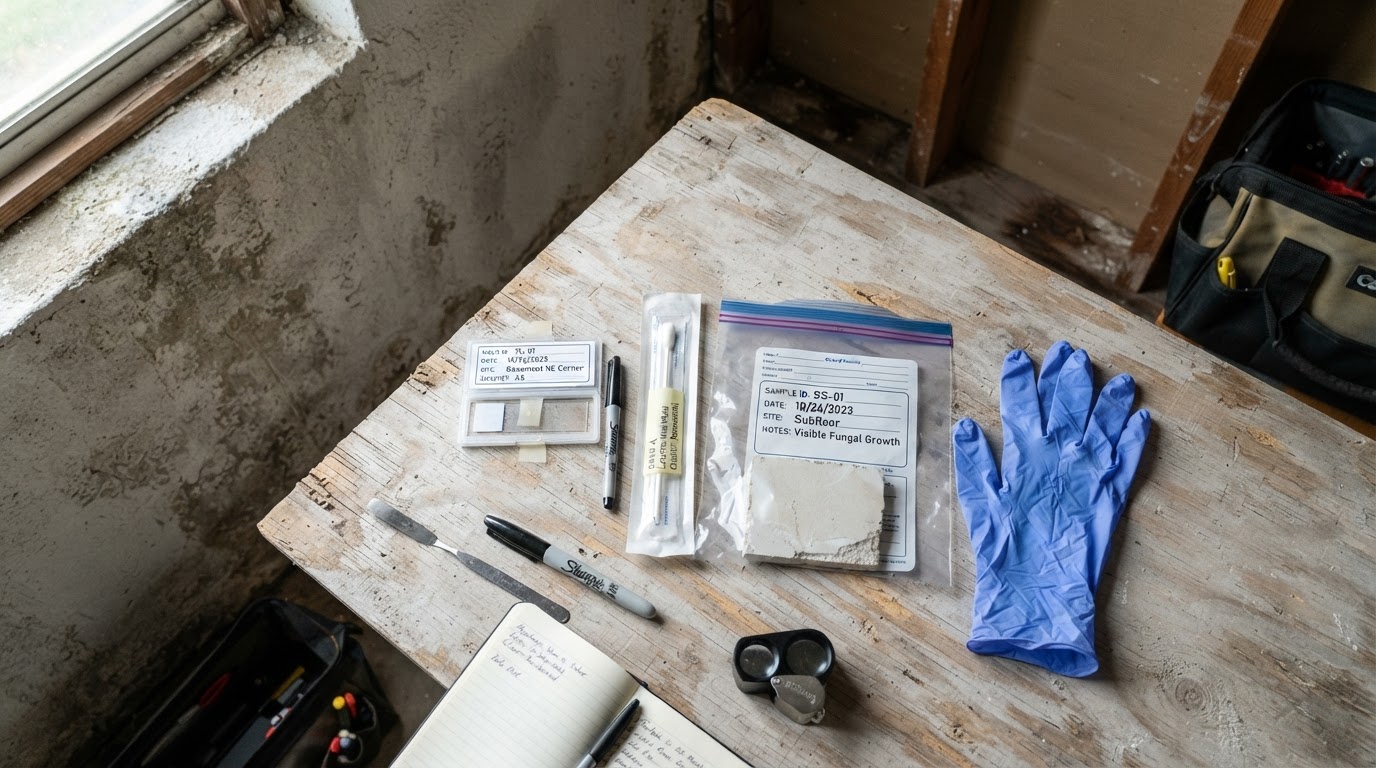
It does not identify species, measure quantity, or say anything about health. Those require laboratory analysis, and the analysis is a separate service. A canine alert is a strong indication that a location warrants confirmation, which is exactly how it should be described in a report. Learn more about building mycotoxin testing for the confirmation path.
It also does not replace your building's other professionals. A good general inspector, a mechanical contractor who knows your HVAC, and a remediation firm working to a recognized standard such as IICRC S520 all do things this does not. The useful framing is sequence, not competition: detection narrows the search, testing confirms what is there, and a contractor fixes it.
Recurring Monitoring Instead of One-Off Inspections
For a portfolio, a hotel, a winery, a clinic, or any building where a mold complaint would be expensive, the one-off inspection is the wrong product. Recurring monitoring puts the same sweep on a monthly, biannual, or annual schedule at a discount to the standard rate, and it changes what you are buying: a record over time rather than a snapshot after something has already gone wrong.
The practical value shows up in two places. You find moisture problems while they are still small, and you have a documented history when a tenant raises a concern, instead of starting from nothing.
To scope one, request a monitoring plan for your property or portfolio, or ask about multi-property programs if you manage more than one building.
The Next Step
If a complaint is already in writing, the sequence that holds up is straightforward: get the building swept, get alert locations documented on the floor plan, confirm by lab where confirmation matters, and hand a remediation contractor a defined scope instead of a guess.
Request commercial pricing with your square footage and a short description of what has been reported. Response during office hours runs two to four business hours, and after-hours scheduling costs nothing extra.
Frequently Asked Questions
Suspect Mold in Your Home or Property?
Schedule a non-invasive canine mold inspection with our K9 handlers today. Serving Walla Walla and Eastern Washington.
Related Articles
Mold Inspection for Property Managers: A Practical Checklist
Mold inspection for property managers, as a checklist: seasonal checks, tenant complaint steps, and when scheduled monitoring is worth it.
Which Mold Test Do You Need? Surface, Air, and Mycotoxin Testing Compared
Which mold test do you need? Compare surface testing, air sampling, and building mycotoxin testing, and learn when testing is not necessary.