How Do I Know If Mold Remediation Worked?
The containment plastic came down last week, the invoice is paid, and the room looks fine. Then you walk in on a warm afternoon and catch that faint smell again, and you are not sure whether you are imagining it.
How do I know if mold remediation worked is one of the hardest questions in this whole category to answer honestly, because the thing you are trying to confirm is an absence. A clean looking room proves that the visible material was removed. It does not prove that the source was fully reached, that the moisture behind it was corrected, or that nothing was left inside the cavity when the wall went back up.
Here is what a real verification covers, when to schedule it, and what the warning signs of an incomplete job actually look like.
How Do I Know If Mold Remediation Worked? Start With What Finished Means
Remediation is not finished when the debris is gone. It is finished when three things are true at once:
- •The source material was removed or cleaned, not just sealed over or treated with a biocide.
- •The water problem that caused it was corrected. The CDC and NIOSH are blunt about this: any mold growing in a building indicates a problem with water or moisture that should be immediately addressed. Remove the growth and leave the leak, and you have bought yourself a delay, not a fix.
- •The work was verified by someone who did not perform it.
That third point is the one most often skipped. ANSI/IICRC S520, the industry standard for professional mold remediation, treats post-remediation verification as a step distinct from the cleanup itself. The reason is straightforward: the party that scoped and billed the work is not the ideal party to declare it complete.
Why Independent Verification Matters Here
Canine Scent Inspections does not perform remediation. There is no demolition crew waiting on the result, no reconstruction bid attached to a finding, and no reason to want the answer to come out one way or the other.
That independence is the entire value of the verification step. If the sweep is clean, you have documentation from a party with nothing to gain from saying so. If the sweep is not clean, you find out before the drywall goes back up, which is the cheapest possible moment to find out.
Verify your mold remediation results before the reconstruction phase starts, not after.
When to Schedule Verification
Timing matters more than people expect. Chemical deodorizers and the residual air movement from containment equipment can interfere with a scent sweep, so the window opens once the equipment is out and those products have fully dissipated. In practice that is typically 24 to 48 hours after the cleanup wraps.
Earlier than that and you risk a muddy result. Much later and you may have already closed the wall, which turns a simple confirmation into an expensive one.
If your contractor is scheduling reconstruction, ask for a gap of two full days between cleanup and rebuild. Most are used to the request, and a good one will welcome it, because a third party sign off protects them as much as it protects you.
What a Canine Verification Sweep Actually Covers
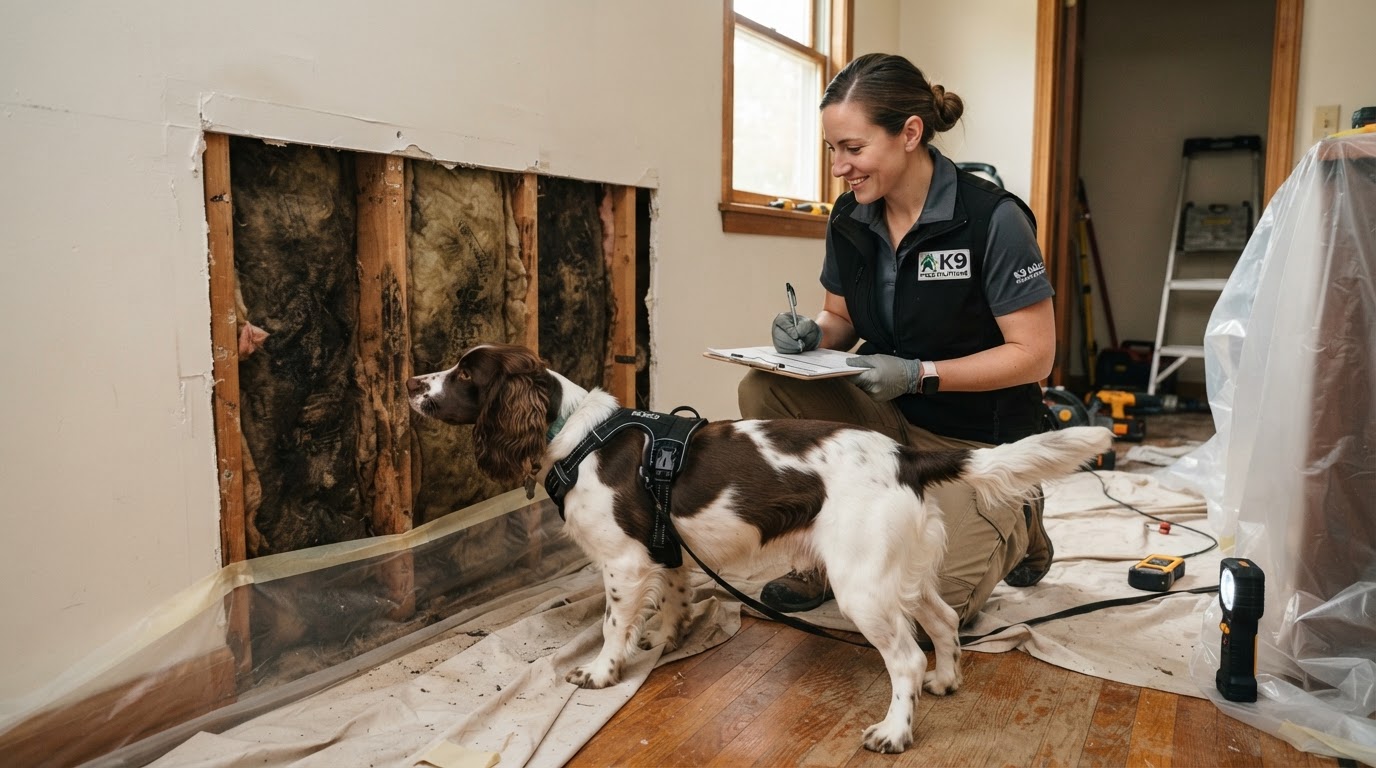
A post-remediation canine mold inspection works the containment zone and the areas around it, because contamination does not respect the plastic sheeting that was hung around it.
The sweep covers:
- •The full containment area, including wall cavities, framing, studs, and subfloors that are still open
- •Adjacent rooms and corridors, where secondary growth from the same water event often turns up
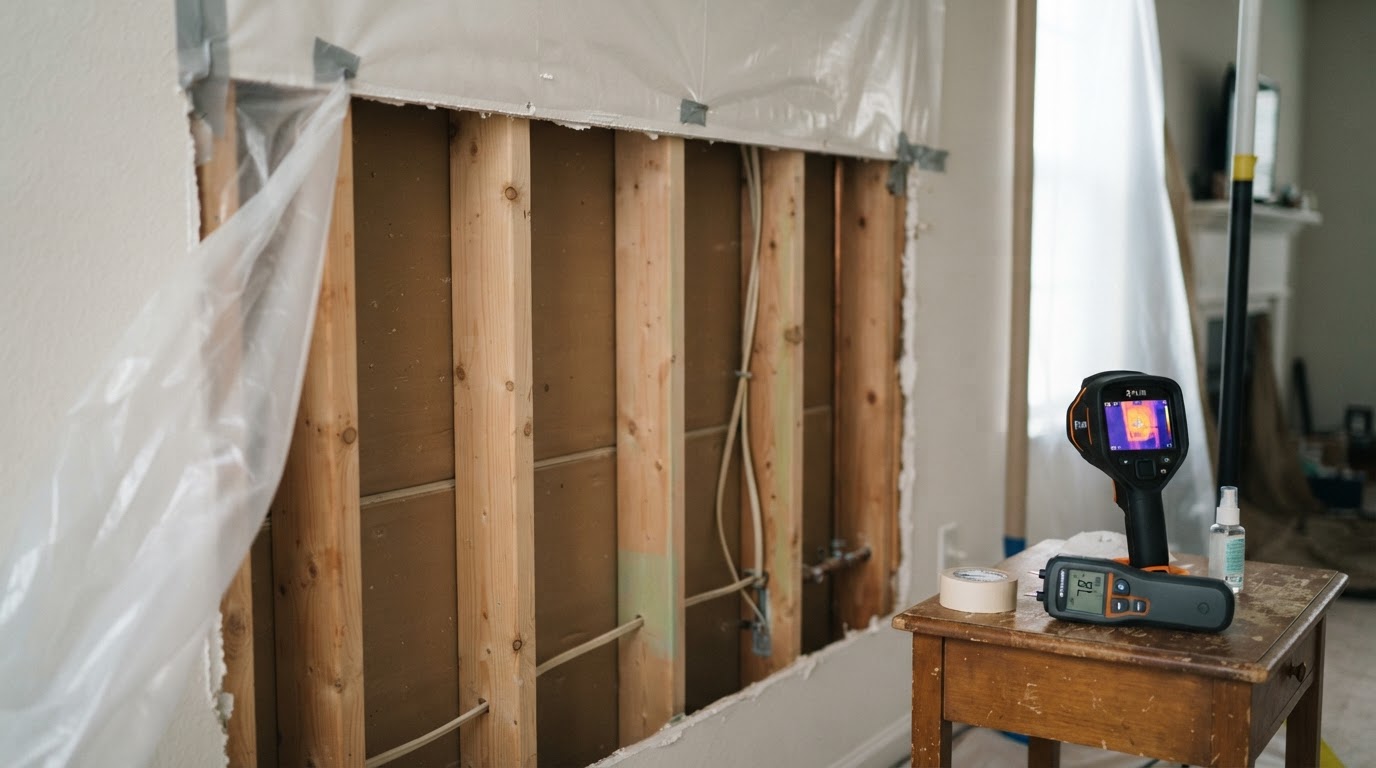
- •Thermal imaging and moisture meter readings to confirm the area has actually dried, since a dry surface over a wet cavity is a familiar trap
- •Written documentation of any residual alert locations, so your contractor knows precisely where to go back
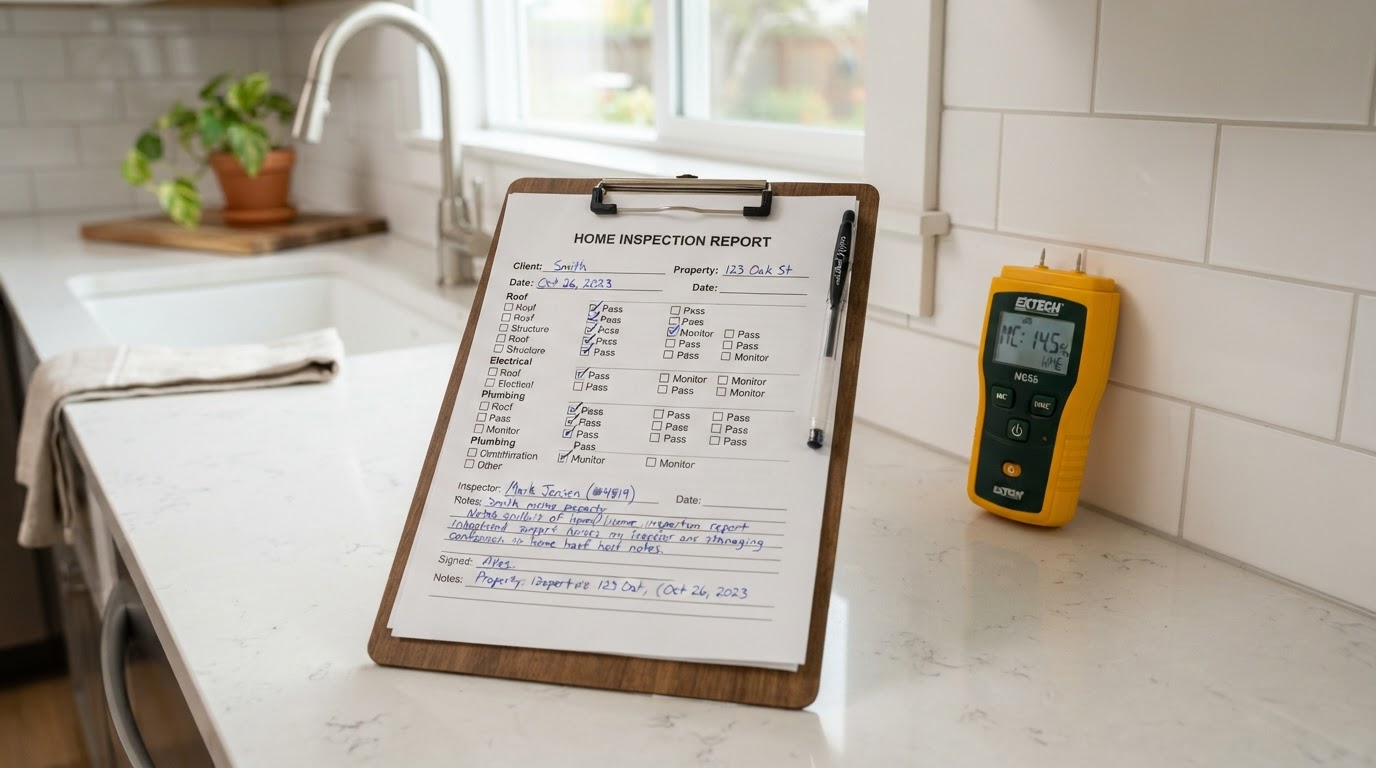
- •A verification certificate recording the outcome, which insurers and contractors will accept as third party documentation
Snow, who works methodically across large and architecturally complicated spaces, tends to draw the commercial and multi-room jobs. Otis, whose specialty is concealed drywall and subfloor work, tends to draw the residential ones. Hadi Ali handles both and documents each alert location as it happens.
What Verification Cannot Tell You
This is where honest language matters, and where a lot of the industry gets sloppy.
A clean sweep means that no active mold odor was detected in the areas inspected. It does not mean the building is mold free, and no responsible inspector should tell you it does. Mold exists in every building, indoors and out. The useful question is whether an active growth problem remains in the areas that were treated, and that is what verification answers.
A canine alert also cannot tell you what species is present or how much of it there is. That takes a laboratory sample. If a residual alert turns up, surface testing for mold is the step that turns the alert into a lab identification your contractor can scope against.
No detection method is perfect, which is exactly why verification pairs a scent sweep with moisture confirmation and, where the stakes justify it, lab analysis.
Signs Your Remediation May Not Be Finished
None of these are proof on their own. Taken together, they are a reason to verify rather than to assume.
- •The odor comes back, especially in warm or humid conditions, or after the HVAC has been running.
- •The moisture source was never clearly identified. If nobody can tell you what leaked, nobody has fixed it.
- •Only the visible area was addressed. Growth that ran along a wall cavity or a joist bay does not stop where the stain stopped.
- •Discoloration returns on new paint, drywall, or trim within weeks.
- •The work was scoped by guesswork. If the contractor opened a wall to see how far it went, the boundary was found by cutting rather than by mapping.
- •Household members notice symptoms that ease when they are away from the property. The EPA notes that mold exposure can cause a range of health effects in sensitive people, and any specific health question belongs with a physician rather than an inspector.
Verify your mold remediation results if more than one of those applies.
When You Probably Do Not Need Verification
Not every cleanup warrants a third party.
The EPA's guidance for homeowners is that a moldy area smaller than roughly 10 square feet, with an obvious and corrected cause, can usually be handled without professional involvement. A patch of surface growth on bathroom tile after a fan failure, cleaned up and followed by a working fan, does not need a verification sweep.
Verification earns its cost when the job was large, when a wall or floor was opened, when an insurance claim or a lease dispute is attached, when the property is about to change hands, or when someone in the household is sensitive to indoor air quality and wants documentation rather than reassurance.
If you describe your situation on the phone and it falls into the first category, you will be told so.
Verification in the Walla Walla Valley and Tri-Cities
Reconstruction schedules are the practical constraint. Inspections are typically booked within 48 to 72 hours, which fits the 24 to 48 hour window after cleanup if you call while the containment is still up rather than after the crew has left. Evening, weekend, and holiday scheduling is available at no additional cost, which matters when a commercial tenant needs the space back on Monday.
Coverage runs across Walla Walla and the surrounding valley towns, and out into Kennewick, Richland, and Pasco. Travel within Walla Walla, Columbia, Franklin, and Benton Counties is included in standard rates.
If the remediation followed a burst pipe, an appliance failure, or a roof leak, the article on what to do after water damage covers the sequence from the beginning.
Your Next Step
Call before the walls close. That is the whole recommendation.
Verify your mold remediation results with an independent sweep, or request a quote first if you want to understand scope and cost before you commit. Either way, do it while the cavity is still open.
*Sources: CDC / NIOSH: Mold, Testing, and Remediation | U.S. EPA: A Brief Guide to Mold, Moisture and Your Home*
Frequently Asked Questions
Suspect Mold in Your Home or Property?
Schedule a non-invasive canine mold inspection with our K9 handlers today. Serving Walla Walla and Eastern Washington.
Related Articles
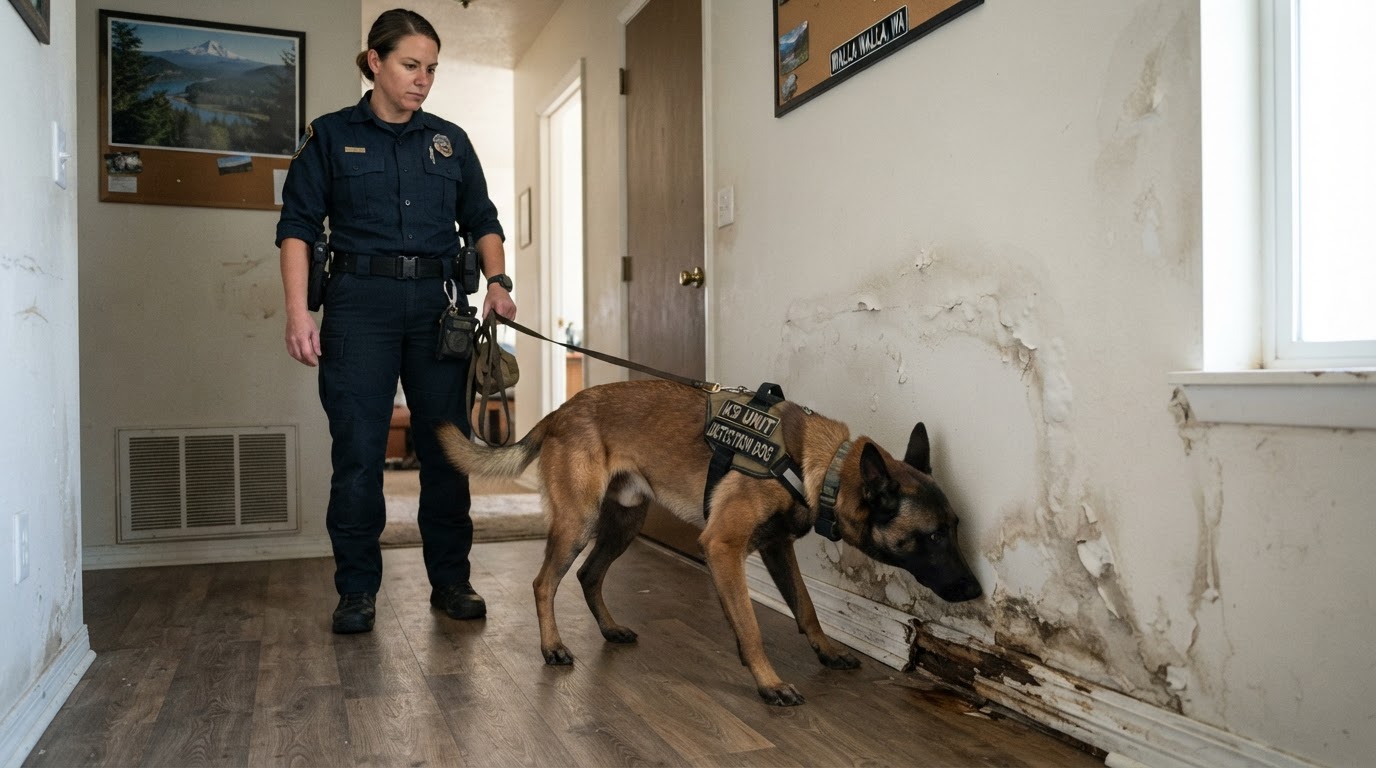
Should You Get a Mold Inspection After Water Damage in Walla Walla?
Water damage in Walla Walla, WA? Learn when a mold inspection after water damage is worth it, and how canine detection finds mold behind walls.
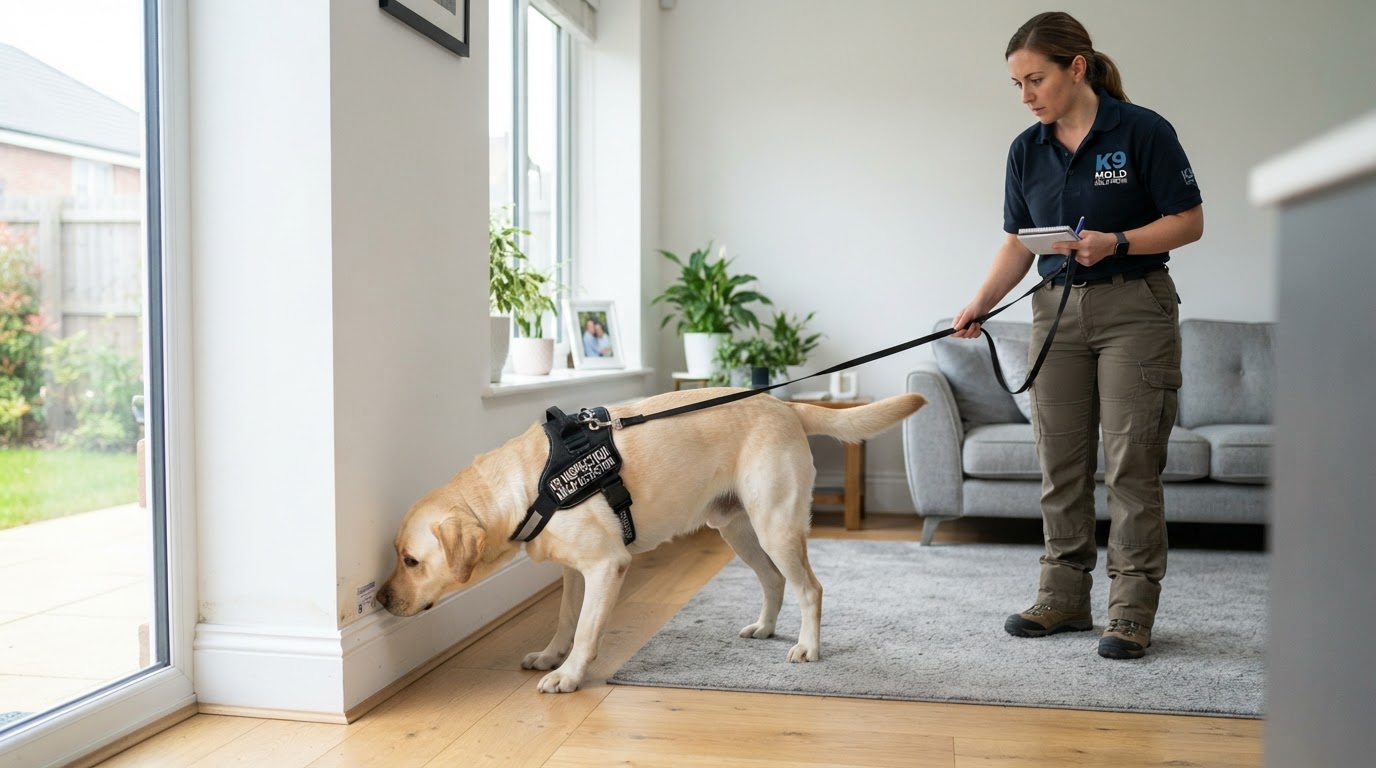
What to Expect During a Canine Mold Inspection in Walla Walla, WA
Here's exactly what happens during a canine mold inspection in Walla Walla, from Snow and Otis's search to your final report.